
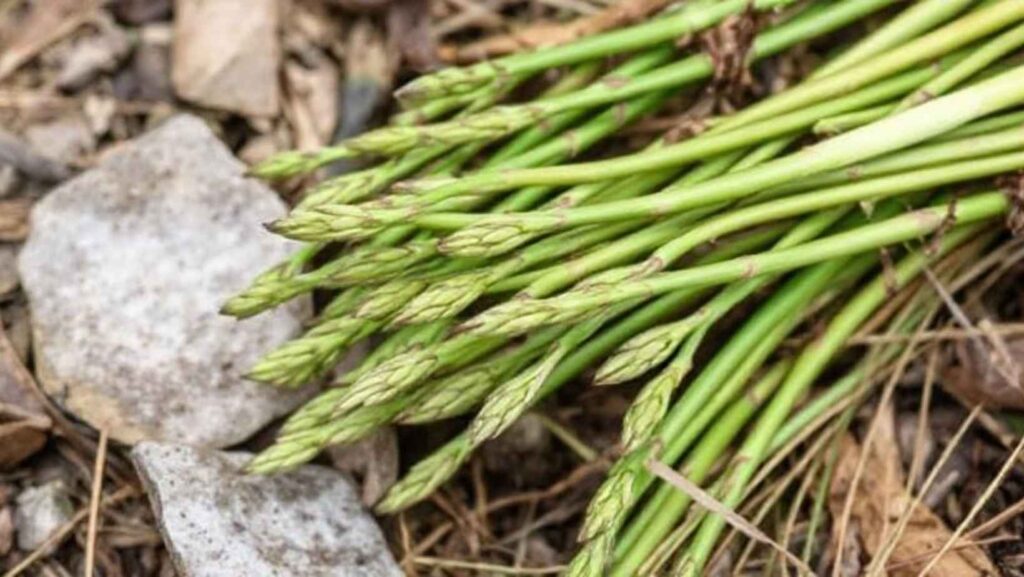
Would you like to know what wild asparagus is and if it is edible? In my experience, wild asparagus, or Asparagus acutifolius, is a plant that thrives in a variety of settings and is edible, although it is frequently slightly bitter.
It is a common culinary component, particularly in Mediterranean countries, and a perennial plant of the asparagus family.
An evergreen perennial, wild asparagus is a gastronomic delicacy that is periodically foraged, particularly in the Mediterranean region.
Since ancient times, people have gathered edible spears from wild populations, and their culinary, medicinal, and folklore applications have been documented throughout history.
However, that’s not all; I’ll provide more details about the topic as you continue reading.
Now, let’s get started.
Can you eat wild asparagus
The fact that wild asparagus resembles store-bought asparagus makes it easy to distinguish between the two.
Perennial in nature, asparagus has substantial subterranean roots. You are pursuing their new shoots in the spring.
When they resemble the store-bought asparagus in size, pick them. Some wild asparagus stalks are slimmer or thicker than store-bought ones.
That is irrelevant. They are tasty to eat as long as they are not woody. The thin ones can occasionally be woody and fibrous, making them less enjoyable to chew.
The shoots are edible even if they reach a height of a few feet. However, the shoots become unfit for consumption as their buds begin to flower and then bolt.
From late April until late June, you may hunt wild asparagus here in the Inland Northwest.
Over many weeks, a single plant may produce numerous branches, so be careful to return to the location where you collected. Every week, you may often find new shots to choose from.
Around the area, wild asparagus prefers to thrive in loose, damp soil. It may be found growing near the banks of the Spokane River and on the lush hillsides of the area.
They frequently inhabit ditches with higher levels of wetness.
However, avoid picking branches that are growing near roadsides or other contaminated areas.
I believe that identifying plants in the fall is the most effective method for finding wild asparagus. They are distinctive.
Once you’ve located them, you may mark the location and return in the spring to pick them up. They resemble tall, airy tumbleweeds with crimson berries in the fall.
Avoid eating the berries since they are poisonous. However, if you want to cultivate them at home, you can gather the seeds they contain.
It takes around three years for the plant to produce edible shoots. Before consuming any wild food, ensure you accurately identify the plant.
Is wild asparagus the same as asparagus
At this point, I usually begin outlining the distinguishing characteristics of the plant or mushroom.
Nevertheless, I’m prepared to wager that every reader can correctly identify asparagus.
If not, look for the asparagus in the vegetable area of your neighborhood supermarket. Despite its silliness, the wild or feral variant is nearly identical, with the exception of a wider range of sizes.
The store-bought items are all relatively comparable in size, as they are cultivated in extremely controlled conditions.
Thorough analysis:
Species: The species Asparagus officinalis includes both cultivated and wild asparagus.
Taste: Compared to the sweeter taste of farmed asparagus, wild asparagus is sometimes described as having a stronger, earthier, and grassier flavor. Some people even say it’s a little bitter.
Size and form: Depending on the growth environment, wild asparagus spears can vary widely in size and form, ranging from matchstick-thin to bulkier ones.
Typically, larger and more consistent spears are the goal of cultivating asparagus.
Growing Conditions: While garden asparagus is grown under controlled conditions, wild asparagus grows naturally in a variety of locations, including fields, meadows, and roadside ditches.
What’s the difference between wild asparagus and asparagus
Nothing has changed. When asparagus escapes a gardener’s plot, it turns “wild.” There isn’t any native asparagus in Colorado.
Except for a few significant variations in growth, flavor, and appearance, wild asparagus is nearly identical to farmed asparagus.
Compared to the cultivated type, wild asparagus is often thinner, more stringy, and sometimes more bitter.
Due to its regulated cultivation, store-bought asparagus is more consistent; however, it also comes in a wider variety of sizes and shapes.
Here’s a more thorough explanation:
Wild asparagus has thinner, more stringy stalks that can resemble “wild grass” in appearance. They can also come in a wider range of forms and sizes.
Cultivated asparagus usually has larger stalks and is more consistent in size and shape.
Taste: Wild asparagus is often described as having a more intense, green, earthy, and sometimes bitter flavor.
Cultivated asparagus has a sweeter, more buttery flavor and is often milder in taste.
Wild asparagus grows naturally in a variety of settings and often exhibits a wide range of sizes and forms.
Asparagus that is grown under regulated conditions yields a more consistent product.
How to Spot Wild Asparagus Plants
Because immature, sensitive spears are difficult to identify in the spring when weeds and grasses conceal them, asparagus can be challenging to forage for—not because it is uncommon.
Almost every other time of year, it is considerably simpler to find. Look for tall, slender green spears in the summer that have several branches extending from the main, vertical stem at 90-degree angles.
A full asparagus stalk resembles a triangular Christmas tree with delicate, fern-like limbs. Bright red berries may appear on a ferny asparagus stalk in late summer.
Asparagus leaves are easily recognizable from a distance in the fall because they are brilliant yellow. Look for three- to four-foot-tall, dry, brown stalks in winter and early spring.
They might be standing straight or stooped and lying close to the spot where new growth would appear.
Take notice if you come across asparagus when it’s not edible. Better still, put a pin on a GPS map so you can quickly return to it when the asparagus is ready in the spring.
How to pick asparagus in the wild
Once the asparagus plants have been identified, you should carefully remove the asparagus from the leaves.
Gloves and boots are helpful while foraging overseas because the flora in the woods may be rather prickly! Bend the stem 5 to 6 inches downward and gently slide the brush to the side.
It should be quite simple to break off. Leave stems that are thinner than a pencil alone; the thicker the stem, the less it has been harvested.
They require time to recover their delicious vigor because they have been overharvested.
Once harvested, place them in your backpack or foraging basket and then go in search of additional juicy stems along the greenery.
I found that using my Osprey backpack for foraging was effective. However, since there are fewer items to carry, I believe backpacks perform equally well as baskets, particularly while traveling.
Furthermore, although I’ve never heard of someone going on a foraging holiday, I’m fairly certain that it does exist.
How to cook wild asparagus
It cooks similarly to store-bought asparagus, but it’s a little more bitter, as it’s wild and you picked it yourself! (Hooray!) Congratulations on completing your first foraging adventure.
It is frequently prepared as crispy fries, combined with spaghetti, or roasted in the oven. People have even been known to air-fry it!
Here are some simple vegan recipes you can make with asparagus while staying at an Airbnb if you’re going overseas.
Broccoli, asparagus, and roasted chickpeas (cook the asparagus at the same time as the broccoli)
Asian-inspired ramen for a pan-sheet supper
Vegetable fried rice with zesty lemon, broccoli, and asparagus pasta (cook the asparagus at the same time as the broccoli).
Apart from the fact that there are several methods to prepare asparagus, it’s also an easy approach to keep your health and fitness levels up when traveling.
Final thought
Now that we have established what wild asparagus is and whether it is edible, like many “weedy or invasive plants,” wild asparagus is an innocent bystander that finds a niche ideal for its survival and eventual growth.
Because of this, I frequently see asparagus in these areas where herbicides have been used.
However, these plants typically recover the following year when no herbicide is used, as a single dosage is insufficient to kill them.
These plants are no longer wise to eat, in my opinion. However, since mowing does not kill the plants, you may frequently encounter stands in public places with some mowing but no pesticide application.