
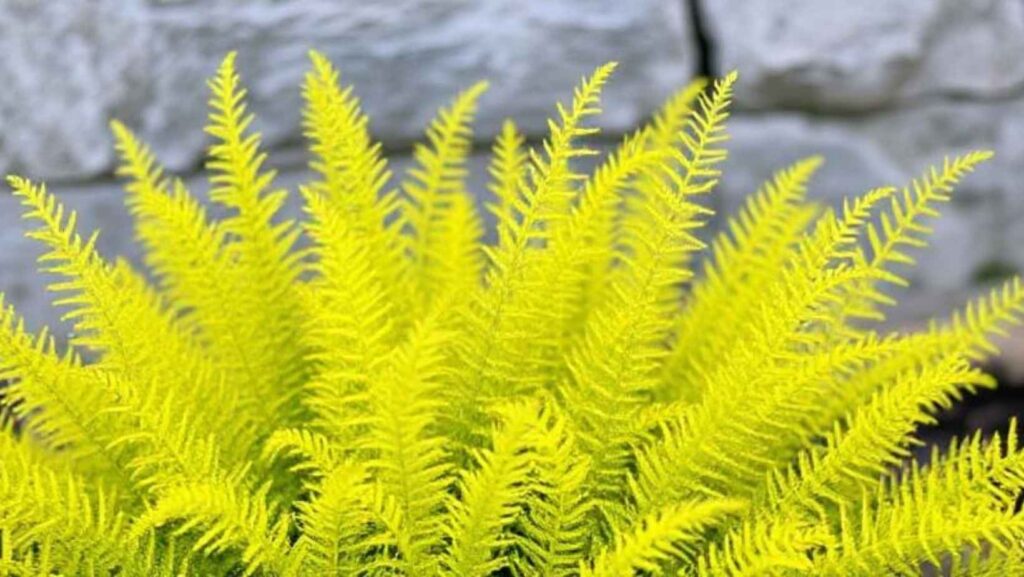
Would you be interested in learning when asparagus fern turns yellow?
The asparagus fern prefers a damp atmosphere! Another reason for yellow leaves might be that there is too much dry air in your home.
This plant appreciates frequent watering and can be kept healthy and green with the use of a humidifier or a pebble tray.
A leaf’s yellow color may indicate too much or too little light. The decline of an asparagus fern from vivid green to yellow is a call for assistance.
Lack of certain nutrients can cause leaves to lose color; young leaves are most affected by iron deficit, whereas older leaves are initially affected by nitrogen scarcity.
Potassium deficiency? Check for leaf edge yellowing.
Like waterboarding a plant, overwatering causes the roots to beg for oxygen in soggy soil, a condition known as root anoxia.
The result is a yellowing of the leaves and a core suffocation that prevents the plant from absorbing nutrients.
Exposure to light requires further balancing.
If leaves receive too little or too much sun, they will turn yellow, indicating suffering.
The secret is to choose the ideal location where indirect light allows your fern’s rich, green leaves to thrive.
The fluffy foliage of asparagus ferns, or Asparagus setaceus, makes them highly beautiful indoor plants.
However, their delicate leaves and stems might get discolored if the growth environment isn’t ideal.
I can attest from personal experience that asparagus ferns are not the most carefree houseplants.
It took me a few tries to find a location that worked, so I moved it around to other rooms several times.
You should also ensure that your plant is placed correctly and monitor how often you water it; otherwise, the leaves will turn yellow.
Can you revive a yellow Asparagus Fern
If a plant does not receive adequate water, the leaves beginning at the base of the branch will become yellow, and the plant as a whole will wilt.
Solution: Your plant needs water right now, as it is thirsty. Watering your plant will help it to recover.
For plants, too much sun is overpowering, much like it is for humans on social media; too little sun leaves them unloved.
Move your asparagus fern away from the window if it’s becoming too brown.
Allow it to get indirect sunlight if it appears more like a vampire than a lively plant.
Ensure that every side of your plant receives equal attention by rotating it periodically.
It is essential to examine the soil, as asparagus ferns require soil that drains efficiently and remains moist even after watering.
If the water takes a significant amount of time to drain after watering the plant, you may want to consider repotting it.
Asparagus ferns thrive in sixty percent peat, thirty percent perlite, and ten percent compost.
Verify the Pot: A pot that is too large for the plant may cause the soil to take a long time to dry out between waterings.
Low-light conditions will cause an asparagus fern to grow extremely slowly and use minimal water.
Because of this, there will be wetness in the soil for far longer than it should, increasing the likelihood that overwatering could cause your plant to turn yellow.
How long do asparagus ferns live for
An asparagus fern may live forever in a home if it is well-cared for and often repotted.
However, when it becomes root-bound and overgrown, it may die within a few years if it is not routinely divided and repotted.
Growing asparagus takes two to three years from planting to harvest, but the wait is well worth it.
Asparagus cultivated at home is among the first vegetables to appear in the spring.
Not only is it less costly than store-bought spears, but the quality is far superior.
Once planted, it grows easily and can endure for decades in a well-prepared garden space. Furthermore, asparagus is lovely.
Its fern-like leaves, which belong to the lily family, turn gold in the fall and can serve as a backdrop for late-season blooms, such as chrysanthemums.
My asparagus bed, which is about 16 years old, appears to be doing well from the outside.
However, according to Rodale’s books and Extension websites, asparagus beds can endure up to 20 or 10–20 years.
All they say about it is that. I don’t see anything about whether they gradually fade away or suddenly cease producing or whether there’s a technique to make them regenerate.
I’m trying to decide whether to establish a new asparagus bed in a different garden area.
If you have grown asparagus for an extended time, please share your experiences with me.
Are asparagus ferns hard to grow
Though not a fern, versatile asparagus fern is an easy-to-grow, appealing herbaceous perennial.
This plant’s tiny, needle-like leaves have a delicate texture similar to that of asparagus plant foliage.
It’s a great option for giving varied garden beds a light, textured appearance.
Asparagus ferns get their name from their airy, delicate foliage that resembles asparagus leaves yet gracefully arches like a fern.
These come from the humid woods of southern Africa and are not technically ferns but rather members of the lily family. They are great as houseplants.
Asparagus setaceus and Asparagus densiflorus are the two primary species of asparagus fern.
The most delicate foliage is seen on Asparagus setaceus, sometimes called lace fern or Asparagus plumosus, which florists like for flower arrangements.
The leaf of Asparagus densiflorus, often known as plume asparagus, emerald, or foxtail fern, resembles a brush or a fox’s tail.
These warm-weather perennials are closely related to typical edible garden asparagus; neither plant is a fern.
These plants thrive as creeping, spreading plants in zones 9 to 11, where they are hardy.
They are also frequently cultivated indoors as houseplants, making attractive “thriller” examples in mixed pots or hanging baskets.
The quick-growing asparagus fern, often planted in the spring, offers many benefits but should be used with some serious considerations.
Asparagus ferns can grow quickly when planted outside and become a significant invasive in warm, humid locations.
To determine if it is invasive in your region, consult with the extension agent in your area.
Although we refer to the tiny, needle-like structures growing on asparagus ferns’ stems as “leaves,” they are called cladodes.
Cladodes are modified stems that are flattened and function similarly to leaves by absorbing light and retaining water.
The plant’s true leaves are difficult to discern and resemble scales near the base of the cladodes.
Do asparagus ferns need a lot of water?
Drought-stricken asparagus ferns can endure, but they still require watering if the soil becomes dry.
You should give the plant less water in the winter.
In winter, give the plant one weekly watering.
The summertime heat makes the earth dry out more quickly.
Asparagus ferns are water-loving plants that dislike drying up.
When you water it again, the topsoil should feel damp but not drenched.
If some dirt leaks out when you squeeze it between your fingers, it’s still damp.
Watering an asparagus fern may be done in a few different ways.
Hydrate the entire plant; avoid soaking the roots in drainage water. If old stalks appear ragged or turn yellow, cut them off.
They are not succulents, so while they don’t mind a little dryness between waterings, they should never be allowed to become completely dry.
They prefer lots of bright light, albeit not always direct sunlight.
These are strong, fast-growing plants that have the potential to burst out of their pots if precautions are not taken against them.
Thus, be ready to either regularly repot the plant or clip the root ball back by one or two inches before repotting it in the same pot with fresh soil.
When the oldest stems begin to shed their older leaves, I usually want to chop them back to the ground to keep them appearing as full as possible.
This encourages the onset of new growth.
Your asparagus fern may be trying to tell you that it needs more moisture when it tips its brown leaves.
Where is the best place to put an Asparagus Fern
When asparagus ferns are not in direct sunlight, they thrive in bright but indirect light.
13°C is the lowest temperature they require.
Stay away from radiators and drafts.
Because asparagus setaceous is a humidity-loving plant, a light-coloured bathroom is the best area.
1. Decide on a site. You may grow asparagus ferns outside or inside.
You can choose to put them directly in the ground, in a container, or to hang them outside.
Ensure the area you select is open enough for the plant’s growth.
Allow it room to grow to four feet in height and three feet in width.
Because moving a plant indoors to outside can be stressful, choose your spot wisely.
If you need to relocate the plant, do so gradually over two to three weeks.
Place your patio in a shady area with a shed and gradually move it to a sunny location.
2. Select a location where the temperature is at an acceptable level.
This plant’s daytime temperatures range from 50 to 75 degrees Fahrenheit (10 to 24 degrees Celsius).
The ideal nighttime temperature range is 50–65°F (10–18°C). Select a location where the temperature remains at approximately room temperature.
Although they can thrive in wet and dry environments, asparagus ferns prefer the latter.
You can place a humidifier in the room next to the one where the fern is located to ensure the air remains moist.
It belongs to the lily family but is commonly referred to as a fern.
Conclusion
As you may already know, too much sunshine can cause an indoor succulent, such as an aloe, to become orange or reddish.
Most houseplants dislike being in direct sunlight, especially when it comes from a glass window.
Severe weather can lead to overheating, scorching of the leaves, and a drop in humidity, all of which are detrimental to the growth of most tropical plants.
Ferns of asparagus are no different.
Asparagus ferns look beautiful draped in a planter or cascading over a shelf or plant stand.
Additionally, they appear attractive when combined with other plants, particularly those with contrasting leaf forms.
Though asparagus ferns are planted mostly for their foliage, they can produce little white blooms and berries if happy.
Mature asparagus ferns have small thorns throughout their stems, which can cause scratches; exercise caution when handling them.
Excessive handling of the plant can cause the leaves to turn brown; therefore, try to avoid this.
The plant is somewhat harmful to people and animals in all sections.
Asparagus fern plants’ plump, white tubers are formed by fibrous roots that create dense mats.
When grown outdoors, these quick-growing plants have the potential to become invasive and have spread to areas of Florida, Hawaii, and Texas.
Before planting, check with your local extension office to determine if they are permitted in your region.
Grow them in ground-level pots if they’re, but be cautious if you’re worried about how much they’ll spread.