
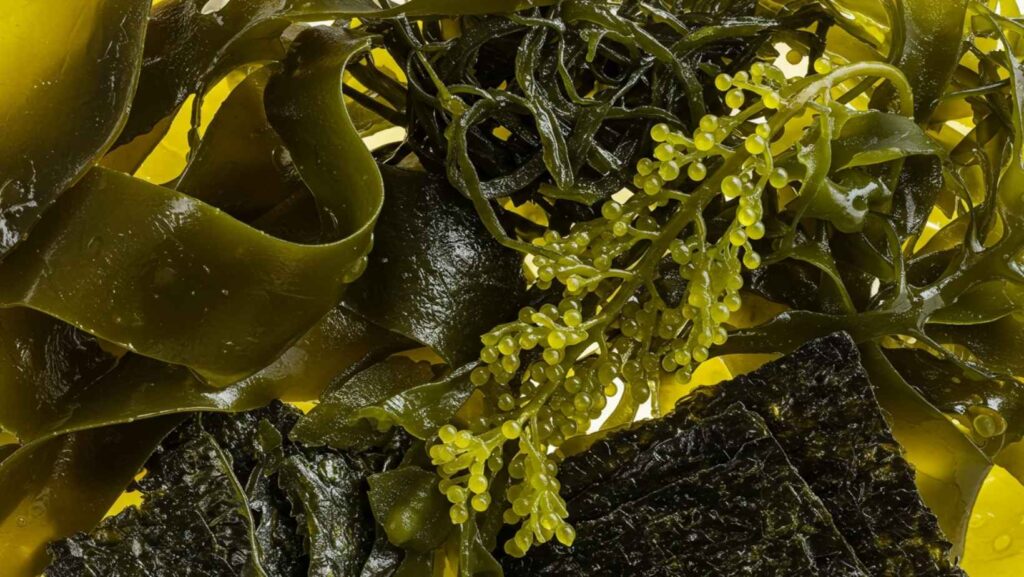
Would you like to know the health benefits of sea vegetables?
Plant proteins, which include the eight necessary amino acids, are abundant in algae.
Proteins are vital to our bodies, and we must obtain them from our diets because our bodies cannot naturally produce them.
They are an excellent source of trace minerals, iron, magnesium, calcium, and potassium, as well as vitamins.
In addition to being rich in vital nutrients and minerals, sea vegetables have a high content of antioxidant molecules that help eliminate harmful pollutants and heavy metals from the body.
Consuming seaweed has been linked to a lower risk of heart disease, according to preliminary research.
According to some research, polyphenols—compounds included in seaweed—may be able to reduce blood pressure, total cholesterol, LDL, or “bad” cholesterol, and blood pressure.
To enjoy their flavor and nutrients, you don’t need to eat a lot of them.
A third of adult Japanese people eat seaweed virtually daily. Yet, even in that country, the typical daily intake is only 4–7 grams, usually consumed in 2-3 tiny doses spread throughout the day.
What advantages do sea veggies offer
As the name implies, sea greens are kinds of plants or algae that grow in or near water, according to the Smithsonian.
These nutrient-dense sea vegetables, according to the University of California, San Diego (UCSD), are comparable to terrestrial vegetables in that they require nutrition, water, and sunshine to flourish.
According to the UCSD, you are not even required to obtain a permit to collect the sea vegetables yourself for cooking. It is advisable to verify this with the local wildlife authorities first.
There is a lot of variation in the edible seaweed family.
There are a few choices, each with a distinct nutritional makeup and purpose.
The red algae, or nori, which is typically used as a garnish or a sushi wrapper, is arguably the most well-known.
However, as seaweed becomes more and more popular, stores are beginning to stock seaweed snacks, oils, jerky, and spices.
Eating sea vegetables is one of the healthiest natural ways to support thyroid function.
Sea veggies are a great source of trace minerals, which are important for thyroid health.
Sea vegetables are the best dietary sources of iodine and selenium, two minerals that are critical for thyroid function.
Sea vegetables may also include high concentrations of zinc, magnesium, iron, B vitamins, and other minerals needed for the production and activation of thyroid hormones.
What kind of nourishment do sea plants offer?
It is the most potent dietary iodine source that promotes thyroid gland health.
Various vitamins, minerals, zinc, iron, and B vitamins are included, along with antioxidants that help prevent cell damage.
However, ingesting excessive amounts of iodine from seaweed might affect thyroid function.
There are plenty of nutrients in every kind of sea vegetable. Many of these are considered essential nutrients, and some are extremely healthy.
The specific species can impact the exact nutritional balance, the seaweed harvesting site, and the time of harvest.
Excellent news for vegetarians: plant protein can contribute up to 47% of a species’ dry weight in certain situations.
There are further categories for seaweed, including green, red, and brown. Seaweed is not the only type of vegetable; single-cell algae like spirulina and chlorella are examples.
Sea vegetables are among the most alkalizing foods on the planet.
In addition to vitamins, they are a great source of iron, magnesium, calcium, potassium, and trace minerals.
Sea veggies are a fantastic source of antioxidant compounds, which help protect the body from free radical damage and remove dangerous elements like heavy metals, in addition to being high in essential nutrients and minerals.
Sea vegetables include a wide variety of antioxidants. However, the most commonly found forms are vitamins A, C, and E.
Antioxidant-rich sea vegetables also help to maintain cardiovascular health, lower inflammation, and regulate blood sugar.
What qualities do sea veggies possess in abundance
Try incorporating a strip of dried sea kelp, or kombu, into a pot of beans to experience firsthand how marine vegetables may enhance the umami flavor of cuisine.
The kombu brings out the natural flavor of the beans.
Kombu contains enzymes that aid in the breakdown of some of the carbs in beans, so they are creamy and soft without being mushy.
Since the same enzymes that break down gas-producing raffinose carbs also break down beans, they are easier to digest and less prone to cause digestive symptoms like gas.
They offer a great source of vitamins and minerals.
In case you missed it, sea veggies are incredibly rich in vitamins and minerals.
Besides the antioxidants mentioned above, you’ll also find iron, copper, manganese, folate, zinc, salt, calcium, and magnesium.
You should try sea vegetables; they’re a tasty and nutrient-dense addition to your diet.
An edible seaweed is called a “sea vegetable.”
In addition to dried sheets or flakes, this commodity is typically found in grocery stores as an ingredient in a variety of products.
What attributes are abundant in sea vegetables
It is rich in alginates, iodine, sugar, bromine, proteins, calcium, and vitamin B12.
Because of the glutamic acid it contains, it naturally enhances flavor, which is why it is used in broths.
Garden veggies are a fantastic source of vitamins (including C, numerous B vitamins, and beta-carotene, which is a precursor to vitamin A), minerals (such as calcium, but also potassium, magnesium, iron, and several B vitamins), and other nutrients that the body needs to function.
Recent research indicates that sea vegetables are a good plant-based source of essential omega-3 and omega-6 fatty acids.
Since sea vegetables are produced from the sea, they are naturally high in salt.
(Among sea vegetables, wakame has one of the highest salt contents, whereas nori has the lowest.)
Seaweed is a fantastic source of numerous vitamins and minerals. It contains some vitamins, such as A, C, E, and K.
Seaweed also contains minerals such as iron, calcium, magnesium, potassium, and iodine.
Iron and other elements are abundant in seaweeds; in fact, some of them contain more iron than terrestrial plants (Rupérez, 2002; MacArtain et al., 2007).
The truth is that the bacterium known as cyanobacteria, which is thought to be the main source of vitamin B-12 in open seas, produces a “pseudo” form of the vitamin that is only found in its relatives.
The finding has implications for where algae and other organisms can get a vitamin needed to support marine life.
-In addition to spinach, other foods high in nutrients include peas, parsley, lentils, dandelion, purslane, and red and white beans.
Which sea vegetables are high in calcium
Green leafy vegetables are among the best accessible sources of calcium.
Thus, turnip greens, kale, spinach, and collard greens are all strong in calcium, containing 100–200 mg per 100g.
Hijiki is a high-fiber seaweed that has 20% protein, calcium, vitamin A, and carotenes, among other minerals. Hijiki contains more calcium than any other sea green, with 1400 milligrams per 100 grams of dry weight.
Surprisingly, boiled kale has 177 mg more calcium per cup of calories than milk.
This versatile leafy green also fights cancer, heart disease, and inflammation.
Collard greens, when cooked, contain the highest amount of calcium (268 mg/cup).
At 1,400 mg per 100 grams (3.5 ounces), hijiki seaweed—which is not one of the four most common kinds—has the greatest calcium concentration.
Compared to 113 milligrams per 100 grams of whole milk. The recommended daily allowance (RDA) for an adult is 1,000 mg.
Seaweeds are rich in calcium, iron, vitamin C, iodine, and trace elements like zinc, magnesium, and selenium, though their nutritional composition varies slightly.
Recent research indicates that sea vegetables are a good plant-based source of essential omega-3 and omega-6 fatty acids.
You may rehydrate them or eat them dry (think about using them as a wrapper or tossing them over grain bowls and salads).
To rehydrate, submerge in water for five to ten minutes or until tender.
Then, add the soft seaweed to salads or stir-fries.
Conclusion
It has been demonstrated that seaweed, specifically Fucus vesiculosus, or bladderwrack, lowers oestrogenic hormones and increases progesterone levels, improving the balance of reproductive hormones (Skibola, 2004; Teas et al., 2009).
Vitamins K, B, A, and E found in seaweed aid in improving the elasticity, texture, and tone of the skin.
Rich in Vitamin C, these organic antioxidants encourage the formation of collagen, which plumps and smoothes fine wrinkles on the skin.
Seaweed has been shown to maintain your skin in addition to being high in collagen, which reduces the look of wrinkles and the volume of your face overall.
The majority of seaweed has high iodine content, and eating a lot of it over time may result in overconsumption.
While many individuals can tolerate high iodine levels, some are more susceptible to its side effects, which include hyperthyroidism.
You can withstand a lot of iodine if you’re confident.
Then, you can eat the kombu by chopping it into tiny pieces.
We advise soaking and rinsing seaweeds before using them and consuming them up to two or three times per week.
When using TerraSana nori, this is not required.
It is the most effective dietary source of iodine that supports the health of your thyroid gland.
In addition to antioxidants that aid in preventing cell damage, it also includes various vitamins, minerals, zinc, iron, and B vitamins.
On the other hand, consuming too much iodine from seaweed may impair thyroid function.