
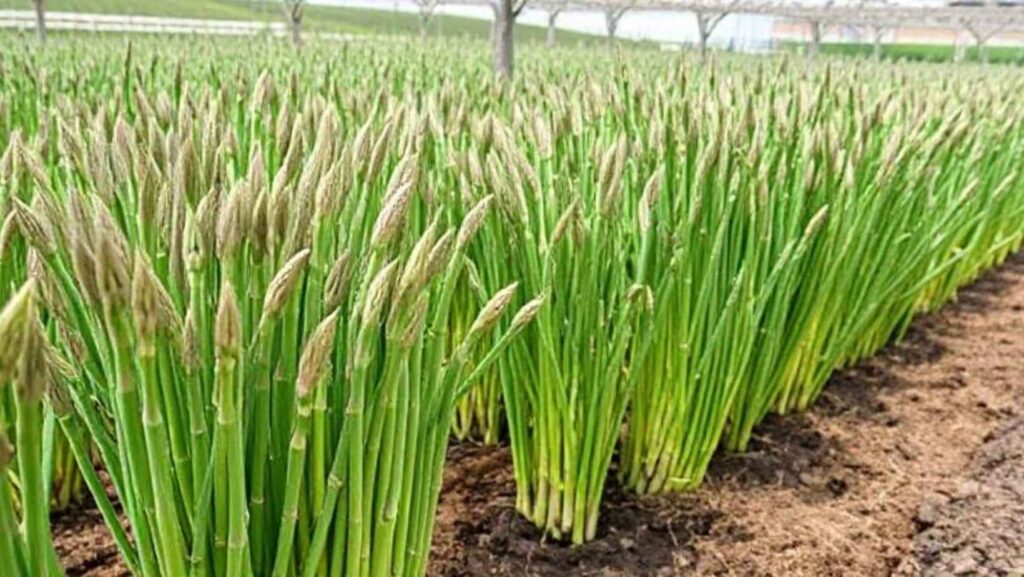
Would you be interested in learning about the ancient cultures’ use of asparagus? To the best of my knowledge, ancient civilizations like Egypt, Greece, and Rome were the first to produce and consume asparagus. In ancient Greece, it was believed to have sensual and healing properties.
The Romans recognized its culinary worth and used it with fish or as an appetizer.
The Romans reintroduced Asparagus to Europe after its popularity declined during the Middle Ages, and by the 16th century, the European aristocracy, especially the French, had developed a fondness for it.
Due to its unique flavor, Asparagus has been utilized as a vegetable and in medicine because of its diuretic and alleged aphrodisiac qualities.
An Egyptian frieze from 3000 BC depicts it as an offering. It was also well-known in ancient Syria and the Iberian Peninsula.
However, that is not all; as you continue reading, I will provide further information on the topic.
Now, let’s get started.
What is the history of Asparagus
The herbaceous, perennial plant known as Asparagus originates from Asia, likely Mesopotamia.
Its name derives from the Persian word “superego,” meaning “spear,” and the Greek phrase “asparagus,” meaning “full of lymph.”
It may have spread from Mesopotamia to temperate areas.
Some Egyptian discoveries show that Asparagus was known in ancient Egypt and spread throughout the Mediterranean and Asia Minor 2000 years ago.
Theophrastus wrote the “History of Plants” around 300 B.C., and Cato, a century later, wrote about Asparagus from an agronomic perspective, as it had long been used for its medicinal and therapeutic properties.
However, Asparagus cooked rapidly.
In his “Naturalis Historia” in 79 B.C., Pliny detailed the methods of asparagus growth, processing, and production, as did Apicius.
The Romans were already familiar with Asparagus as early as 200 B.C. Special ships named “asparagus” were created to harvest Asparagus for the Roman emperors, who loved it so much.
Martial recommends Asparagus from Ravenna’s shore, sent to Rome to please the higher classes, in poems.
Italy deemed Asparagus native because of its long history. As the Romans conquered new regions, they increased asparagus planting, as it was one of their favorite foods.
In the Middle Ages, Asparagus was collected for its medicinal properties, including diuretic effects.
The Schola Medica Salernitana stated that Asparagus increases sperm, sparking debate on its sexual properties.
Asparagus in history and medicine
All of Germany goes crazy for Asparagus in the spring. All restaurants serve Asparagus with steak, ham, or schnitzel. Its tasty stalks are white in shade and green from chlorophyll in daylight.
While Asparagus is eaten beyond Germany, it may not be as popular. Cans that were unaffordable decades ago are now available year-round.
Onions and garlic are distant cousins of Asparagus. Greek to Latin, or Persian to Greek, corrupted to sperage or sparrow grass.
It was grown in Egypt, the eastern Mediterranean, and Africa for at least 2,000 years. Ancient Greeks revered this aphrodisiac herb.
Hippocrates used it for diarrhea and urinary issues; asparagine may have diuretic properties.
Caesar’s armies introduced Middle Eastern Asparagus to Rome. Romans often ate it as an entrée or paired it with fish.
Arabs kept eating it. It was lost in Europe throughout the Middle Ages but was later rediscovered and used in royal courts.
It was grown for Louis XIV, who loved it, in 17th-century France. By the 18th century, it had become a widespread food. It is often eaten in soups, salads, and meat and fish dishes and is abundantly produced in China.
Asparagus is nutritious. It has vitamins, folate, fiber, and minimal fat. Non-fattening. Half a cup has 20 calories and 2.2 grams of protein.
It also includes flavonoids, glutathione, polyphenols, quercetin, isorhamnetin, kaempferol, and anthocyanins, whose functions are not yet understood.
The Linnean taxonomy classified Asparagus in the lily family, alongside leeks, onions, and garlic; however, it has since been reclassified into the Asparagaceae family, specifically the Asparagoideae subfamily, and the 300-species Asparagus genus.
Most of the globe consumes Asparagus officinalis. Not to be confused with Ayurvedic Asparagus racemosus.
Asparagus is an ancient vegetable.
The ancient Greeks believed that Asparagus could stop bee stings and treat toothaches. The nutrient-dense vegetable has a lot to give, but that is a stretch.
Two grams of fiber, vitamin C, vitamin A, folate, and just 20 calories are found in only six cooked asparagus spears.
Because it hardly ever has pesticide residues, Asparagus is considered to be one of the most “consistently clean” fruits and vegetables.
Although the season for asparagus peaks in April and May, it may be seen in stores as early as February.
Select tender yet firm stalks. Select closed, compact stems with rich green or purple tips for the green variety.
Steeps that are too sandy should be avoided. Narrow-diameter stalks are softer than thick ones.
Typically, Asparagus is packaged with just a rubber band, eliminating the need for plastic, cardboard, Styrofoam, and other materials.
Keep stalks in the crisper portion of the refrigerator, with the bottoms covered in a moist paper towel. Place them in plastic bags and store them in the coldest section of the fridge if you don’t have a crisper.
As Asparagus loses flavor with each passing day, it is best consumed on the day it is purchased.
Another advantage of Asparagus is that it has a unique flavor, so it seldom needs to be seasoned.
It may be roasted till it is brilliant green after simply brushing it with olive oil and then spritzed with freshly squeezed lemon.
Alternately, sauté it with fresh garlic and ginger chopped in olive oil. You may also use raw Asparagus in hummus or yogurt-dill dip or steam it.
History and Benefits of Asparagus
With a history spanning over 2,000 years, Asparagus was a highly valued vegetable in ancient societies, renowned for both its distinct flavor and health benefits.
In addition to its diuretic effects, it is said to have therapeutic and even aphrodisiac qualities.
History: There is evidence that the ancient Greeks, Romans, and Egyptians cultivated Asparagus, indicating that it has been cultivated for over 2,000 years.
Hippocrates used it to treat urinary tract issues and diarrhea, and it was revered as a herb in ancient Greece.
Asparagus was a highly valued item in ancient Rome, and Emperor Augustus coined the expression “faster than cooking asparagus” to convey the importance of getting things done quickly.
In the past, Asparagus was also well-known in Syria and the Iberian Peninsula.
Asparagus was cultivated in French monasteries by the middle of the 15th century, and in the 16th century, it gained increasing popularity in Germany and England.
The National Institutes of Health (NIH) states that it was introduced to North America in the mid-19th century.
Benefits
Diuretic Properties: Asparagus can assist the body get rid of extra fluid and salt by acting as a natural diuretic. This makes it advantageous for ailments like edema and high blood pressure.
Kidney Health: It helps avoid kidney stones and remove toxins from the kidneys.
Rich in Nutrients: Vitamins C, E, and K, fiber, and folate—which is necessary for DNA synthesis and cell growth—are all found in Asparagus.
Antioxidant Properties: Asparagus contains antioxidants that may help lower the risk of chronic illnesses and protect the body’s cells from damage.
Weight management: It can aid in weight reduction or maintenance due to its high fiber and low-calorie content.
Brain Function: Asparagus’s folate may help enhance cognitive performance.
What are the Varieties of Asparagus
There are several types of Asparagus, and each has unique qualities and flavors. Among the most popular types are:
The most popular type of Asparagus is called “green asparagus,” distinguished by its strong flavor and vivid green hue.
Green asparagus is a versatile culinary choice that is high in chlorophyll, which gives it its color and nutritional benefits.
To develop white Asparagus, the spears are covered with dirt or other materials that block sunlight and inhibit photosynthesis.
The Asparagus’s softer, somewhat nutty flavor and pale color are the results of this treatment. White Asparagus is particularly well-liked in European nations like France and Germany.
Purple Asparagus: Due to its greater sugar content, this species is valued for its vibrant purple color and sweeter flavor.
Purple Asparagus is frequently used to enhance the visual appeal of recipes and may be consumed either raw or cooked.
Wild Asparagus: Compared to farmed types, wild Asparagus has a stronger flavor and thinner stalks. It is frequently seen growing in the wild. Gourmet chefs and foragers are particularly fond of it.
Final thought
Now that we have established the history of Asparagus in ancient cultures, Fresh Asparagus straight from the garden is a springtime staple.
Reflect on the history of this nutrient-dense vegetable as you steam, roast, or sauté the spears.
For millennia, people have been consuming and relishing this vegetable. A picture of Asparagus was discovered by scientists in a 3000 BC Egyptian tomb.
It was a highly valued vegetable in ancient Rome and the Middle Ages. It was once thought to have aphrodisiac qualities, enhance vision, and reduce toothache pain.
Nature’s detoxifier is Asparagus. Additionally, it protects osteoarthritis, lowers pain and inflammation, combats aging, and aids in the battle against cancer.
Consider placing some along the rear of a flower bed, a mixed border, or along the edge of your vegetable garden. Once planted, this perennial veggie will yield tasty harvests for decades.