
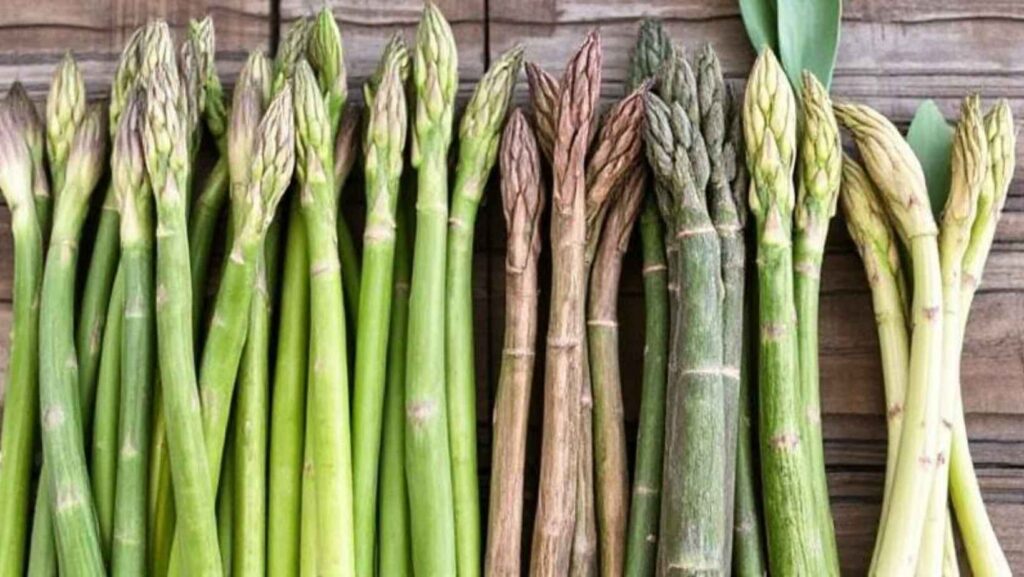
Would you want to know The most common asparagus varieties in the U.S.? My observations have shown that the green varieties of Asparagus are the most widely available in the United States, with the Mary Washington type being the most popular among the green options.
Other popular kinds include Purple Passion and Jersey Giant, as well as more recent all-male hybrids such as Jersey Knight and Jersey Supreme.
However, that is not all; as you continue reading, I will provide you with further information on the topic matter.
Now, let’s get started.
What are The most common asparagus varieties in the U.S.
The most common type of Asparagus grown in the United States is green Asparagus, with the “Mary Washington” variety being especially well-liked by farm owners.
The Jersey Giant and the Jersey Knight are two types of green Asparagus that are quite popular.
Other varieties of Asparagus that may be purchased include white Asparagus and purple Asparagus, which is referred to as Purple Passion.
Take a look at the most typical examples:
Veggie Asparagus; Green
This kind is the one that is cultivated and consumed the most globally. This substance is easily identifiable because of its green tint, which is a result of chlorophyll.
Among the green kinds that are most commonly used are Mary Washington, Jersey Giant, and Jersey Knight.
One popular purple asparagus cultivar is Purple Passion. Another named variety is Purple Asparagus.
Purple Asparagus is renowned for its spears, which are both sweet and delicate.
The United States of America also has access to white Asparagus, although it is not as widely available as it is in Europe.
Blanching the stalks before growing white Asparagus prevents them from turning green due to a lack of exposure to sunlight. This allows for the cultivation of white Asparagus.
What is the most common type of Asparagus
The color of the asparagus crowns is usually used to distinguish between different types of Asparagus. Explore these popular types of Asparagus.
1. Precoce D’Argenteuil: This pale green heritage variety, featuring rose-pink tips, is well-liked in Europe. The actual plant has a maximum height of three feet.
When cooked, this Asparagus becomes soft and has a sweet flavor.
2. “Purple Passion”: One well-liked type of purple Asparagus is Purple Passion.
They are frequently recognized by their purple spears and bracts, which resemble leaves; however, they turn a lighter green when cooked.
They have a distinct nutty flavor and are excellent for freezing. They are wonderful for salads since they are among the most delicate types of Asparagus.
3. “Jersey Giant”: In the Jersey Series of Asparagus, “Jersey Giant” is a hybrid cultivar.
The “Jersey Knight” and “Jersey Supreme” cultivars, which were developed to be meaty and disease-resistant, are among the others in the line. They are very resistant to the fungus fusarium.
As the name implies, the edible portion of the “Jersey Giant” hybrid asparagus plant may reach a length of nine inches and thrives in most climates.
4. “Mary Washington”: The most widely grown green Asparagus in North America, “Mary Washington” is a member of the Washington Series of Asparagus, along with the cultivar “Martha Washington.”
When planted in full or partial light, they produce long, consistently thick green spears.
5. “Apollo”: These big, sharp, early-blooming flowers have a dark green color with purple hints. They are resistant to diseases like asparagus rust and thrive in both warm and chilly areas.
Similar to “Purple Passion,” “Apollo” asparagus often has sturdier spears that freeze well.
6. “Atlas”: This kind of Asparagus thrives in hot regions and is disease-resistant. Atlas asparagus is a robust and frost-tolerant crop that yields high yields.
What are The best asparagus varieties for growing at home
If you cultivate a variety of early, mid-, and late-season asparagus types, you may be collecting Asparagus from April to June.
You can cultivate the following types of green, purple, and white Asparagus at home:
Types of green Asparagus:
Green types are grown above ground, have a grassy, almost bitter flavor, are rich in vitamins and minerals, and are well-adapted to the UK climate.
Commercial producers prefer the German-bred Ariane, which features thin, green spears with tight, purple ends, early to mid-season yields, and excellent flavor.
“Connover’s Colossal” is a dependable heritage cultivar that has won the RHS Award of Garden Merit for its huge yields, thick green spears, early to mid-season harvest, and superb flavor.
The Dutch hybrid known as “Gijnlim F1” won the RHS Award of Garden Merit because of its exceptional quality, early to mid-season yield, and medium to thick green spears.
“Guelph Eclipse”: a male-dominant hybrid produced in Canada that produces thick, green spears with purple ends and remarkable yields in the early to mid-season.
Varieties of purple Asparagus: The plant component anthocyanin gives purple Asparagus its vivid color, which ranges from almost crimson to deep purple.
Compared to green Asparagus, purple Asparagus is less fibrous and has a sweeter flavor due to its higher sugar concentration.
“Burgundine” is a male-dominant hybrid cultivar that is available early in the season, characterized by soft, vibrant purple spears and a well-tasting flavor. Because it contains less lignin, it may be eaten raw.
Harvested between April and June, “Pacific Purple” has thick purple spears that are soft and have a sweet, nutty flavor. Cooking might cause the color to fade.
“Stewart’s Purple” is a recently developed type with medium-sized, dark purple spears that are harvested from May to June and have a highly sweet flavor.
White asparagus variations: It isn’t easy to obtain white asparagus varieties for cultivation, and white Asparagus isn’t nearly as popular in our country as it is in Europe.
Nonetheless, the following two types can be produced as white Asparagus below the ground or as green Asparagus above it:
The “Gijnlim F1” cultivar is appropriate for growing both white and green Asparagus. Hardy, medium to thick stems, big yields, early season, male-only hybrid.
“Vittorio F1” is a male-dominant F1 hybrid that was created for white Asparagus. It has medium-sized spears, heavy cropping, and strong disease resistance.
Despite being produced commercially all over the world, Asparagus can be grown at home and provide tasty spears right out of the garden.
How many types of Asparagus are there in the world
Flowering plants belonging to the genus Asparagus are classified as members of the family Asparagaceae, specifically within the subfamily Asparagoideae.
A total of up to 300 species are included. Growing from the understory as lianas, shrubs, or climbing plants, the majority of these plants are evergreen perennials that typically have a lengthy lifespan.
The edible species of Asparagus officinalis, more generally known simply as Asparagus, is the most well-known of the species to be found.
Several additional species belonging to the same genus, such as Asparagus densiflorus, are cultivated for their attractive qualities.
Before we get into the specific subtypes, however, let’s take a moment to discuss the vegetable as its whole.
Although some species are purely decorative, there are over 300 different species of Asparagus.
Every year, the plant can come back, and a healthy asparagus plot can survive for ten years or even longer.
Which jersey asparagus is best
Crowns of Jersey Knight Asparagus are simple to cultivate and provide a large quantity of Asparagus.
In comparison to other Jersey kinds, the spears produced by Jersey Knight Asparagus Crowns are of the greatest quality.
These crowns generate significant quantities of tasty and soft stalks. Due to its strong resistance to fusarium wilt, crown rot, and rust, Jersey Knight is a hardy plant that can thrive in Zones 4-8.
If you can establish this tried-and-true, high-yielding cultivar, you will be able to enjoy a wonderful harvest for many years to come.
We have been cultivating our crowns for more than two years, and it is anticipated that they will be ready for a small harvest the following spring.
- Second-Year Crowns
- sold in groups of 10, 25, 50, and 100 units
- High yields while being simple to cultivate!
- Enjoy delicate spears for many years to come from this perennial plant!
- Rot, Fusarium, and Rust on the Crown are resistant to wilting
- Natural, non-GMO, and non-treated, this plant thrives in zones 4-8 and is grown naturally.
- Sun in its fullness
The Asparagus will be delivered in crowns that are bare-root, dormant, and newly dug. It is essential to plant as soon as possible for the greatest benefits.
Remove all the covering and carefully release the crowns if you can’t plant the seeds right away.
Until you are ready to plant, wrap the seeds loosely in newspaper and store them in a cool, shaded spot that is protected from direct sunlight and wind.
Final thought
Now that we have established the most common asparagus varieties in the U.S. Be wary of stalks that have a limp or wilted appearance.
The tips of the Asparagus must be tight and compact, without any spreading or softness.
To get the desired hue, Asparagus should have a deep green tint that gradually transitions into a white color at the bottom of the stalk.
Those that are drab in color should be avoided since this suggests that the Asparagus has lost its freshness.