
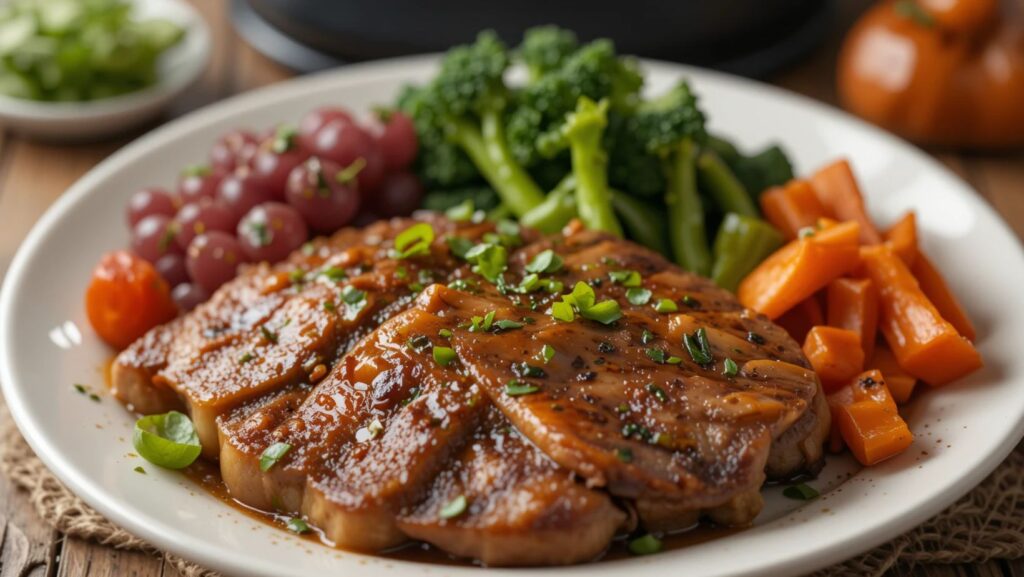
Would you want to know How to replace meat with vegetables in meals? In light of my experience, Protein-rich plants such as beans, lentils, tofu, tempeh, seitan, and mushrooms may be used in a variety of recipes, from salads and stir-fries to stews and burgers, to replace meat.
Some plants, including eggplant and mushrooms, have a texture similar to that of meat.
You won’t even miss the steak if you dress it up with flavorful sauces and grill or bake the vegetables like meat.
Use beans or chickpeas in lieu of meat and fish for cold dishes like salads, sandwiches, and chilled soups.
But that’s not all; as you continue reading, I’ll provide additional information on the topic.
Now, let’s get started
How do you replace meat with vegetables
Vegetables are the primary option for replacing meat in most recipes.
It is possible to create delicious main courses by stuffing peppers, squash, or even baked potatoes with a special topping.
The portobello mushrooms are delicious when used in a sandwich or burger. There is also the possibility of preparing a veggie burger by using veggies, legumes, and complete grains.
Vegetables available in bite-sized pieces might be an excellent alternative to meat when it comes to pasta.
When it comes to soups and stews, chunky veggies like potatoes and carrots are fantastic additions.
What vegetables can take the place of meat
1. Seitan or Tofu Tempeh
They may be used in place of white meat in any dish as they are made from soybeans or, in the case of seitan, wheat gluten.
2. Mushrooms
Unami mushrooms are the finest if you want to preserve the meaty flavor.
3. The jackfruit
It is ideal for stir-fries, sandwiches, barbecues, and any other recipe that calls for beef, chicken, or pork because of its somewhat sweet flavor.
4. Eggplant
Eggplant is quite versatile and has a deep, meaty flavor. Ideal for frying, meatballs with noodles, or burger patties.
5. Lentils
Lentils are cheap, fast to prepare, and available in a range of colors. What an ingredient, hero! In your recipes, they might take the place of ground beef.
6. Peas with Beans
They are incredible; there are so many variations. They are affordable and nutritious, and they work well in curries, salads, stews, and hearty soups. They can be used to create amazing sausages and burgers.
7. The cauliflower
In Asian cuisine, cauliflower may be used in lieu of chicken. It can also be cut and cooked like a steak.
8. Potatoes
Whether they are roasted, boiled, baked, mashed, or fried, potatoes may be the primary component in a variety of recipes.
9. Beets
Beets may be roasted or added to salads since they are sweet and tasty.
10. Nuts: You may use them to make vegan burgers and to replace meat in your cuisine, even if they aren’t considered “vegetables.”
Which vegetable is equal to meat
A satisfying and healthful method to give a plant-based meal texture and taste is to use mushrooms in place of meat.
Furthermore, mushrooms may be easily included in almost any dish due to their adaptable texture.
You’ll want to incorporate this vegetable into your meals on a regular basis, whether it’s in soup or enchiladas.
This Meatless Mondays Bulgur and Black Bean Mushroom Enchilada Casserole is the perfect mushroom-based meatless Monday meal.
This dish substitutes bulgur and mushrooms for ground beef, giving it a chewy texture that can easily be substituted for traditional meat—the only real difference is the flavor!
This dinner is inherently plant-based, but with a few easy substitutions, it can be made dairy-free or gluten-free, making it perfect for anyone with dietary allergies.
Use a non-dairy cheese substitute to make this enchilada casserole dairy-free while still producing a tasty dish.
Alternatively, replace bulgur with gluten-free steel-cut oats if you must make this recipe gluten-free. It will taste just as good, even if the texture may be a little different.
What is the best vegetarian substitute for meat
Tofu, tempeh, seitan, and plant-based burgers made with soy, peas, or mushrooms are a few common meat alternatives for vegetarians and vegans.
When included in a balanced diet, these substitutes may be nutrient-dense and provide a variety of flavors and textures.
A closer look at a few well-liked vegetarian meat substitutes:
Tofu
Tofu, which is made from soybeans, is a flexible and high-protein choice that may be baked, scrambled, or stir-fried.
Tempeh: A firmer texture and nutty flavor than tofu, tempeh is made from fermented soybeans.
Seitan: Made from wheat gluten, seitan can be seasoned to taste like a variety of meats and has a chewy texture.
Beans and lentils are great sources of fiber and protein. They may be used as a foundation for vegetarian recipes or added to soups and stews.
Chickpeas: Another adaptable legume, chickpeas may be used in hummus, salads, and a variety of other recipes in place of meat.
Jackfruit: The unripe meat of jackfruit may be cooked in a manner similar to pulled pork by shredding it.
Textured Vegetable Protein (TVP): TVP is a meat substitute composed of fat-free soy flour.
Which vegetables are high in protein
1. Edamame
18.4 grams of total protein Per cup, (g) (made from frozen)
It’s time to start eating edamame at home if you typically only get it at your neighborhood sushi joint.
It’s full of vitamins, minerals, and good plant protein.
Try these recipes: Spicy Edamame
Edamame with Crispy Parmesan Garlic
2. Lentils
17.9 g of total protein One cup of boiling trusted source per cup
Although they seem like little beans, lentils are actually a kind of pulse that belongs to the legume family.
But for a cheap, easily accessible, vegetarian-friendly protein, you won’t find a better choice.
Bonus: It only takes 15 minutes to boil dry lentils!
Recipes to try:
Red Taco Soup with Lentils
Four Corners Soup with Lentils
3. Pinto beans
15.4 g of total protein (boiled from dry) per cup
In Mexican cookery, pinto beans are frequently used. They are great as a side dish, in soups and chilis, as a salad topper, or in burritos.
For even more health advantages, try boiling dry pinto beans rather than using canned ones.
Try these recipes: Pinto Beans in a Slow Cooker
Chili with Pinto Beans
4. Chickpeas
21.3 g of total protein (dry) per 100 g serving (Trusted Source)
Garbanzo beans, another name for chickpeas, are a key component in hummus. They complement many different recipes with their delicate, nutty taste.
Savor roasted chickpeas as a snack or as a main ingredient in soups, curries, or veggie bowls.
Recipes to try:
Roasted chickpeas that are crispy
Curry with Coconut Chickpeas
What vegetable has the same protein as meat
Black beans:
One cup of black beans has 15 grams of protein, which is about equivalent to two chicken drumsticks.
A fantastic source of protein, black beans may be mashed for refried beans, added to soups and stews or used in vegetarian patties.
Then there is the recipe for “black bean brownies,” which is quite tasty and contains black beans, a secret high-protein ingredient.
Soybeans:
A single one-cup portion of organic soybeans, which are solely used to prevent harmful GMOs, has 18 grams of protein, which is comparable to a hamburger patty.
Contrary to what you may have heard, soy does not cause hormonal imbalances or even cancer.
Unfortunately, although being false, it has been spread so widely that many people believe it to be “fact.” However, the research disproves such worries.
Almonds:
A portion of ¼ cup of almonds + almond butter has 12 grams of protein. The protein content of one tablespoon of almond butter is the same as that of a glass of milk.
Two tablespoons of peanut butter, if you want, provide eight grams of protein.
Final thought
Now that we have established, Would you want to know How to replace meat with vegetables in meals, Vegetables include phytochemicals, fiber, carbs, and many vitamins, including C and A.
While different vegetables have varying amounts of amino acids, no one vegetable typically has similarly high quantities of all the amino acids that humans require.
The majority of veggies are either low in fat or include fats that aren’t saturated.
Meat is high in protein and contains all of the amino acids, but it is low in fiber and carbohydrates and high in saturated fat and cholesterol.
Vitamins, particularly B vitamins, are also present in meat.
Some of the vitamins that we often receive from plants can be found in meat, but you would have to consume things like brains and offal.