
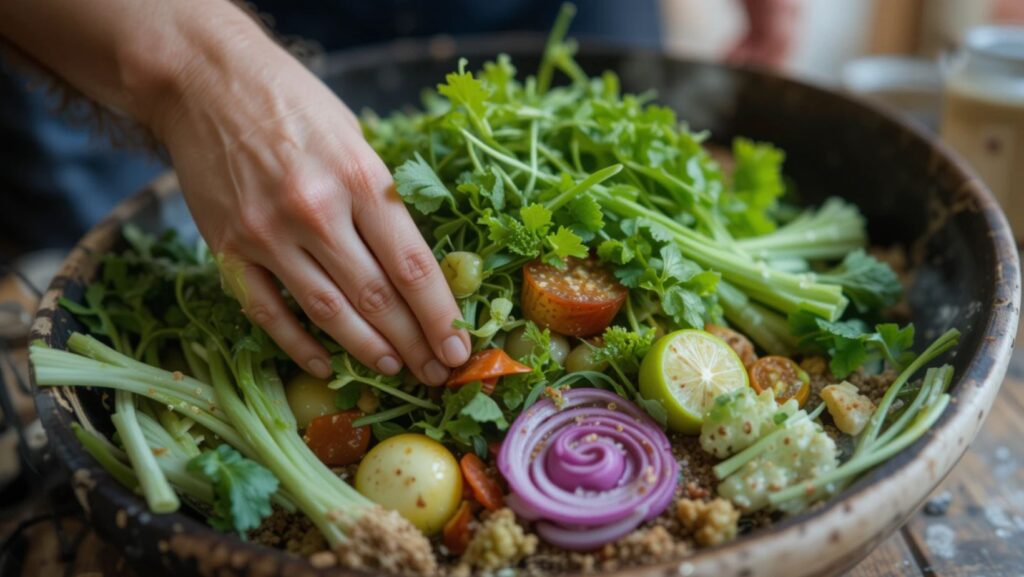
Would you want to know How to reduce vegetable waste? In light of my experience, Meal planning, list-making, adequate food storage, taking into account “ugly” vegetables, composting, and repurposing leftovers are all ways to cut down on vegetable waste.
Finding methods to make the most of our food is crucial. Even though the pieces of many fruits and vegetables are perfectly edible and healthy, we typically throw them away.
But that’s not all—read on to learn about these complete, zero-waste fruits and veggies and how to maximize their use to improve our nutrition and cut down on trash.
Now, let’s get started
What are some ways to prevent wasting vegetables
Additionally, “ugly” veggies can be used in a variety of ways to cut down on food waste.
Regarding the less appealing veggies
Return their vitality to them.
To revitalize lettuce, carrots, and celery, submerge them in very cold water for a few minutes.
Include them in a prepared dish.
Soup, pizza, chili, omelets, stir-fries, etc. The less appealing veggies disappear after being peeled, chopped, and combined.
Cost-effective advice!
Peels and leftovers of vegetables should be kept in a freezer bag. After that, you may make broth for your other dishes.
For veggies that are really less aesthetically pleasing and tasty
Put them in sweet breads or muffins.
You may add pureed or grated sweet potatoes, zucchini, carrots, or squash to your snacks or sweets. Once they’re in the mix, you won’t be able to tell if they’re fresh or a little old.
Turn them into soups, smoothies, or purees.
It is possible to include older veggies in meals and combine them with other fruits or vegetables. Some veggies that aren’t as popular when eaten by themselves can also be used up in this way.
Although this tactic could encourage your child to consume this food, it won’t help them grow to like it, so proceed with caution.
Even the leaves of certain vegetables that aren’t often consumed, including celery, carrots, and beets, can be used in soups.
There is no longer any chance that your veggies will end up in the garbage after being stored in the refrigerator thanks to these various tactics!
How to reuse vegetable waste
Here are simple methods to reuse peels at home.
Recipe reuse:
Creatively cooking with vegetable and fruit peels is the easiest method to reuse them. These peels improve broths and stocks.
The delicious liquid makes a varied soup and sauce basis. Naturally, these peels may be tempura-fried till golden and crunchy. Kids will not know they’re eating veggies this way.
Grated or diced peels can be used for lasagna, spaghetti, and creamy salads. Add a few pantry ingredients to make jelly, jam, pickles (watermelon rind, please), and sweets.
They may be added to oils and salt and pepper. Peels help beverages, too. Mix skins into protein drinks and morning smoothies or create tea with water and aromatics.
Home maintenance reuse:
Housework may drain energy and money. All cleaning chemicals are harmful to humans and the environment.
The ideal answer? Peels—natural and healthy. Cleaning using fruit and vegetable peels helps maintain a home.
Make an all-purpose spray cleaner using vinegar, water, and citrus peels. Citrus peels repel bugs, while lemon skins scrub skinks, bathroom tiles, and stainless steel.
Cucumber peels repel ants, so use them to seal gaps. To polish plants and foliage, use banana peels. Why not sun-dry fruit peels for natural air freshener?
Add compost:
Composting peels make rich organic fertilizer. One may manufacture natural plant food from peels and other biodegradable garbage.
Many composting methods are doable at home. Vermiculture, which decomposes food waste with worms, is popular. It produces a nutrient-rich substance for plant development.
Citrus, melon, and carrot peels are great for worms.
Bokashi composting is also growing in popularity. Inoculated bran bacteria break and digest food waste. The odorless compost generates a liquid fertilizer.
Turn into feeds:
Maintaining household animals may be costly, especially for food. Many commercial feeds are expensive and neither natural nor beneficial for animals.
What about natural feeds produced from vegetable and fruit peels? Chickens will benefit. Even dogs and bunnies will appreciate cubed peels.
Make household products from recycling:
Innovative thinking may convert food waste into a new home product. It will also lower household costs and reduce waste. Consider the modest orange. Its skin works brilliantly indoors.
Serve ice cream in an orange peel dish after halving it. This makes a great candleholder. Orange peel is absorbent enough to use as a sponge in the kitchen.
So many options! Deeply colored fruit and vegetable peels may be used to dye goods and create art. The same peels and skins may be brushes and stamps.
In skincare, there is a growing desire for solutions that claim to solve all problems. However, production and packaging waste care has increased.
Peels saves the day. Fruit and vegetable peels provide natural skincare benefits.
How do you recycle vegetable waste
This entails combining food waste with garden trash, shredding it, and then composting it for two to four weeks at temperatures as high as 70°C in an enclosed system.
This guarantees that any dangerous microorganisms are eliminated and expedites the composting process.
Composting, which may be done at home or through neighborhood composting initiatives, is a way to recycle vegetable waste and create nutrient-rich soil for your garden or other plants.
A more thorough explanation of recycling vegetable waste may be found here:
1. What is composting?
The natural process of composting produces a nutrient-rich material from the breakdown of organic materials, such as vegetable scraps.
How to accomplish it:
At Home: You may use a kitchen composting machine or build a compost bin or heap in your garden.
Local Programs: You may drop off your leftovers in bins or participate in composting programs offered by many cities.
2. Alternatives (Outside of Composting):
Food Waste Dewatering: Solid residues and liquid extract are byproducts of dewatering food waste that can be used for other purposes.
Giving to Food Banks: If you have extra veggies, think about giving them to food banks or other nonprofits in your community.
Producing Animal Feed: Food scraps can occasionally be turned into animal feed.
Biogas Production: Biogas is a renewable energy source that may be made from food waste.
Incineration: Although not the best option, incineration can lower garbage levels and perhaps provide power.
How do you decompose vegetable waste faster
To accelerate composting, add worms, manure, grass clippings, and coffee grounds. Adding a compost accelerator speeds up the process even further.
Most compost accelerators contain bacteria or enzymes to accelerate decomposition.
To avoid that, get a container with a tight cover to hold food waste until you can take it out. Flat dwellers have greater food waste disposal options.
1. Composting– Composting is a great technique to get rid of food waste since it’s good for the environment and may produce soil that is rich in nutrients.
Numerous cities provide communal composting.
Alternatively, you may install a composting bin on your balcony or in a communal area if your building allows it. It’s cheap and can drastically cut household trash.
Indoor composting offers numerous advantages over outside.
One of the main advantages is that it flourishes year-round, unlike outdoor composting bins and heaps, which need protection from intense sunshine and heavy rainfall, and protection from cold weather.
A good compost has carbon-rich browns and nitrogen-rich greens. Carbon-rich browns include dried leaves, cotton and wool rags, cardboard, and paper.
Nitrogen-rich greens include fresh leaves, grass clippings, and vegetable and fruit waste.
2. Garbage disposal: You may get rid of some food waste [this way] if your apartment has a garbage disposal.
This procedure works for some food waste, but not all. Some can harm it. Read the disposal handbook and follow manufacturer instructions.
3. Green bins—Some towns gather food trash and other organic products in green bins.
4. Reusing food waste– Some food waste may be repurposed. Citrus peels, for instance, may be used to create DIY cleaning solutions.
Additionally, you may utilize coffee grounds as plant fertilizer and vegetable leftovers to make vegetable broth.
What is the best way to dispose of vegetable scraps
1. Save carrot peels, potato skins, zucchini tips, celery cores, and leafy tops to make stock or broth.
Freeze scraps as you go in a sealable container. You can mix them before freezing to save space.
Add white or apple cider vinegar to vegetable scraps after watering. This extracts more vegetable minerals. From there, put the scraps (frozen or not) in a pot and fill them with water.
Add aromatics like garlic or bay leaves to boost taste. Only boil the broth for 10 minutes. Store the broth in the fridge or freezer depending on when you want to use it.
2. Make smoothies using frozen vegetable stalks! Easy and tasty.
3. Turn them into vegetarian chips. Make tasty potato peel chips from leftovers. Another easy method to use vegetable scraps is to make chips.
You may bake, broil, or fry carrot and potato peels, broccoli leafy greens, and other wastes into crisp veggie chips. This method reduces food waste and provides a crunchy, healthful snack.
Fried vegetable chips may be produced in a deep-walled saucepan on the stove. Air fryers should work.
To bake vegetable leftovers into a tasty snack, slice them thinly, sprinkle them in a little oil (olive, walnut, or avocado) and spices, then spread them out on a baking dish in a single layer
. Bake the chips for 10 minutes on each side in a 400-degree oven after preparation.
4. Start a New Plant—If you have enough vegetable scraps, start new plants. Even avocados’ huge seeds can develop roots and renew the fruit.
Reuse vegetable seeds, pits, and cuttings to save money on seeds and seedlings and grow your vegetables. Grow new veggies.
5. Sauté remaining veggies if you like.
use leftovers in cooking, and try a sauté. Sauté kale stalks for a nutritious side dish. Other stalks like Swiss chard, fresh broccoli, and cauliflower can be used.
Add leftover veggies to a heated non-stick pan or skillet with olive or walnut oil to sauté. Cook the veggies on all sides and remove from heat to enjoy or use. Make a medley or serve them alone.
6. Make Soup-The saved green “trunks” of broccoli, kale, Swiss chard, or other leafy greens with a stem make a delightful soup or may be used to quiche or other meals that call for chopped greens for nutritional content and chunky, crunchy texture
Other vegetable remnants like carrots or finely chopped zucchini ends can be utilized in quiche, where the veggies won’t be as visible.
7. Mince and freeze herbs before they deteriorate in oil or water. Using an ice cube tray, you may make little quantities for sauces and soups.
8. Use the Tops-Carrots, radishes, beets, and celery have lush green tops, so don’t throw them away. Instead, they may be used with spinach, arugula, and endive.
Tossing the leaves into salads or other raw veggie dishes is the easiest way to use them. Sauté beet tops like spinach for a side dish.
How to reduce vegetable waste in school
Food waste audits, composting, sharing cultures, and waste reduction education can minimize vegetable waste in schools.
A more extensive strategy breakdown:
1. Food waste audits and analysis
Track vegetable waste kinds and quantities in the cafeteria and other locations through frequent audits.
Study the data:
Find the waste’s sources, such as over-portioning, improper storage, or unpopular goods.
2. Good School Cafeteria Practices:
Portion Control: Let kids request refills and provide lesser quantities.
Menu Planning: Use veggies efficiently to minimize overstocking and spoiling.
Food Storage: Properly store veggies to increase shelf life.
“Share Table” Program: Let children share unopened, safe-to-eat food.
3. Recycling, composting:
Set up composting:
Compost food leftovers to provide fertilizer for school gardens and other applications.
Recycle packaging: Sort and recycle all recyclable veggie packaging.
4. Educational Programs and Student Engagement: Educate students: Help pupils understand food waste reduction and how they can help.
Get kids involved in trash reduction: Promote trash reduction with a student group or club.
Encourage sharing: Tell pupils to share meals and only take what they can eat.
5. Waste-Free Lunch Tips: Encourage kids to bring their lunches to prevent cafeteria food waste.
Invite students to bring reusable lunch and snack containers.
Students should learn how to keep food correctly to avoid spoiling.
Final thought
Now that we have established How to reduce vegetable waste, Taking a zero-waste strategy, which means consuming all of your fruits and veggies, is not only beneficial for the environment, but it is also beneficial for your health and your budget.
Through the process of rediscovering the edible elements of these items, which are sometimes missed, you may minimize the amount of food that is wasted, enhance your diet with necessary nutrients, and save money.
Therefore, the next time you are cooking a meal, take into consideration these suggestions and load up on taste and goodness by using fruits and veggies that do not produce any waste!