
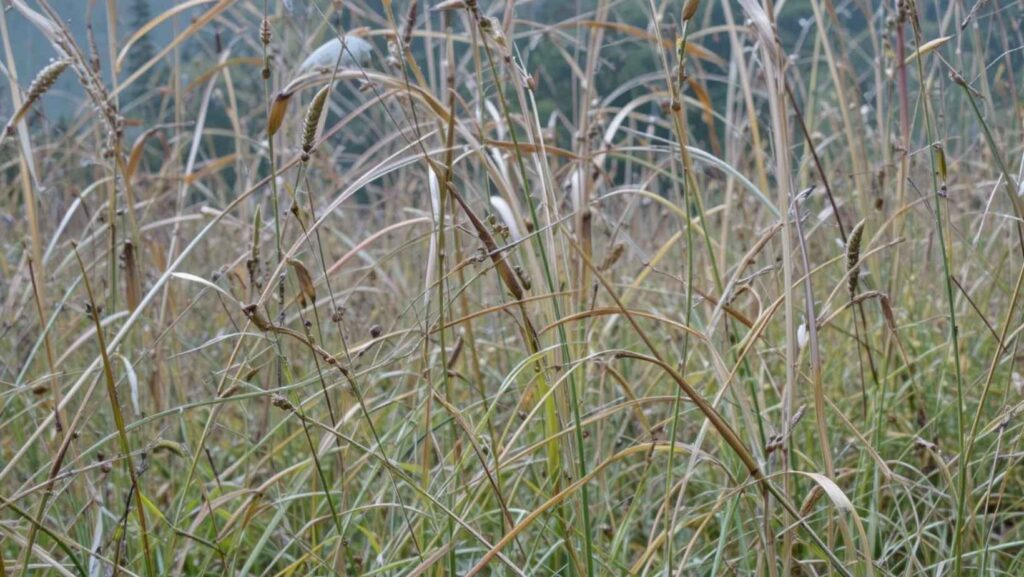
Would you want to know How to identify wild asparagus in nature? My experience has shown that wild asparagus may be recognized by its distinctive fern-like look, which includes feathery, branching foliage and leaves that resemble spines along the stem.
Usually long, thin, and spindly, the spears have a crimson tint, especially when they are growing in direct sunlight. Look for these spears, which often appear in clusters emerging from the base of the plant.
It is better to search for wild asparagus in late summer or early fall when it is not in season. The berries will be vivid crimson, and the wispy green fronds will have gone yellow.
They are now as simple to identify as they will ever be. However, as you continue reading, I will provide additional information about the topic.
Now, let’s get started.
How do you identify wild asparagus
Although the leaves resemble feathers, they are robust and spiky in appearance. In reality, what we perceive to be leaves are modified stems.
The little triangular scales that resemble flaps and sprout on the spears are the actual leaves.
Important Characteristics for Identification:
Look:
Wild asparagus, being a perennial, withers away in the fall and reappears in the spring. It may reach a height of 1.5 meters in the summer and resembles a little, twiggy shrub with feathery leaves.
Leaves: The leaves have a rough, pointed feel and are tiny and fluffy.
Blooms: The bell-shaped, white to yellowish-green blooms of wild asparagus are found at the intersections of the stalks.
Berries: In the summer, female plants produce small, red berries that are 3–4 mm in diameter and are dispersed across the top portions of the branches.
It is not advisable to consume these poisonous berries.
Spears: The plant produces new, fresh shoots, or spears, in the spring, which are usually harvested.
These spears, which can reach up to 30 cm in length, emerge from the base of the plant. At the base of their leaves are triangular scales.
Growth Habit: Wild asparagus often grows near water or in damp areas, such as ditches or along fences.
Advice on How to Spot Wild Asparagus:
Seek for any dried stalks.
The crimson berries will become more noticeable in the fall as the green foliage turns yellow.
Once an area of wild asparagus has been located, mark it so you can identify it again in the spring.
Watch out for lookalikes:
It’s crucial to understand the primary distinguishing characteristics of plants because some of them can mimic wild asparagus.
To ensure the asparagus is wild, try a small portion before collecting a significant amount.
Think about the surroundings:
Wild asparagus typically grows in specific areas, such as along ditches or near the ocean.
What’s the difference between wild asparagus and asparagus
Nothing has changed. When asparagus escapes a gardener’s plot, it turns “wild.” There isn’t any native asparagus in Colorado.
Except for a few significant variations in growth, flavor, and appearance, wild asparagus is nearly identical to farmed asparagus.
Compared to the cultivated type, wild asparagus is often thinner, more stringy, and sometimes more bitter.
Due to its regulated cultivation, store-bought asparagus is more consistent; however, it also comes in a wider variety of sizes and shapes.
Here’s a more thorough explanation:
Wild asparagus has thinner, more stringy stalks that can resemble “wild grass” in appearance. They can also come in a wider range of forms and sizes.
Cultivated asparagus usually has larger stalks and is more consistent in size and shape.
Taste: Wild asparagus is often described as having a more intense, green, earthy, and sometimes bitter flavor.
Cultivated asparagus has a sweeter, more buttery flavor and is often milder in taste.
Wild asparagus grows naturally in a variety of settings and often exhibits a wide range of sizes and forms.
Asparagus that is grown under regulated conditions yields a more consistent product.
What are the benefits of eating wild asparagus
A low-sodium, fat-free vegetable, asparagus has only three calories per spear and is packed with nutrients.
Asparagus contains the following nutrients:
Folate lowers the incidence of neural tube abnormalities, dementia, and heart disease.
In addition to supporting skin and eye health, vitamins A and C also help reduce the risk of heart disease and some forms of cancer.
Bone development and blood coagulation depend on vitamin K.
Potassium: maintains a healthy range of blood pressure
Capillary walls are strengthened by rutin.
The beneficial bacteria in the large intestine eat inulin.
A well-known natural cure for indigestion, asparagus also has moderate calming and laxative properties.
There are some drawbacks to eating asparagus despite its numerous advantages. The vegetable contains a high amount of sulfur, which can alter the scent of urine, and purines, which increase the risk of kidney stones and gout.
Furthermore, intestinal gas is produced by inulin even though it is a healthy food source for gut bacteria.
What are the medicinal uses of wild asparagus
They have a cleaning and healing impact on the liver, kidneys, and intestines. The plant has sedative, diaphoretic, diuretic, demulcent, cardiac, and antispasmodic properties.
Additionally, it is used to treat cancer. It is said that the roots can reduce blood pressure.
Traditional medicine has utilized wild asparagus, especially Asparagus africanus and Asparagus racemosus, to treat a variety of illnesses.
These include helping with delivery and relieving backaches, headaches, and stomachaches. It is also believed to aid in the treatment of diseases such as malaria, hemorrhoids, hematuria, and certain infections.
Additionally, it has been used traditionally to treat tumors, diarrhea, dyspepsia, and neurological diseases.
Particular applications and possible advantages:
Asparagus africanus: Used to ease stomachaches, backaches, headaches, and labor pains.
Hematuria, hemorrhoids, malaria, leishmaniasis, bilharziasis, syphilis, and gonorrhea are among the other conditions it is used to treat.
The subterranean stems, roots, and shoots can all be used to make medicinal concoctions.
After giving delivery, ladies can boil the root tubers and combine them with milk.
Shatavari, also known as Asparagus racemosus, is a medicinal plant used in Ayurvedic medicine.
It may contain antibacterial and antioxidant properties.
Used to assist breastfeeding, cure diabetes, and enhance sports performance.
Used historically to treat stomach ulcers, spasms, constipation, and upset stomach.
Used to treat a number of conditions, such as fluid retention, anxiety, and discomfort.
Common Applications:
Diuretics cause more urine.
It may aid in alleviating pain.
It may boost sperm production.
Used as an adrenal rejuvenator and tonic.
It may possess anti-inflammatory and anti-ulcerous qualities.
Some people think it can assist with liver illness, tumors, hyperdipsia, neuropathy, dyspepsia, diarrhea, and dysentery.
What are The Top 5 Health Benefits of Wild Red Asparagus Root
1. The Lungs According to the Chinese proverb, “Wisdom comes from the lungs.” For this reason, this herb is very beneficial to lung health, both spiritually and physically.
It helps to moisturize dry lungs and is a strong yet moderate lung tonic. It would be ideal for those who smoke, are exposed to pollutants, live in dry conditions, or have dry coughs.
The root’s viscous phytochemicals may help soothe respiratory conditions, moisturize the lungs, and generally enhance respiratory health.
This herb supports your body’s natural mucous production, promoting healthy breathing and singing throughout the day. It’s a fantastic method to maintain the cleanliness and wellness of your lungs!
2. The skin is positively correlated with pure blood and healthy lungs, which contribute to beautiful skin. This plant is revered by many Tibetan Buddhist monks, who attribute their youthful appearance and smooth skin to it.
Vitamins, minerals, and phytonutrients found in this root naturally support supple, soft, and healthy skin from the inside out!
#3: Contentment in the Mind According to Taoists, eating wild asparagus root gives one the capacity to fly.
No, you won’t take off! This flight represents the freedom of Spirit that may be felt once one has achieved harmony and the capacity to ascend above ordinary things.
In addition to benefiting the skin and lungs, it can also expand the heart center, calm a hyperactive mind, and foster a deeper sense of compassion.
Those who use this herb for extended periods report that it has a significant impact on their general well-being.
#4: Health of the Sexual Organs. Like the Ayurvedic herb Shatavari (Asparagus racemosus), this plant has also been long utilized as a potent sexual tonic for both men and women.
One of its main functions as an aphrodisiac and sexual tonic is to expand the heart, calm the mind, and replenish physiological fluids.
The root’s nutrients are said to alleviate sexual inhibitions, encourage wetness, and aid with infertility.
#5: Sleep and Dreaming Everyone knows how important sleep and, for some, dreaming are. Because it eases stress and promotes mental calmness, this plant can be used as a natural treatment for insomnia.
Oneirogen and dream herb are other names for the plant. Many people, including Taoists, report lucid dreams in which they are flying or soaring over the sky.
Most people can have this liberating sensation if they practice!
Final thought
Now that we have established how to identify wild asparagus in nature, you can easily identify it by locating the triangular leaf scales on the lower part of the plant.
This is one of the most effective methods to ensure that you correctly identify the plant. Doesn’t it appear precisely the same as it does on asparagus, which is still fresh and green?
As asparagus grows, it forms cladodes, which are long stalks that resemble leaves and are cylindrical.