
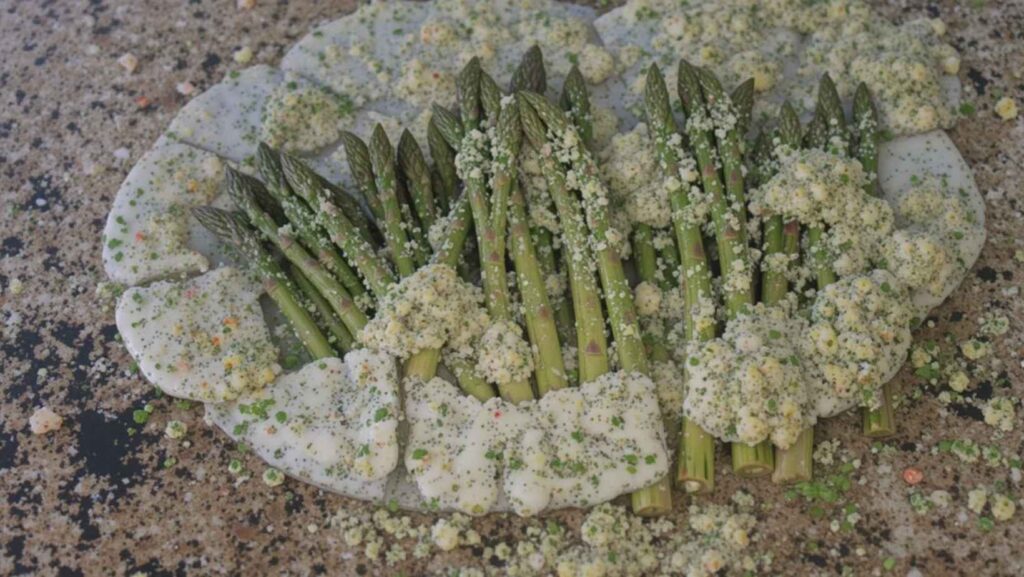
Would you want to know How to keep asparagus from getting mushy? For the purpose of preventing asparagus from becoming mushy, it is recommended that it be stored appropriately, preferably in a sealed bag with a wet paper towel,
And that it be cooked immediately, preferably by steaming or roasting, in order to preserve its crisp texture.
However, that is not all; as you continue reading, I will provide you with further information on the topic matter.
Now, let’s get started.
How to prevent mushy asparagus
It is essential to avoid overcooking your asparagus. It is recommended that you soak the asparagus in ice-cold water if you are not going to consume it promptly.
The cooking procedure will come to an end as a result of this. To stop it from becoming mushy, to begin with.
Breakdown in great detail:
Putting away:
Asparagus stalks can be kept hydrated by placing them in a jar with a small amount of water; alternatively, the cut ends can be wrapped in a dampened paper towel.
Refrigerate: To maintain the freshness of the asparagus, store it in the refrigerator.
If you are storing water in a jar, change the water daily to ensure it remains fresh.
Asparagus cooks quite rapidly, so it’s essential to keep a close eye on it while cooking to prevent the stems from becoming mushy.
Prepare till it is crisp-tender: It should have a texture that is soft and crisp, not mushy.
Immediately after cooking, place the asparagus in an ice bath to halt the cooking process and maintain its color and crispness. This will ensure that the asparagus retains its flavor.
Regarding the ways of cooking:
The asparagus should be steamed for a few minutes until it obtains a crisp-tender texture.
When boiling, bring the asparagus to a boil in salted water until it is crisp-tender.
To roast asparagus, place it in the oven and roast it until it is crisp-tender.
Pan-frying: For a quick and simple supper, try pan-frying frozen asparagus.
Advice for Asparagus that is Thicker:
Remove the stems: If you are using thicker asparagus, you may want to try using a vegetable peeler to remove the outer layer of the stems to make them more tender.
To prepare the asparagus spears for consumption, trim the woody ends of the spears.
Why is my asparagus not getting soft
The stems of thicker asparagus may be slightly more woody, which means they will not become as soft when baked in the oven.
Take a vegetable peeler and remove the outer covering of the asparagus stalks. This will allow you to circumvent the problem. After that, cut them off around one inch from the bottom.
You might also bend the stems and observe the point at which they break. The point where the woody part of the asparagus begins should be where it breaks naturally.
For this dish, we’re keeping things simple by using only salt, pepper, and olive oil to season the asparagus. Anyway, you are free to season it any way you please.
When it comes to producing that tender-crisp quality, a hot oven is really necessary. When the oven reaches 400 degrees Fahrenheit (200 degrees Celsius), roast the asparagus for 15 to 25 minutes.
Keep a close eye on the thinner stalks, as they cook more rapidly than the thicker ones.
Take a spear of asparagus and pierce it with a fork to determine if it is done. The spear should be soft yet have a small resistance.
So that wraps it up! The roasted asparagus is now ready to be consumed as a straightforward side dish or added to your preferred dishes.
How do you freeze asparagus without it getting mushy
But fresh asparagus stalks cannot simply be frozen. They must first be blanched. Blanching asparagus retains its texture and flavor as near to fresh as possible while also preserving its color and nutrients.
You may anticipate a mushy, mealy mess when using frozen raw asparagus. Here are the best ways to utilize asparagus after freezing it.
Asparagus Freezing Procedures:
The shelf life of asparagus is short. You will only get three to five days out of a bundle of asparagus, even if you know how to preserve it. You may avoid squandering money and gain more time by freezing asparagus.
There are a few procedures you must follow to prepare asparagus spears for freezing, as fresh asparagus cannot be frozen in its natural state.
Fortunately, they are really easy, and you’ll have frozen asparagus in no time.
What You’ll Require
A colander
The chef’s knife
A cutting board
Large saucepan or stockpot
A slotted spoon or tongs
Baking tray coated with paper towels
An ice water bowl
Tea towels or paper towels can be used for drying.
Zip-top plastic bags that can be sealed
Stop The asparagus
The asparagus should be placed in freezer bags.
After drying and cutting the asparagus, transfer the stalks or pieces to zip-top plastic bags that may be sealed. Before sealing, expel as much air as possible.
2. Put labels on the bags.
To help you locate the food in the freezer and determine whether it is still edible, write the date and the product’s name on the outside of the bag.
What are the Signs Your Asparagus Has Gone Bad
It is important to pay attention to the texture, color, and smell of the asparagus, just as you would with any other food that has gone bad.
First, the tips tend to become pliable, and then the plant’s stems begin to shrink.
As it approaches its expiration date, the stalks will change from brilliant green and firm to dull-colored and limp.
When you realize that the tips have become black, you will also note that they are fully squishy and possibly smell a little strange as well.
It is time to discard your asparagus if it has a slimy or sticky texture, a mushy and soft taste, an unpleasant fragrance, or visible signs of mold.
What are the Mistakes You’re Probably Making With Asparagus
1. Picking a Bad Group
Bringing home a good bunch of asparagus from the shop is the first step in making delicious asparagus.
However, because asparagus is a vegetable that people purchase less of, it’s easy to be unaware of what asparagus at its peak looks like.
Because of this, you can wind up with weak asparagus stalks, faded, and lack of snap.
You must learn to appreciate the appearance and texture of excellent asparagus. Fresh asparagus should feel solid and strong, not wilted or limp.
There should be no noticeable spaces between the asparagus’s tiny, needle-like leaves, and the tips should appear thick.
You should seek out the most colorful bunch you can locate in terms of color.
However, keep in mind that asparagus often grows with purple specks or sections, which may appear to bruise but might actually be the color of that particular plant.
Generally speaking, the size of the asparagus won’t tell you how fresh it is, but keep in mind that if you choose very thin asparagus, it may cook more rapidly and lose its crunch or snap.
To make cooking asparagus easier, it’s also recommended to look for asparagus that’s about the same size.
2. Not experimenting with the many types
Like many vegetables, asparagus comes in a wide variety of sizes, shapes, and, most importantly, colors.
Additionally, failing to familiarize yourself with the many varieties of asparagus is one of the most serious blunders you can make as a novice.
Although you may be accustomed to traditional green asparagus, its white version is just as tasty. S
ince white asparagus is not exposed to direct sunlight; it lacks the characteristic greenness of other vegetables.
More likely to be found at farmer’s markets, these chalky-white spears have a subtle sweetness and might not taste as grassy as green asparagus.
Alternatively, opt for purple asparagus if you prefer a platter with a bit more color. In addition to growing in deep violet, Pacific Purple and Purple Passion asparagus are typically sweeter than the green variety.
They are much more nutritious than ordinary asparagus found in supermarkets due to their purple hue, which also indicates that they are rich in beneficial antioxidants.
Importantly, overcooking some asparagus varieties can cause them to lose their color, so serve them raw or steam-tender for the most visual impact.
3. Not making use of your leftover stems
Like cauliflower and broccoli, asparagus is one of those veggies where a large portion of the stem can be wasted.
The plant’s base, which has a tough, thick, and fading feel, is sometimes discarded, but its more delicate extremities are usually valued.
In some situations, a significant portion of the plant may be discarded.
Final thought
Now that we have established how to keep asparagus from getting mushy, Put boiling water over the asparagus and cover it. Bring to a boil for two or three minutes.
The hot asparagus should be packed into hot jars, and then the jars should be filled with boiling cooking liquid or water, allowing a headspace of one inch.
If you like, you can add half a teaspoon of salt to pints and one teaspoon to quarts.