
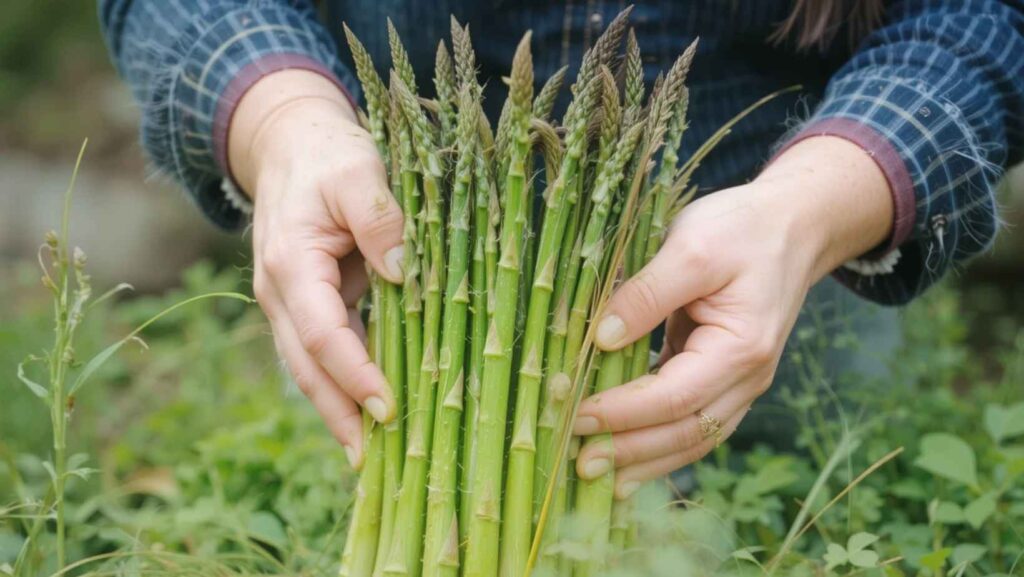
Would you like to know how to harvest asparagus without harming the plant? To harvest asparagus without causing any harm to the plant, I have found that it is best to snap or cut the spears at ground level when they reach a height of six to ten inches.
This is done while taking care not to damage the crown or the spears surrounding it.
However, that is not all; as you continue reading, I will provide you with further information on the topic matter.
Now, let’s get started.
How to harvest asparagus without killing the plant
Using a gouge or knife, cut the asparagus spears at the base, close to the ground, to collect them without harming the plant.
Don’t take more than 60% of the spears so the plant may regrow.
More thorough manual:
1. Time is of the essence:
Avoid harvesting during the first year to allow the plant to develop its root system and store energy.
Harvesting in the second year: If the plants are robust, you can assess soil and plant health by harvesting for a short period, perhaps two to three weeks.
Later years:
Harvest for six to eight weeks, but no later than July 1st, so that the plants can store energy for the next year.
Harvesting should cease when the heads begin to open, or the spears become thin, allowing the plant to store energy for the next growing season.
2. Harvesting Methods:
Snapping: Hold the spear gently close to the soil line and break it off where it naturally snaps.
Cutting: Carefully cut the spear at ground level with a clean, sharp knife or asparagus knife so as not to harm the crown or other spears.
Steer clear of cutting too deeply: To prevent crown damage and spear development, do not cut more than 1 inch below the soil’s surface.
3. Post-Harvest Care: Let ferns grow. Since ferns are crucial to the plant’s ability to store energy, allow them to develop after the harvest season is over.
Autumn fern pruning: To stop the spread of illnesses and promote new growth in the spring, trim the ferns down to ground level in the autumn.
Mulch: To assist the asparagus plants retain moisture and keep weeds at bay, cover them with a layer of mulch.
Treat: To encourage healthy development, treat asparagus plants in the spring with a balanced fertilizer.
How to Achieve Asparagus’s Perpetual Harvest
Pickers of asparagus refer to it as snapping. To avoid damaging the plant, snap the spear above the wooden stem.
The general guideline to prevent overharvesting:
Harvesting is permitted for two weeks in the second year. Four weeks in Year 3. Six weeks in year four. You may eat as much asparagus as you like for eight weeks after year five.
Harvesting should be stopped to allow for the growth of ferns if more than three-quarters of the spears are thinner than a pencil.
Keep in mind that there are male and female asparagus plants. Although they are preferred for their bigger spears, males are not required for a plentiful harvest.
In testing conducted by the University of Illinois, the following asparagus cultivars have demonstrated good yields:
- Sequoia is the male cultivar that regularly produces the most on the list.
- Porthos is a male cultivar that produces a large amount and is resistant to disease.
- Mondeo is a delicate and delicate-tasting male cultivar with a good yield.
- Jersey Giant is a male cultivar with a steady output, ease of cultivation, and considerable disease resistance.
- Pacific Purple is tasty, heat-tolerant, high-yielding, and both male and female (produce seeds).
How to Harvest and prepare asparagus
Stems can be harvested by cutting the stem at an angle slightly below the soil line using a sharp knife.
Snap the spear where it will break cleanly before cooking, then use only the sensitive points and throw away the lower part.
The best way to consume asparagus is fresh. It does, however, freeze well for extended storage.
Gourmet white asparagus appeals to certain gardeners. White asparagus is green asparagus that is cultivated in the dark; it is not a variation.
This procedure is known as “blanching.” Blanching is accomplished by either covering the asparagus bed with black plastic or mounds of loose mulch or crushed leaves.
The spears remain white due to these compounds, which block light from reaching the plant as it emerges from the ground.
The spears will become green if they are exposed to light.
Tips for harvesting:
First year: Avoid spear harvesting
Second year: Harvest the spears for only three to four weeks during the second season; if the fern growth was poor the first year, harvest even less. Let the ferns grow once the cutting season is finished.
Later years: For eight to ten weeks in the third year and the years that follow, trim spears every day or every other day.
After that, let the ferns grow for the rest of the growth season. Harvest for a shorter period if the spears are small and spindly, as this indicates that the plants are deteriorating due to overcropping.
How Long After Planting Asparagus Can You Harvest
Those who want fast fulfillment from their garden should not grow asparagus spears, as they are not the right crop for them.
(If you want to use baby spinach or radishes for that!) Asparagus can be harvested the first year after it has been planted; however, this will almost certainly result in the death of your plants because they will not be able to store sufficient food reserves to maintain themselves.
To maximize asparagus harvesting, it is recommended to wait until the third year of the plant’s growth.
It is possible to reduce the number of years required to harvest asparagus by obtaining older plants at the time that you are prepared to begin cultivating your asparagus bed.
By way of illustration, if you buy plants that are one year old, you may pick asparagus during the second year of their development, so save yourself one year.
When to Stop Harvesting Asparagus
In spite of the fact that you may harvest asparagus in waves, it is essential to refrain from selecting it until the season has extended too far.
Harvesting plants on a regular basis might put them under unnecessary stress, which can lead to a reduction in future productivity.
There is not usually a definitive mark that indicates when it is time to stop selecting asparagus. However, the harvest season for your asparagus should continue somewhere between six and eight weeks.
Regardless of whether or not you have reached this time range, it is most likely appropriate to cease harvesting if you see the following:
- slowing of growth
- the narrower breadth of the spear
- a formation of tiny ferns
Asparagus harvesting season in my region, which is 4 b, typically comes to an end at the end of June and the beginning of July.
When harvesting for the first time, consider harvesting for a shorter period to reduce the pressure on the plants.
When it comes to the number of times you may pick asparagus during this window, if you come across a stem that is perfect for harvesting, you are free to do so.
However, if you want to save seeds, you should allow some plants to go to seed. Twenty years of productivity may be expected from an asparagus plant that has been properly cared for.
Final thought
Now that we have established how to harvest asparagus without killing the plant. However, the year after establishment is when you can start harvesting asparagus.
Every five to eight-inch spear that emerges throughout seven to 10 days should be cut or snapped.
Be careful not to leave stubs when cutting or snapping stems at the soil surface.
Allow all fresh spears to grow into ferns and cease harvesting for the season when the spears start to become spindly to nourish the crown.
For three to four (3–4) weeks during the second season, you can harvest every new spear that emerges. Harvesting during the entire season, which typically lasts six to eight (6–8) weeks, is possible by the third year.