
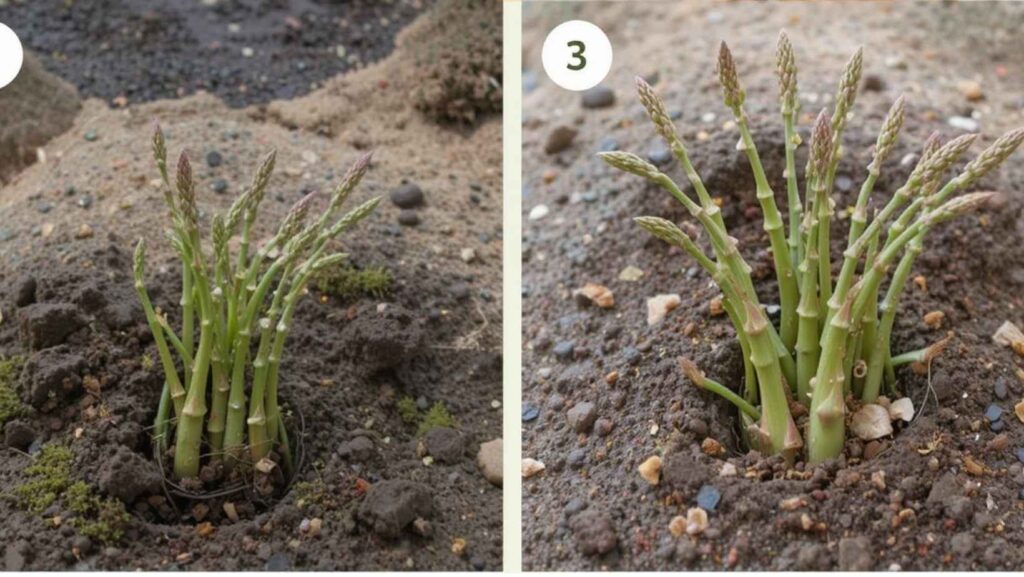
Do you want to know the exact steps involved in growing asparagus from seed? My experience has shown that you should start growing asparagus indoors 8–10 weeks prior to the final frost. For germination, soak the seeds overnight, plant them in a seed-starting mix, and maintain a warm temperature (70–85°F). After seedlings emerge, transplant them to a nursery bed and then to their final location after a year. Wait three years before harvesting.
However, that is not all. As you read further, I will provide more information on the subject matter.
Now, let’s get started.
How to Grow Asparagus from Seed
Discuss how that influences asparagus growth.
Starting Seeds:
Starting asparagus is like starting other organic vegetable seeds. Start seedlings inside using a kit. Peat pots or other seed-starting containers are also suitable options.
Warm soil helps asparagus seeds germinate. Maintain a temperature in the high 70s using bottom heat. It takes three weeks for asparagus to germinate, so be patient.
After the seeds germinate, reduce the temperature to 60-70 degrees. Once the frost is gone, move plants outside.
They must be toughened. Plant them 2-3 inches down in a temporary nursery bed.
Monoecious asparagus. So, each plant is male or female. The female plant prioritizes seed production. Plant only male asparagus for maximum harvests. Some asparagus types, like Jersey Knight or Jersey
Supreme generates mostly male plants. Flowers will help you identify male asparagus in a bed. The small blossoms may require a magnifying glass to see clearly.
Female plants have well-developed three-lobe pistils, whereas male flowers are longer and bigger.
Asparagus Bed Location:
You have one chance to make your asparagus bed ideal. This is crucial since they will grow there for 25 years.
Pick your spot wisely. Asparagus can tolerate shade, but productivity may diminish. Full sun is best.
Many gardeners prefer raised beds. Raised beds reduce standing water, which asparagus roots dislike. Raised beds make asparagus picking and weeding simpler.
It’s acceptable to plant asparagus in a row in a conventional garden, but keep in mind that it will grow tall after harvest and shade the plants next to it.
To prepare the asparagus bed, start with preparing the soil after selecting the place. Adjust your soil for asparagus, which prefers lighter soil. Deeply dig and add compost and aged manure. Remove stones, rubbish, and weeds.
This will be crucial throughout the life of your asparagus bed. Weed seedlings are easy to pull in a few minutes. Once weeds develop, they’re harder to pull without injuring the spear underground.
Planting asparagus:
In the prepared bed, dig a 12-inch-wide, 6-inch-deep trench. Plant asparagus 11/2-2 feet apart and cover with 2 inches of dirt.
Add 2 inches of dirt two weeks later. Keep adding soil until it’s mounded over the earth. Regularly weed and water the bed.
Maintenance: Clean mulch reduces weeds and maintains soil moisture. Spring and autumn bed fertilization. Allow asparagus to grow each year after harvesting. They have time to re-energize the rootstock. Remove dried plant material in late Autumn and clear the bed of pest-attracting waste.
Growing asparagus seedlings is easy, but you may not want to wait three years to enjoy them. Purchase asparagus plants to minimize the wait by a year.
Park Seed sells one-year-old bare-root crowns for permanent placement. Consider planting both and buying heritage asparagus seeds to germinate. Plant one-year-old plants for your major crop.
What is Asparagus Planting & Growing Instructions
Asparagus Seed Germination Guide: Compared to utilizing crowns, growing asparagus from seeds can be a somewhat more time-consuming yet rewarding operation.
Here’s a detailed tutorial on the successful germination of asparagus seeds:
Obtain Asparagus Seeds of High Quality:
Invest in asparagus seeds from a reliable supplier. Seek seeds of a kind that fits your environment and tastes.
Stratification of Seeds: The technique of stratification, which mimics winter conditions, is advantageous for asparagus seeds. To arrange asparagus seeds in layers:
Put the seeds on a moist cloth or paper towel.
Seal the plastic bag or container containing the towel and seeds.
Keep the bag or container refrigerated at 35°F to 40°F (2°C to 4°C) for approximately 3–4 weeks.
This cold stratification simulates the winter conditions required for asparagus seeds to emerge from dormancy.
Indoor Seed Starting:
Eight to ten weeks before your area’s latest anticipated frost date, sow the stratified seeds indoors.
As a result, the seedlings can grow robust enough to be moved outside.
Use well-draining potting soil or a seed-starting mix to fill seed trays or pots.
The stratified seeds should be planted 1-2 inches (2.5-5 cm) apart and about 1/2 inch (1.25 cm) deep.
Ensure the soil is always moist but not overly wet.
For best germination, maintain a temperature of around 70°F (21°C). To help maintain a constant temperature, you can use a heating mat.
Germination and Seedling Maintenance: The time it takes for asparagus seeds to germinate and sprout can range from 14 days to several weeks. During this time, exercise patience.
Give the seedlings plenty of light once they emerge. If natural sunshine isn’t enough, you can use grow lights.
If there are too many seedlings, thin them out until only the strongest remain.
Maintain the soil’s consistent moisture content without becoming overly wet. Please don’t allow it to dry out.
When the seedlings are approximately 6 to 8 inches (15 to 20 cm) tall, and there is no longer any chance of frost, move them outside.
As with asparagus crowns, choose a sunny spot with well-draining soil.
Rows of seedlings should be positioned two to three feet (60 to 90 cm) apart, with each row being about 12 to 18 inches (30 to 45 cm) apart.
Observe the Growing and Care Guidelines:
Water, mulch, fertilize, and weed asparagus according to the general care guidelines provided in the preceding response.
Harvesting and Patience: Keep in mind that asparagus cultivated from seeds will require more time to develop and yield a full crop. It can take two to three years before you can harvest spears from seed-grown plants.
Although growing asparagus from seeds may be a little more challenging than using crowns, it can be a satisfying gardening experience and allows you to choose specific types.
You may finally savor a plentiful harvest of asparagus from your garden if you are patient and pay attention to the demands of your plants.
What is the Soil pH and fertility for asparagus
Asparagus is best grown in well-drained soils with a pH of 6.5 to 7.0, but it cannot tolerate extremely acidic soils.
If the soils are well-drained and do not show water gathering after rain, they may thrive on heavy, medium, or sandy soils.
Have your soil tested to determine whether it contains the proper quantity of nutrients for asparagus growth before planting.
Apply the fertilizer recommended based on the soil test results.
About half of the phosphorus and potassium should be supplied during planting time; however, it is preferable to add some of the fertilizer in the Autumn or spring before planting.
After planting, after the crowns start to grow, nitrogen should be applied.
The standard garden fertilizer rate for asparagus, if you don’t have a soil test report, is 1 to 1.5 pounds of fertiliser (10-10-10) with 10% nitrogen, 10% phosphorus, and 10% potassium per 100 square feet applied prior to planting.
It is advisable to conduct soil tests every three years after establishing an asparagus patch and to follow the test recommendations prior to adding fertilizer.
Following the establishment of the asparagus patch, fertilizer, compost, or composted manure can be applied either in the early spring, before the appearance of spears, or in late June or early July, following harvest.
Add these inputs only if the soil test indicates that they are required.
When to Harvest Asparagus
Patience is an extremely valuable quality when it comes to asparagus gathering.
The duration of the harvest season is determined by several factors, including the age and vitality of the plants, as well as environmental conditions.
In general, asparagus should not be picked in the same year that it was planted (but certain seed-grown plants can be harvested up to two years later).
During the first week of the year following planting, harvest the crops sparingly. You should gather spears for a period of two to three weeks during the second year.
Following the third season, asparagus can be picked for a period of up to eight weeks, beginning with the first appearance of spears and continuing until the summer solstice (depending on the location).
Be sure to check on the garden regularly during the harvest season. There is a rapid growth rate of asparagus spears, reaching up to two inches in length every day.
You should make it a habit to harvest spears at least once every other day when the weather is cold and on a daily basis when the temperature is high.
You should select spears that are between six and ten inches in height. To remove the spear from the ground, you need only use your hand to grip it and then snap it off.
When spears have a diameter that is smaller than the width of a pencil, it is preferable to cease harvesting and let the spears mature into ferny foliage.
What are the Asparagus Growing Requirements
Most asparagus cultivars grow well in zones 3 to 8.
Take the selection of where to plant your asparagus very seriously, and do not rush into it. The production of asparagus can continue for up to twenty years after it has been planted, despite the fact that it takes several years to become established.
It is in your best interest to avoid moving it during that period; thus, exercise caution when selecting a location for your asparagus patch.
In the event that you intend to plant asparagus crowns, it is highly recommended that you prepare the soil in the Autumn.
As soon as the soil can be dug to a depth of 18 inches, the crowns can be planted outside in the spring.
If I were to plant asparagus crowns, the best time for me to do so would be at the end of April, as I live in Zone 3 in Calgary, Alberta.
When grown in soil free from other roots, rocks, and weeds, asparagus thrives in loose, well-drained soil.
Locate a spot that receives at least eight hours of continuous sunlight. A soil pH that falls between 6.5 and 7.0 is ideal for asparagus.
Before planting your asparagus, make sure to incorporate compost into the soil at a deep level.
Asparagus is often grown in a garden that is planted directly into the ground, although it may also be grown on a raised bed (as long as the raised bed is connected to the ground).
It is essential to mulch asparagus in the fall with a layer of leaves or straw that is about four inches thick if you are growing it in a raised bed.
The mulch will help shield it from the winter weather conditions.
Final thought
Now that we have established how to grow asparagus from seed step by step, you may have a lot of fun cultivating asparagus in your yard or garden bed.
As a perennial vegetable, it returns every spring.
You won’t have any trouble learning how to cultivate asparagus from seed, and we hope that you feel prepared to give it a shot right now!