
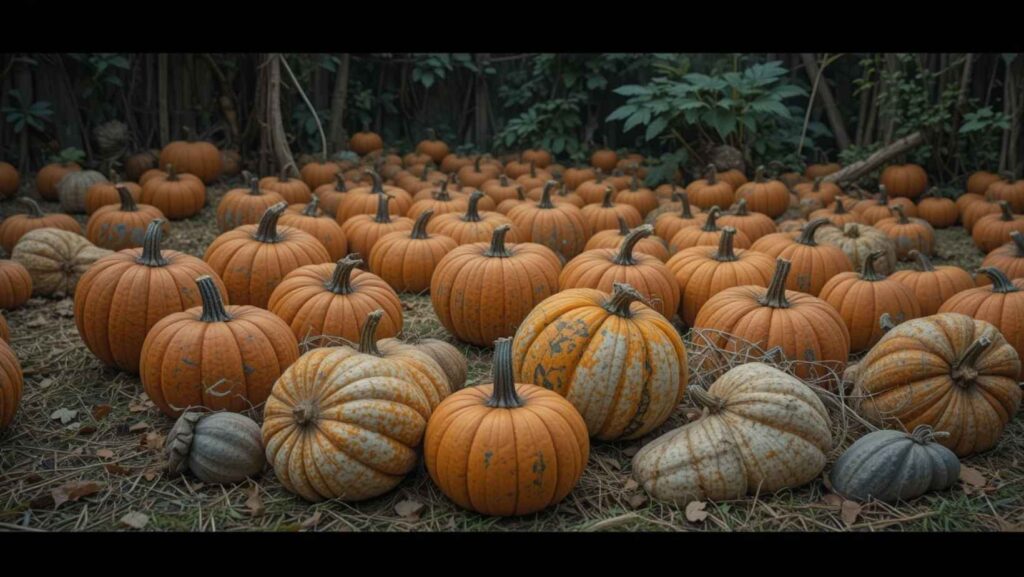
Would you want to know the history of pumpkins? According to my observations, the earliest evidence of pumpkin cultivation dates back around 9,000 years, and they originated in North America.
Native Americans utilized them to make baskets and mats, among other things, and they were an essential source of food.
Pumpkins, sometimes called “pompions” in England, were a mainstay of European cuisine after being brought to other areas of the world by European explorers.
The practice of carving jack-o’-lanterns originated in Ireland and was subsequently adopted in America.
As pumpkin cultivation expanded around the world, they grew to be linked with autumn harvest celebrations, especially Halloween.
But that’s not all; as you continue reading, I’ll provide additional information on the topic.
Now, let’s get started.
What is the History of the Pumpkin
It is said that North America is where the seeds from which pumpkins evolved. The Greek term “pepon,” which means huge melon, is where the name “pumpkin” first appeared.
Over time, the name changed via several languages before American colonists adopted the term “pumpkin.”
Native Americans utilized the pumpkin in a variety of ways and devoured it for millennia. The pumpkin’s meat would be cooked by roasting, baking, boiling, and drying it.
They occasionally utilized the pumpkin seeds as medicine in addition to eating them. They could store grain and other necessities in the dried shells.
In order to weave the pumpkin fibers into mats, they could have additionally dried and crushed them.
Native Americans and, subsequently, the Pilgrims benefited from the numerous uses of pumpkin throughout the harsh winter months.
When early European explorers returned, they brought pumpkin seeds with them, and animals began eating them.
The pumpkin swiftly established itself as a mainstay in the diets of the settlers who migrated to America.
Since then, pumpkin has been included in an increasing variety of recipes, ranging from soups to desserts.
What is the Early Origins of Pumpkins
The origins of pumpkin seeds date back more than 7,500 years to Central America. The indigenous people used them as a major source of food once they were first grown in what is now Mexico.
Pumpkins crossed the Atlantic to reach Europe during the period of discovery; the French brought them to Tudor England in the 16th century.
Due to its versatility and ease of growing and storing, pumpkins, or “pompions,” rapidly became popular.
Tudor Gardens quickly adopted these “New World” vegetables, and recipes calling for pumpkins started to show up in cookbooks from that time.
Pumpkins were a mainstay in English cooking, appearing in everything from soups and pies to preserves.
Pumpkins were utilized extensively for medical purposes in addition to being a delicious ingredient in many cuisines.
All parts of the pumpkin plant, including the fleshy shell, seeds, leaves, and even flowers, were thought to have therapeutic qualities in the past.
Many illnesses, including skin and gastrointestinal disorders, as well as diuretics, were treated with pumpkins.
Pumpkins are still used in many different ways nowadays. This unassuming vegetable has become a mainstay of the fall diet, appearing in everything from soup to pumpkin spice lattes.
Where Do Pumpkins Come From
Although they are classified as a fruit, pumpkins are actually a kind of winter squash. In fact, a berry!
Pumpkins are cultivated in warmer areas despite their association with the chill of autumn.
They have been cultivated and consumed for about 10,000 years, making them one of the oldest crops ever discovered!
Additionally, they are native to Oaxaca, Mexico, which is in North America. Did you know that pumpkins are Latin?
Pumpkins were little, bitter, and green 10,000 years ago; they were not as delicious as the ones we adore today.
They served as storage rather than food. They were turned into baskets because of their robust, thick skins.
Mats were made from dried strips of the outer shell. They served as medicine as well. Indigenous tribes relied heavily on pumpkins, which they developed into new varieties and dispersed over the Americas.
Pumpkin seeds were taken back to Europe by European colonists who landed in the Americas in the late 15th century, and they (mostly the Spanish) dispersed pumpkins all over the world.
The Greek word “pepõn,” which means huge melon, is where the term “pumpkin” comes from. The French subsequently altered it to “pomp,” which the English then renamed to “pumping” and
American settlers came up with the word “pumpkin.
What are the 6 Things You May Not Know About Pumpkins
You might be surprised to learn these six facts about them.
1. From Global Gardens to Central America
Originally from Mexico and Central America, these plants are now found on six continents, with the exception of Antarctica.
2. The Pioneer Crop
Even before corn and beans were cultivated, Native Americans grew pumpkins for thousands of years.
3. A Gourd’s Etymology
The Greek word pepõn, meaning huge melon, is where the term pumpkin comes from.
Before American settlers came, the French nasalized it into “pompo,” the English modified it from “pompon” to “Pumpion,” and so on.
4. Illinois: The Capital of Pumpkins
Illinois is the country’s top pumpkin-producing state, according to the 2017 U.S. Agriculture Census.
Compared to other top-producing states, it harvests twice as many pumpkin acres.
5. Gourds That Break Records
In 2016, the largest pumpkin ever weighed 2,624 pounds and was cultivated in Belgium. In 2018, the largest pumpkin in the United States weighed 2,528 pounds and was produced in New Hampshire.
In 2010, the biggest pumpkin pie was produced in Ohio. It was more than 20 feet in diameter and weighed 3,699 pounds.
6. Prompt Planting, Annual Harvest
They are harvested in October when they are a vibrant orange hue, and they take 90 to 120 days to grow.
You can keep their seeds for the following year’s pumpkin crop.
What does the pumpkin symbolize
Pumpkins are representations of the harvest season that extend beyond Halloween. They have traditionally been associated with plenty and the end of the growing season in agricultural societies.
In fall décor, pumpkins are frequently used in houses and businesses, often encircled by vibrant gourds and bundles of hay.
With pumpkin pie being one of the most classic sweets on the Thanksgiving table, they are also essential to the Thanksgiving meal.
Pumpkins, which are carved into faces and lit to ward off bad spirits, have come to represent Halloween in the United States.
Nowadays, carving pumpkins is a common custom that families and communities take pleasure in every autumn.
Pumpkin festivals, which feature enormous pumpkins, imaginative carving competitions, and even pumpkin-flinging contests, are held in towns throughout the nation.
One of the most iconic representations of fall, particularly during Halloween and harvest celebrations, is pumpkins.
Their cultural importance stems from long-standing customs.
For instance, the Irish folklore of “Stingy Jack,” a man destined to roam the world with nothing but a lump of coal for light and a carved-out turnip, is where the contemporary jack-o’-lantern got its start.
The modern jack-o’-lantern originated when Irish immigrants discovered that pumpkins were simpler to carve than turnips when they first came to America.
Final thought
Now that we have established the history of pumpkins, Pumpkins, despite the fact that they are popularly appreciated as a symbol of Halloween and the fall season, carry a deeper importance that has its roots in culture, environmental concerns, and agricultural advantages.
The function that they played in the past as a staple meal for Native Americans has developed into a multi-faceted crop that is today used to decorate porches, fill holiday feasts, and contribute to more sustainable agricultural techniques.
Despite the fact that pumpkins are a well-known symbol of fall,
it is essential to acknowledge their potential beyond the realm of decoration due to the fact that they have a high nutritional value, help reduce waste, and promote environmentally responsible agricultural techniques.