
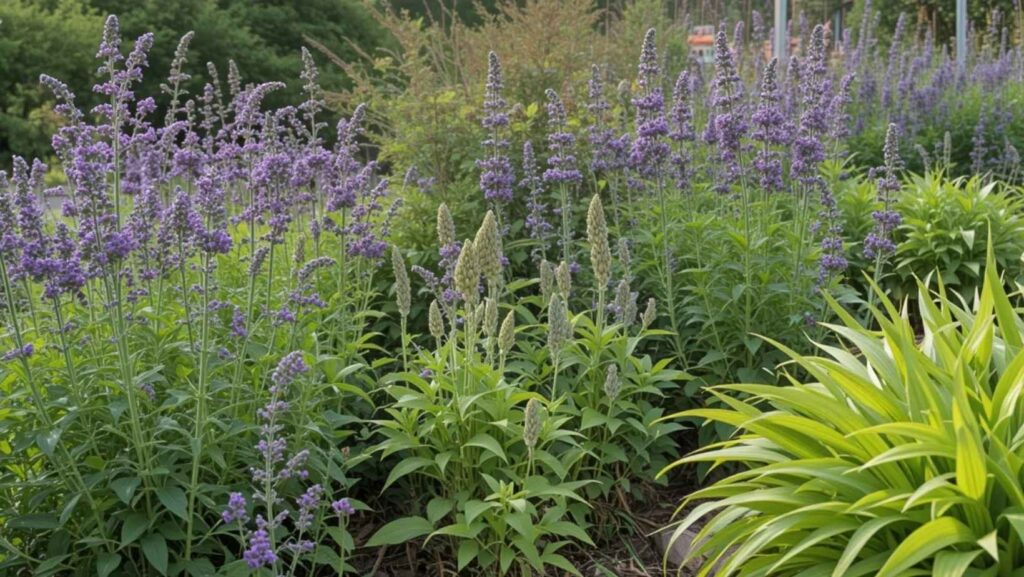
Would you want to know the Companion plants for asparagus in your garden? According to my personal experience, to maximize the yield of your asparagus crop and the health of your garden, consider planting companion plants such as basil, cilantro, dill, nasturtiums, marigolds, and nightshades (including tomatoes, peppers, and eggplant).
These plants can ward off pests while also attracting beneficial insects and improving soil health.
However, that is not all; as you continue reading, I will provide you with further information on the topic matter.
Now, let’s get started
What are The Best Companion Plants for Asparagus
In light of the mutually beneficial interaction between tomatoes and asparagus, tomatoes are considered among the best partners for asparagus.
Tomato plants produce a substance called solanine, which acts as a natural deterrent against the asparagus beetle, one of the most widespread pests of asparagus.
As a result, asparagus plants are able to flourish without the additional strain that is caused by these harmful pests.
Furthermore, asparagus plants can protect tomatoes against certain pests, such as nematodes, which damage the plant’s roots.
Basil: Basil is a wonderful companion plant for asparagus due to its powerful scent, which can confuse and deter asparagus beetles. Basil is a great plant for supporting asparagus.
This herb is also good for the garden since it draws helpful insects like bees and butterflies, which may help pollinate the entire garden, which benefits the asparagus and other plants.
These aromatic herbs, parsley and dill, are well-known for their capacity to attract beneficial insects, which are natural predators of common garden pests.
Parsley and dill are also noted for their taste.
Since ladybugs and parasitic wasps feed on asparagus beetles, parsley and dill are particularly effective in attracting these beneficial insects, which in turn provide a natural treatment for pest management.
Both marigolds and nasturtiums are examples of blooming plants that provide a supplementary function.
Marigolds and nasturtiums, in addition to enhancing the decorative value and aesthetic appeal of your garden, also possess the ability to deter pests.
Their vivid hues and strong aromas are effective in warding off a wide variety of pests, including asparagus beetles.
Additionally, they attract beneficial insects, resulting in a healthier environment in the garden.
What are the 3 Plants to AVOID Planting Near Asparagus
There are undoubtedly some plant enemies of asparagus! I would absolutely not grow the following three vegetables close to your asparagus:
1. Allium Family (chives, shallots, garlic leeks, and onions)
One of the families that may both greatly benefit some plants (and keep pests away) and stunt the development of others (like asparagus!) is the allium family. Several things are happening here:
Because they are nutrient hogs, they will deplete the valuable nutrients that asparagus needs, causing development to be slowed and stunted.
Particularly, garlic is planted rather deep and has the potential to disturb the deep asparagus crowns.
It has been demonstrated that they introduce Fusarium spp., which can lead to root and crown rot in asparagus.
2. Potatoes
As another food with deep roots, asparagus and potatoes will clash. Here’s what you may observe:
Due to competition for nutrients and moisture, the development of both plants was stunted.
Disruption of the deep asparagus crowns physically
3: Carrots
Last but not least, you should never grow carrots close to asparagus. Additionally, they are a deeply ingrained vegetable that may cause problems. This is what’s happening:
They will deplete the valuable nutrients that asparagus requires, causing its development to be slowed and stunted.
Disruption of the deep asparagus crowns physically
Additionally, they are plant foes with dill, an advantageous companion plant for asparagus.
What is the Importance of Companion Planting for Asparagus
When it comes to companion planting in your asparagus garden, it can be challenging to decide which heritage seeds to choose.
Spend your money wisely and get plants and seeds that are both edible and compatible with asparagus.
Any gardener who wants to increase the productivity and health of their crops must use companion planting.
Companion planting can help enhance soil quality, deter pests, and attract beneficial pollinators like butterflies and bees to asparagus.
Reintroducing nutrients into the soil is one method companion plantings contribute to better soil quality.
Legumes such as beans and peas, for instance, fix nitrogen.
They are able to transform atmospheric nitrogen into a form that plants can utilize due to their symbiotic interaction with certain bacteria in their roots.
By replenishing the soil with nitrogen, these plants enhance soil fertility when cultivated with asparagus.
Controlling pests is another advantage of growing asparagus with other plants. Some plants naturally deter insects or attract beneficial insects that feed on harmful pests.
For instance, the oils that chives release deter aphids from eating plants like tomatoes or asparagus that are nearby.
Pollinators, such as bees and butterflies, which primarily aid in fertilizing crops like tomatoes, are supported by companion planting, which contributes to a more diverse garden environment.
This will be covered in the next portion of this paper.
What Plants You Should Avoid Planting Near Asparagus
Certain plants can have a detrimental effect on the development and health of asparagus when planted close by.
While certain deep-rooted plants may draw pests that might harm your asparagus, others may compete with it for water and nutrients.
Plants in the Brassica family, including broccoli and cauliflower, as well as alliums such as garlic and onions, are often avoided when planted close to asparagus.
Strong-smelling plants, such as mint, can also attract pests and compete with asparagus for nutrients.
The asparagus may flourish in a fruitful and wholesome food garden if these potentially hazardous companion plants are avoided.
Optimizing Asparagus Potential: Planting companion plants helps create a successful and fruitful food garden.
The presence of companion plants, which provide a variety of advantages, including improved soil health, increased pollination, and natural pest management, can help asparagus, a resilient and adaptable crop.
You can design a sustainable landscape that is both aesthetically beautiful and productive by carefully choosing and placing companion plants near asparagus.
Therefore, consider adding these five top companion plants to your garden now if you want to enhance your asparagus production.
What are the Benefits of Companion Planting with asparagus
There are many more compelling arguments for planting specific crops together:
Keeping pests away: Pests are one of a gardener’s worst problems. Yes, you can spray insecticides, but they are highly ineffective tools that can seriously harm beneficial bugs and other non-target species.
Planting companion plants is preferable. Many of us plant single crops in big blocks, which makes it simpler for pests to locate and attack them.
Nonetheless, the homesteader’s intuition that mixing crops results in fewer nemeses is supported by a wealth of data.
Bringing in beneficial insects: Beneficial insects are also attracted to certain plants. Borage, for instance, draws little wasps that feed on pests and pollinating bees.
Researchers have given the go-ahead for beneficial insect-attracting plants, confirming gardeners’ attempts to attract pollinators and pest predators by planting “pollinator strips”—rows of pollinator-magnet plants—in their gardens.
Regulation of shadows: Large plants shade smaller plants that require protection from the sun; for instance, maize shading lettuce.
Natural supports: Lower-growing, spreading crops like cucumbers and peas can be supported by taller plants, such as maize and sunflowers.
Better plant health: The biochemistry of the soil may shift in favor of neighboring plants when one plant absorbs certain materials from the soil.
Increasing soil fertility: Certain crops, such as legumes like beans and peas, help improve the soil’s nitrogen availability.
Similar to this, plants with long taproots, such as burdock, replenish the topsoil for the benefit of shallow-rooted plants by drawing nutrients up from deep within the soil.
Weed suppression: By planting tall, upright plants alongside expansive crops like potatoes, you may reduce the amount of open space where weeds usually grow.
Final thought
Now that we have established Companion plants for asparagus in your garden, the health and production of your asparagus patch may be supported in a pleasant and environmentally responsible manner via the use of companion planting.
By selecting the right companion plants, you can help prevent pests from invading your garden, enhance the quality of your soil, and provide your asparagus with the essential nutrients it needs to thrive.
You can construct a stunning and abundant garden with a little imagination and attention to detail, which will provide you and your guests with great pleasure for many years to come.