
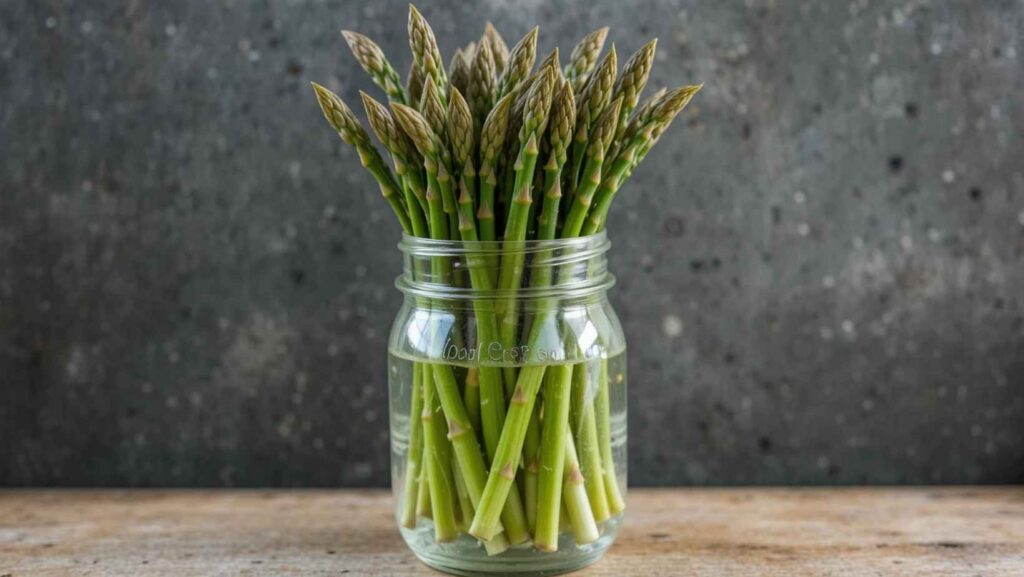
Would you want to know if you can store asparagus in water like flowers? From my own experience, I can confirm that it is possible to preserve asparagus in water, just like you would any other type of flower.
In order to achieve this, you must first take around half an inch off the bottom of the stalks of asparagus. After that, place them in an upright posture inside a jar or glass that is filled with somewhere around one inch of water.
To assist in preserving moisture, wrap the tops loosely with a plastic bag. To keep the asparagus crisp and fresh, change the water every day or two.
However, that is not all; as you continue reading, I will provide you with further information on the topic matter.
Now, let’s get started
Can you store asparagus in water
Asparagus can be preserved in water, allowing it to retain its freshness for a longer period.
It is usual practice to keep asparagus in an upright position within a container of water, such as a jar or glass, in a manner that is analogous to the way that cut flowers are stored.
There is also the possibility that trimming the ends of the spears before placing them in the water would help them absorb water more efficiently.
For ten days or longer
Finding the natural break, which is usually between 1 and 1.5 inches, is the first step in trimming the woody ends. Snap one spear to find it.
It can serve as a guide for trimming the remaining pieces, which can be done by aligning them or by retaining them in place with a rubber band.
After the asparagus has been cut, please place it in a large glass or jar filled with one inch of cool, fresh water.
To prevent dust and smells from getting inside, I also prefer to cover it with a plastic bag in a loose manner.
Replace the water in the jar once every one to two days and store it in the refrigerator to maintain its freshness.
Soaking asparagus in water
It is recommended that asparagus be soaked in water before being cooked. It is not necessary to soak asparagus in water; all that is required is to wash them before cooking to eliminate any dirt.
If you soak the asparagus after purchasing it, it will absorb moisture and become mushy.
If you put the asparagus in the refrigerator, it will not last as long and will spoil more quickly.
Description in further detail:
The Reason Behind Soaking:
When asparagus is soaked in cold water for a short period, it can help release any dirt or sand that may be stuck in the tips of the asparagus.
The method consists of filling a bowl with cold water, placing the asparagus in the water, then performing a few gentle agitations on the asparagus. Let it soak for 5 to 10 minutes.
Stay away from over-soaking: Although soaking can be beneficial, avoid keeping asparagus soaked for an excessive amount of time, as this can result in waterlogging and a loss of flavor.
To clean the asparagus, once it has been soaked, rinse it under cold running water to remove any debris that may have remained.
Soaking Asparagus in Water Before Cooking
No soaking is required; just wash the asparagus well before cooking to remove any debris.
If you soak the asparagus after purchasing it, it will absorb moisture and become mushy. If you store it in the refrigerator, it will not last as long and will spoil more quickly without proper preservation.
You should wash them just before you prepare them, and the best place to store them in the refrigerator is in the vegetable drawer. Use the vegetable drawer.
After trimming the ends of the asparagus spears, store them in a jar with an inch of water, just as you would with fresh flowers, to maintain their freshness for a longer period.
You may keep it in the refrigerator for up to four days if you cover it with a plastic bag.
What is the best way to preserve asparagus
Freezing asparagus is the best way to preserve it. Rinse and trim the spears, then blanch them in boiling water for a few seconds. Shock them in ice water and place them on a baking sheet to freeze.
For long-term storage, move them to a freezer bag after they are solidly frozen.
Specific Preservation Techniques:
Freezing:
This is the most popular and recommended approach. When asparagus is frozen, its texture and flavor are retained for subsequent use.
Get ready: After washing, cut the asparagus into the appropriate sizes and clip the woody ends.
Blanch: Blanch the asparagus for 2–4 minutes in boiling water, then shock it with freezing water, depending on its thickness.
To freeze the blanched asparagus, spread it out on a baking sheet until it solidifies. After that, move to freezer bags.
Canning: A pressure canner can be used to properly may asparagus while ensuring safety and preventing botulism. Certain actions must be made in order for this technique to ensure proper preservation.
Drying: To help keep asparagus fresher for longer, it can be dried in a dehydrator.
Pickling: Using a boiling water bath canner, pickling asparagus is an additional preservation technique.
Here’s a quick technique for keeping asparagus. Cut those ends off. is cut off by around 1/4 inch. Similar to cut flowers, keep them in a glass or Mason jar with water.
In the store that sells refrigerators. In this manner, asparagus will truly survive for weeks, which is longer than you’re likely accustomed to.
What are alternatives to storing asparagus in water
The cup approach might not work for your asparagus for some reason. Don’t worry; you can still use water to maintain the freshness of your asparagus stalks.
Once more, begin by cutting the stalk ends, but try to cut as little as possible in case you need to trim more later.
Instead of immersing the asparagus in a glass of water, you can place the stalks in an open plastic bag after wrapping them in moist paper towels or dishcloths.
This technique isn’t as effective as a glass of water, but it will retain enough moisture on the stalks to keep them hydrated for a few days.
Still, this is an excellent approach to try if you have a limited refrigerator room.
Remove the asparagus stalks from their wrappings, wash them, and cut the ends again if they have become hard and dry. Then, cook some asparagus and Pecorino or asparagus frico.
The texture of asparagus may begin to deteriorate with time, depending on how quickly you consume it. However, you can dry-char the asparagus to bring back some crispness to wilted stalks.
You suddenly become a master at both preparing and keeping this vegetable.
Does asparagus last longer in water
Indeed, keeping asparagus in water instead of in a crisper drawer can extend its shelf life.
Asparagus can be kept fresh for up to 10 days by storing it upright in a glass jar or container with a small amount of water to moisten the spear ends.
Here’s why this approach is effective:
Rehydrating:
Like many other vegetables, asparagus is mostly composed of water. The spears may retain their firmness by keeping their ends submerged in water.
Decreased Water Loss:
Water keeps the asparagus from drying out and losing its moisture content, which might cause it to become bland and taste less good.
Extended Shelf Life: By using this technique, asparagus’s normal shelf life of three to five days in the fridge can be extended to possibly ten days.
This one is for your kitchen, then! After trimming the asparagus’s ends, place it upright in a jar or other container with a water level of one to two inches.
The asparagus will magically absorb the ideal quantity of water, keeping it crisp and ready to eat.
Final thought
Now that we have established you can store asparagus in water like flowers, If someone wishes to consume asparagus, they should do so; however, the quantity of asparagus that is added to water should be kept to a minimum.
The nutritional content of the beverage must not necessarily improve as a result of this addition, she explained.
To reap the benefits of asparagus, you need to consume half a cup, and it’s unlikely that you’ll be able to get it out of three pieces.