
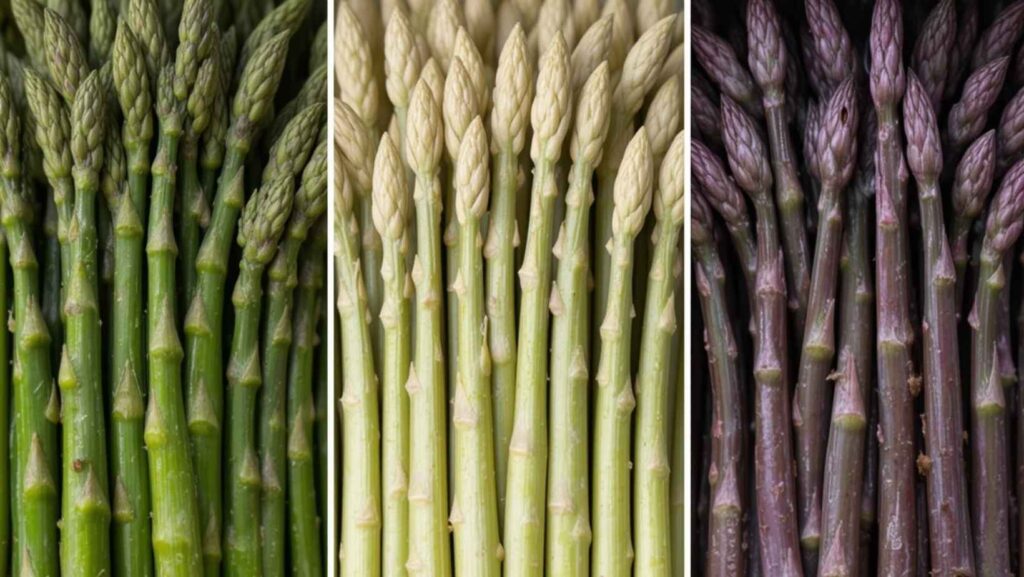
Would you want to know the difference between green, white, and purple asparagus? As far as I can tell, the primary distinction between green, white, and purple asparagus is the manner in which they are cultivated and the flavor profiles that they possess.
The flavor of green asparagus is described as grassy and slightly bitter since it is grown in the sun on the plant.
The flavor of white asparagus is characterized by a gentler, sweeter, and less bitter taste as it is cultivated underground, away from direct sunlight.
Because of its vivid purple hue, which is ascribed to the presence of anthocyanins, purple asparagus is farmed extensively. It has a distinct flavor that is somewhat sweeter and nuttier than that of other asparagus types.
However, that is not the case; as we progress, I will provide you with further information on the subject.
Now, let’s get started
Is green, white, or purple asparagus healthier
The vitamin content and secondary plant components of the various asparagus varieties differ. The distinctions between purple, green, and white asparagus are described in the section that follows.
White asparagus:
In Germany and Switzerland, white asparagus is a popular subterranean vegetable. To keep the spears out of the sunlight until the asparagus harvests, the farmers bury them with mounds of dirt.
White asparagus may be developed from most asparagus varietals. Nonetheless, unique, high-yielding cultivars that only generate white asparagus have been developed for commercial use.
These types generate the reddish-purple plant pigment anthocyanin instead of the green pigment chlorophyll when exposed to sunlight, which can give them an unfavorable, somewhat bitter flavor.
Green asparagus: When the spears are 10 to 20 cm above the ground, they are ready to be picked.
Green asparagus may be grown from mild-tasting, low-anthocyanin cultivars because it contains more beta-carotene vitamins C, E, and K. Green asparagus is said to be healthier than white asparagus.
Purple asparagus: Originally, Italy was the primary location for purple asparagus varietals. Purple asparagus has a delightfully mild flavor with a hint of sweetness and nutty undertone.
Purple asparagus, like green asparagus, is cultivated above ground and, when exposed to sunlight, produces violet anthocyanins.
Another important antioxidant that aids in the body’s defense against free radicals is anthocyanin.
All the nutrients and vitamins present in green asparagus are also present in purple asparagus, in addition to these secondary plant components.
Which is better, green or purple asparagus
Asparagus is rich in potassium, fiber, and vitamin B6, regardless of color.
However, compared to its green counterpart, purple asparagus, which derives its color from anthocyanin, is sweeter and contains more vitamin C per serving.
Purple asparagus may be established using the same soil needs and planting techniques as green asparagus.
A perennial vegetable, asparagus may continue to grow for over 15 years. Select a location that receives full light, has soil that drains properly, and is devoid of perennial weeds.
Please spend some time conducting the crucial soil test; this should be the first thing you do before planting anything, but it’s especially vital when committing to an asparagus plot.
Soils with a reasonably high pH of 6.8 to 7.0 are ideal for asparagus.
The best way to grow asparagus is to purchase one-year-old crowns and plant them 8 inches apart in the early spring.
In April, while the temperature is still chilly, you can start planting from seed. Plant traditional green variety 12 inches apart.
Purple Passion and Pacific Purple are the suggested purple asparagus cultivars for West Virginia.
Purple asparagus should be harvested when the stalks are 6 to 10 inches long and at least as thick as a pencil.
While most cooking techniques will yield the same flavor, steaming brings out the rich purple color of purple asparagus to its fullest.
Health Benefits of Green and White Asparagus
1. They Provide a Lot of Fiber
Any asparagus, whether green, white, or even purple, is a fantastic source of dietary fiber.
Fiber improves blood sugar, lowers cholesterol, keeps you feeling fuller for longer, and promotes intestinal health.
2. There Are More Antioxidants in Green Asparagus
Asparagus has a lot of flavonoids and vitamin E, two antioxidants that help shield the body from oxidative stress, which is known to cause harm.
Antioxidant-rich foods, including asparagus, are linked with a limited risk of heart disease and several forms of cancer.
However, the variety and color of the fruits have an impact on their antioxidant levels. Antioxidants are found in the highest concentrations in green asparagus and the lowest in white asparagus.
3. They’re Good for Your Heart
76% of your daily vitamin K needs may be met with one cup of cooked asparagus. Minimizes rate of heart disease are associated with diets high in vitamin K.
It has been found that those who consume large amounts of vitamin K are 21 percent less likely to be admitted to the hospital for heart disease.
What are The Different Colors of Asparagus and How They Affect Flavor
Here is some assistance if you have never purchased asparagus and are unsure of the distinctions between green, white, and purple:
White asparagus has less nutritional value than green or purple asparagus, as it is essentially green asparagus that has been cultivated in the dark.
It’s a little milder, and fresh white asparagus isn’t commonly found in the vegetable area of your neighborhood supermarket. This type of asparagus is typically found in a can or jar.
The most popular variety of asparagus sold in supermarkets is green asparagus, which is cultivated in full sunshine.
Though it’s not a terrible thing, it also has the strongest flavor. It doesn’t make your mouth water like a very powerful chunk of lemon.
Said green asparagus has a somewhat stronger flavor than the other varieties.
Purple asparagus tastes great raw and has a somewhat fruity flavor. Additionally, it contains less fiber and more sugar than white or green asparagus.
To add some color to a salad, you may shave some raw purple asparagus using a peeler.
When I first prepared purple asparagus, I was disappointed to learn that it would ultimately turn green if cooked for a long enough time.
When I removed my purple asparagus from the steamer, it had already gone green, contrary to my initial expectation that I would place it on my niece’s dish and she would be thrilled to see something purple on her plate.
I am by no means an authority on asparagus. I’ve learned a lot about it over the years and happen to believe it’s one of the world’s most wonderful vegetables.
I think green asparagus is my favorite, but you should absolutely try all the colors to see which you like best!
Although I also enjoy roasting asparagus, I particularly enjoy coating it with olive oil, salt, and pepper and then wrapping the bunches in bacon before grilling.
Because you don’t have to watch it, and you can put multiple baking sheets in the oven at once, this is a terrific way to cook in large quantities.
Try roasting it as I do if you have an abundance of fresh asparagus and are unsure of what to do with it!
You will require:
- Two pounds of fresh asparagus
- Olive oil
- Salt
- Black pepper, ground
Instructions:
Set the oven temperature to 400°F. Remove the rough ends of the asparagus while the oven is heating up.
Either chopping or snapping your asparagus will do this; the decision is entirely yours. Look at this if you’re unsure which approach is best for you:
Once the rough ends have been cut off, put the asparagus on a baking sheet and brush it with a little olive oil.
Then, toss it with your hands to ensure it is well covered. Sprinkle the asparagus with salt and pepper after spreading them out in a good, single layer on the baking sheet.
The asparagus should be soft but still somewhat crunchy after 25 minutes of roasting.
What is the difference between white and green asparagus
The white ones grow underground. The sun doesn’t reach them. Because their harvest is fragile, you must be careful not to damage the tips or stems.
Purple asparagus grows underground as well. They’ve just figured it out. They change color in response to light.
Furthermore, green asparagus sprouts straight from the ground. Light causes them to become green, activating the chlorophyll.
They react quite strongly to changes in temperature. They are now developing beneath the cover. Compared to their relatives, they have a stronger flavor.
The fourth kind of asparagus is the wild variety. Nature contains them. They taste stronger on the tongue and are green but considerably finer.
Final thought
Now that we have established the difference between green, white, and purple asparagus, it is possible to consume purple asparagus raw, which is one of the reasons why it is regarded as the healthiest of all types of asparagus.
Green asparagus, much like purple asparagus, is an excellent source of vitamins. To get the most out of these vitamins, exercise caution when cooking purple and green asparagus.
A significant number of the vitamins are destroyed when exposed to excessive heat. The most effective method for preparing asparagus is to steam it.
Steaming, as opposed to boiling or simmering, does not remove any of the beneficial components present in the asparagus.