
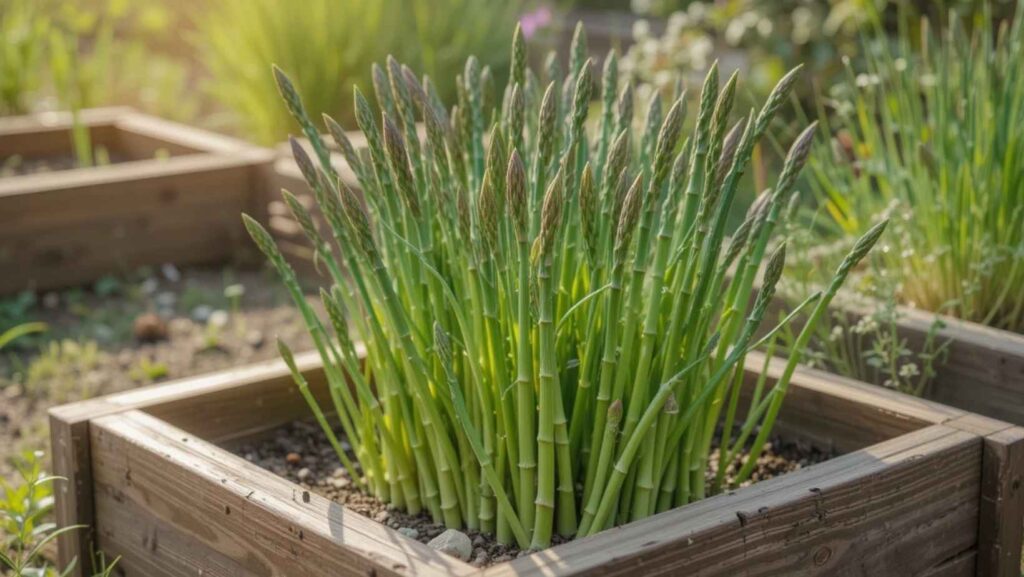
Would you like to know if you can grow asparagus in raised beds? Based on my personal experience, the answer is yes; it is indeed possible to cultivate asparagus on raised beds.
This is an excellent choice, particularly if you have heavy or poorly draining soil, as it allows you to have greater control over the soil’s conditions and drainage.
It is also possible to plant asparagus on raised beds that are between eight and ten inches in height. Purchase crowns that are one year old and in good health from a reliable vendor.
For the length of the bed that has been created, open a trench that is six inches deep and fifteen inches broad.
However, that is not all; as you continue reading, I will provide you with further information on the topic matter.
Now, let’s started
How deep should a raised bed be for asparagus
What are the simple procedures involved in planting crowns of asparagus in a raised bed? First, dig a trench that is between 12 and 18 inches wide, a raised bed that is 12 inches deep, and an in-ground trench that is 6 inches deep.
Secondly, plant crowns at a distance of 12 to 24 inches apart. After the crowns have developed new growth, the third step is to cover them with around two inches of dirt.
Breakdown in great detail:
Size of the Planting:
Create trenches or holes that are between six and twelve inches deep.
Place the crowns of the asparagus plants in the trench or hole, making sure that the crowns are at least six inches below the surface of the soil.
When covering the crowns with soil, ensure that the top of the crown is covered with approximately six inches of compost.
The preparation of the soil involves adding organic matter and compost to provide a rich environment with good drainage.
Inspect the soil to ensure it is free from grasses and weeds.
When it comes to spacing, rows of asparagus should be 8-10 inches apart, and crowns should be spaced 12-18 inches apart.
The asparagus bed should be mulched with a layer of organic matter that is at least two inches thick to discourage weed growth and maintain moisture.
Ensure that the plants receive adequate watering, especially during their first year of growth.
During the spring months, water once a week, and during the summer months, water twice a week (which is twice a week).
Is asparagus better ground or raised beds
When you grow asparagus on a tall raised bed, which is by far the easiest method, you will remove all of the digging, mounding, squatting, kneeling, and weeding that is required for traditional asparagus cultivation.
In addition, a raised bed helps the earth warm up more quickly in the spring, which means that your asparagus will also come up more quickly.
Breakdown in great detail:
A Few Advantages of Raised Beds for Growing Asparagus
Enhancement of Drainage: Raised beds provide superior drainage, which is essential for asparagus since it can not tolerate roots that are soaked in water.
Control of the Soil: When you grow asparagus on a raised bed, you have total control over the composition of the soil, which enables you to cultivate an environment that is rich, well-drained, and excellent for asparagus.
Management of Weeds: Raised beds are an effective method for weed management because they separate asparagus from grasses and other weeds.
Asparagus is grown in raised beds, which allow it to be grown in isolation and make harvesting it much simpler.
Due to the fact that raised beds warm up more quickly in the spring, they may result in early harvests.
Asparagus grown underground:
Naturally Occurring Terrain:
Growing asparagus in the ground might be a realistic alternative if you have rich, well-draining soil.
Dedication Over a Prolonged Period: Since asparagus is a perennial plant that may survive for a great number of years, once it has established itself, it takes very little upkeep.
Due to the fact that in-ground asparagus requires space to expand, you must make sure that there is sufficient room for the plants to develop.
How to us raised bed to plant asparagus
Once established, asparagus tends to remain in place. Since asparagus ferns may grow up to 5 feet tall in a season, locate a suitable permanent position in your garden to prevent relocating the whole crop.
Plant asparagus when the soil is workable and your usual last frost date has passed.
Store-bought asparagus in a huge basket or tub may have brittle tops, so soak them in a pail of water before planting.
While preparing the soil, leave the crowns in water for no more than an hour to avoid rot.
Prepare soil:
Grow asparagus on the north or west side of a garden to avoid shading other crops in summer.
To allow roots to grow, your raised bed must be at least 12 inches high, but I prefer 24 inches for easier harvesting. (My asparagus bed is 36″ tall!) Every season, my back appreciates me.
Plant asparagus on a raised bed instead of excavating trenches and mounds, saving time and effort.
Place crowns 12 inches apart and distribute roots around them.
The crown should face up. Asparagus grows from the nub above the roots. Occasionally, little spears grow.
Add 3 inches of dirt to the top of your bed (the crown should be 6 inches below the surface) once the asparagus starts growing and the spears are a few inches long.
For the rest of the season, apply 2 inches of mulch to control weeds.
For the first two years, asparagus needs regular watering (1 to 2 inches per square foot each week). Once established, plants require 1 inch of water per week.
Older plants become drought-tolerant and thrive well with rainwater alone (unless you live in a dry, hot region).
For asparagus, fertilize at the start of the season before the first shoots develop and again mid-season (in June or July) after harvesting. This promotes lush, robust fronds and large harvests the next year.
How to prepare an asparagus bed
After deciding on a spot for your new asparagus bed, prepare the soil beforehand to give it time to settle.
Ensure the soil drains well and add a generous amount of well-rotted organic material.
Fork the dirt layer under you as you dig down to a spade’s depth.
Eliminate any signs of perennial weeds.
Add a generous amount of garden compost or well-rotted manure to the top 25–30 cm (10–12″).
In a 4×8 raised bed, how many asparagus plants are there?
A 4×8 raised bed may accommodate 10–12 asparagus crowns spaced 12–18 inches apart.
Here’s a more thorough explanation:
The bed Dimensions: 4 feet by 8 feet
Plant spacing: Generally, asparagus plants require a distance of 1.5 to 2 feet between each other.
Rows: You can plant in rows, with two to three feet between each row.
Planting Depth: Dig holes 1 1/2 to 2 feet apart and 6 to 8 inches deep.
Yield: Planting a sufficient number of asparagus plants will ensure a steady harvest, as they can produce for many years.
Final thought
Now that we have established that you can grow asparagus in raised beds, in contrast to other plants and weeds, asparagus does not have to contend with competition. For this reason, it is a good idea to construct an elevated bed specifically for it.
Beds that are raised are simple to keep clean. You can more easily manage the growth of weeds and enrich the soil.
Creating a miniature ecosystem for your plants may be accomplished by incorporating the appropriate proportions of topsoil, compost, and organic matter into the soil.
The space provided by raised beds allows for the installation of insect precautions such as raised bed coverings.
Additionally, they make it simpler to set up a soaker hose system or drip irrigation, making watering more convenient.