
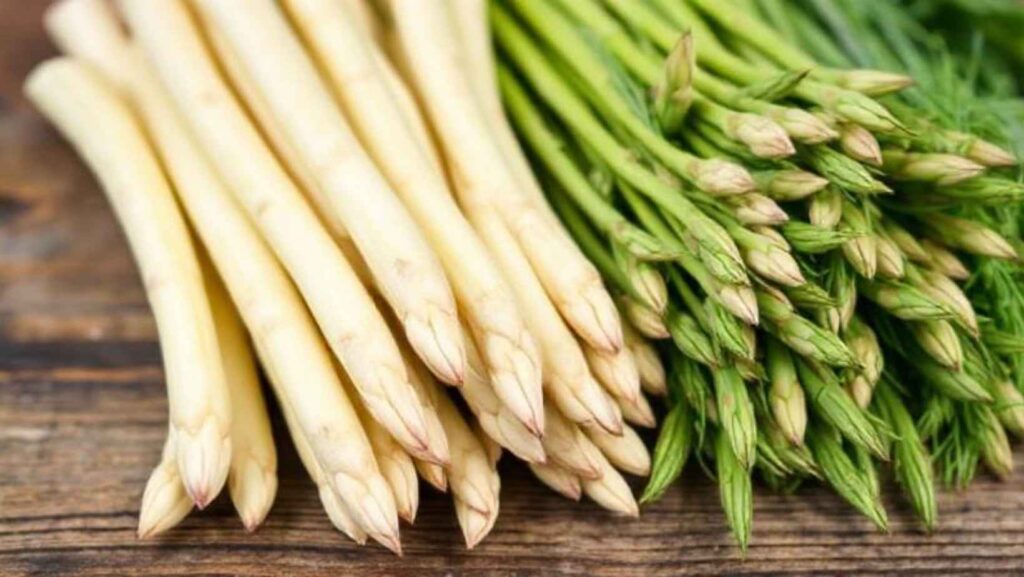
Would you like to know why white asparagus is more expensive than green asparagus? From my own experience, I can say that white asparagus is often more costly than green asparagus.
This is because the cultivation procedure for white asparagus is more labor-intensive and time-consuming.
The particular method of cultivating white asparagus underground, away from sunlight, to prevent chlorophyll formation and maintain its color contributes to the product’s expense.
Furthermore, white asparagus is included.
However, that is not all; as you continue reading, I will provide you with further information on the topic matter.
Now, let’s get started.
Why is White Asparagus So Expensive
Growing White Asparagus
White asparagus cultivation is a complex procedure. This delicate vegetable grows more slowly and may become bitter on clay or loam soils; it likes sandy terrains.
Asparagus is grown using a unique method: it is covered with dark coverings or placed under earth mounds to keep off sunlight. Starting a plantation is a difficult task.
The first year is dedicated to plant growth, without harvest, after seeds are sown in the spring.
To protect crop rows from sunlight and regulate the temperature below ground, farmers build earth mounds around the asparagus.
There is a 15–20 day harvest window in the second year. However, the plantation takes off in the third year, producing around 15 asparagus shoots over three months.
It is produced for over ten years before needing to be replanted since it is a perennial crop. This growing season needs ongoing maintenance, which comes at a cost with no quick payoff.
Health Benefits of Green and White Asparagus
1. They Provide a Lot of Fiber
Any asparagus, whether green, white, or even purple, is a fantastic source of dietary fiber.
Fiber boosts blood sugar levels, lowers cholesterol, keeps you feeling fuller for longer, and promotes intestinal health.
An estimated 95% of Americans are thought to be deficient in this essential vitamin, with only 5% meeting the recommended fiber intake.
2. There Are More Antioxidants in Green Asparagus
Asparagus has a lot of flavonoids and vitamin E, two antioxidants that help shield the body from oxidative stress, which is known to cause harm.
High in antioxidants foods, including asparagus, are related with a reduced risk of heart disease and some forms of cancer.
However, the variety and color of the fruits have an impact on their antioxidant levels. Antioxidants are found in the highest concentrations in green asparagus and the lowest in white asparagus.
3. They’re Good for Your Heart
76% of your daily vitamin K needs may be met with one cup of cooked asparagus.
Vitamin K-rich diets are associated with decreased rates of heart disease; individuals who consume large amounts of vitamin K have been shown to have a 21% lower risk of heart disease hospitalization.
How Do You Shop for White Asparagus and Why Is It So Expensive
When purchasing white asparagus, there are a few key considerations to keep in mind before shopping.
Finding bunches with stems that are firmer, thicker, and not wrinkled or withered is something Pépin suggests looking for.
Please take a look at the tips to ensure that they are not wilted or mushy but rather that they are still whole and fresh.
Due to the labor-intensive cultivation technique and low market demand in the United States, white asparagus is often more expensive than its green counterpart.
This is because of the combination of these two factors
What’s the difference between green and white asparagus
The same plant is the source of both green and white asparagus. Sunlight gives green asparagus its color.
The light strikes the plant as it emerges from the earth, causing it to turn green. White asparagus develops underground because the world is piled on top of the stalks to block sunlight from reaching the plant.
A specialized knife is used to cut the stalk beneath the ground after the tip has penetrated the surface.
Protein, ascorbic acid, calcium, thiamin, and niacin are among the nutrients that are often found in greater concentrations in green asparagus.
Compared to green spears, white asparagus often has a lower antioxidant level. In gourmet cooking, white asparagus is chosen due to its milder flavor.
Tips for Preparing and Storing
Asparagus quickly loses quality after harvest. The amount of fibrous material increases as the sugar concentration decreases.
Steeds with loose heads are fibrous and do not hold up well; choose spears with compact heads.
As asparagus is sensitive, it is best to prepare it the same day it is bought. It should be covered and kept cold to preserve it for a longer period.
After trimming the stem end by approximately 1/4 inch, repeatedly wash it in warm water.
After patting it dry, put it in the refrigerator’s crisper drawer and wrap it in moisture-proof material. For optimal quality, refrigerate and consume within two to three days, but not more than a week.
Stand upright in two inches of cold water or drape a moist paper towel over the stem ends to keep them fresh.
Is white asparagus the same as green
There is a significant difference between white and green asparagus, and that difference is the cultivation method used to grow them.
Asparagus transforms color when exposed to the sun, much like your skin does.
The process of photosynthesis is responsible for the green coloration of spears, which occurs as fresh spears emerge from the ground and extend upward toward the sun’s rays.
This process causes the spears to generate chlorophyll.
However, white asparagus is planted entirely underground or covered with plastic so that it is never exposed to sunlight.
This ensures that it is always preserved. This suppresses photosynthesis, resulting in the spears retaining a milky white color.
More earth is piled up around them as they continue to develop, ensuring they remain covered until harvest time.
Why is white asparagus so expensive
As a result of the significantly increased amount of effort required to cultivate white asparagus underground, the price reflects exactly this.
It is a laborious task that requires each stalk to be excavated and chopped to size by hand.
A bunch of white asparagus might cost up to two dollars more than a bunch of green asparagus.
Although green asparagus remains the most popular type in the United States, there has been a growing demand for white asparagus in recent years.
It is possible that in a few years, we will be celebrating our very own Sparglefest. Who knows?
Final thought
Now that we have established why white asparagus is more expensive than green, Once the veggies have been picked, it is a race to have them cleaned and sorted as quickly as possible to preserve their color and freshness.
As the final process, sorting is done according to quality. In Europe, the stalks that are the whitest, straightest, and thickest command the greatest price, which can reach up to ten euros per kilogram.
A price tag of $25 per pound can be attached to white asparagus once it has been sold to nations such as the United States.