
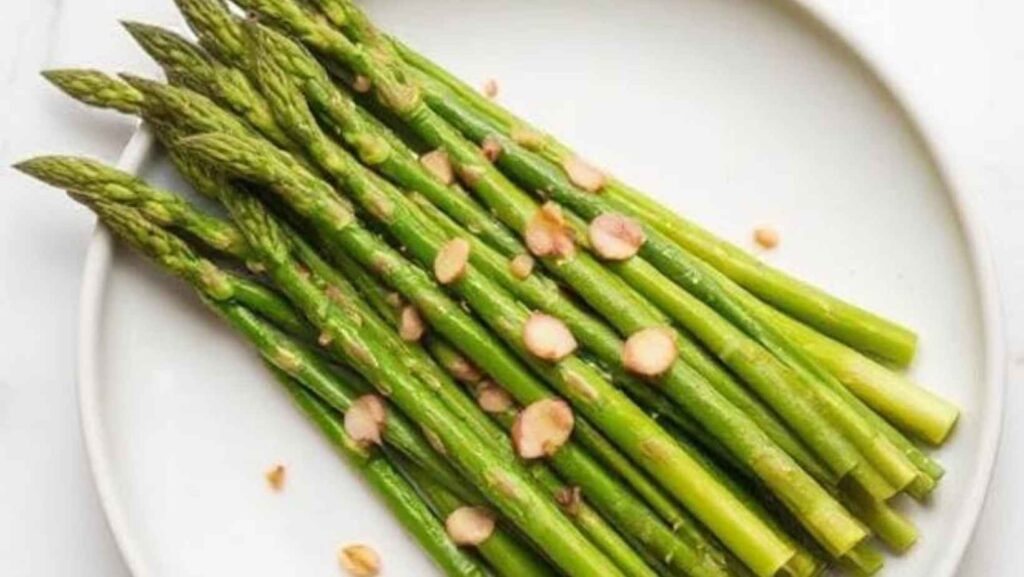
Would you want to know Why is Asparagus considered a luxury vegetable? According to my observations, Asparagus is frequently regarded as a luxury vegetable because of a special set of characteristics,
Additionally, it requires considerable effort to cultivate, yields a modest harvest per acre, has a limited harvest season, is challenging to transport, and its increasing popularity drives up demand and prices.
After the seeds are sown, it may take three to four years for the plants to produce edible spears, and each plant requires several square feet of space.
As a result of this long wait and the limited growing season, Asparagus has elevated itself to the rank of a luxury vegetable, which explains why it might occasionally cost more at the market.
But that’s not all; as you continue reading, I’ll provide additional information on the topic.
Now, let’s get started.
Why is Asparagus so expensive
The time it takes to develop a crop, the labor-intensive harvesting method and the seasonality of its availability are some of the reasons why Asparagus can be costly.
For example, white Asparagus is more costly since it needs certain agricultural methods.
Here’s a closer look at the causes:
Extended duration of establishment:
It takes several years for asparagus plants to reach maturity and yield a harvestable crop, necessitating a substantial initial investment in land.
Harvesting Asparagus requires a lot of effort, as it is a manual activity that is difficult to mechanize and increases labor costs.
Short growing season: Because Asparagus is a seasonal produce that is mostly accessible in the spring, its availability is limited, and its out-of-season pricing may increase.
Fragile and requiring careful transportation: To preserve freshness, Asparagus must be packed carefully and transported quickly, which increases the transportation cost.
Particular growth conditions: Asparagus grows best in rich, well-drained soil, which can restrict its growing areas and have an impact on pricing and availability.
The unique cultivation of white Asparagus: White Asparagus, which has a unique flavor and look, is cultivated by covering the stalks with dirt or shade, which takes more work and skill and raises the price
What is unique about Asparagus
These seven amazing facts can help you get started.
1. Asparagus has a long history as a vegetable.
Growing Asparagus dates back thousands of years, and it was even featured on Egyptian tombs as early as 400 BC.
“The Greek asparagus (and originally the Persian asparagus) meaning sprout or shoot” is where the name originates.
2. Asparagus picking can be a social faux pas; avoid doing it immediately after Royal Ascot, which takes place in the third week of June.
The plant must die down in order to accumulate energy for the crop the following year; hence, it is not suitable for social behavior.
3. Asparagus grows remarkably
The season for British Asparagus (Asparagus officinalis) typically starts in April.
The spears are known as the Usain Bolt of the vegetable world, as they can grow 10 cm in a single day.
Because each spear must be hand-picked and the season is brief (approximately eight weeks), British Asparagus may not be as inexpensive as some other seasonal vegetables.
4. Although it’s not a miraculous remedy, Asparagus is nutritious.
Vitamins K and C may be found in abundance in Asparagus.
It is also a prebiotic, which means that it helps nourish our gut bacteria to maintain the health of our microbiome by providing soluble fiber in the form of fructooligosaccharides (FOS).
However, the advantages to health have sometimes been exaggerated. Pureed Asparagus may cure cancer, according to a myth that went viral online.
Sadly, there is no proof supporting this, even though one of its components, vitamin K, has been linked to anti-cancer effects.
5. White Asparagus
White Asparagus tastes milder than its green relative, although sunshine is the primary distinction between the two.
Etiolation is the procedure used to cultivate white Asparagus, which means it is not exposed to light and is often covered with soil or another material until it is ready to be harvested.
As a result, the molecule that gives plants their green color, chlorophyll, is not produced. Look for the white variety in jars if you’d want to try it.
6. Asparagus may be enjoyed in many different ways.
Asparagus is a versatile vegetable that can be grilled on the barbecue or served with boiled eggs. It takes just a few minutes to prepare and boasts a unique flavor that is enhanced by a hint of salt and pepper.
Purchase it fresh, frozen, or canned, but if you want a little crunch to your food, go for the fresh kind.
Because frozen Asparagus is often softer, it works well in soups
Is Asparagus the king of vegetables
Asparagus was proclaimed the “Food of the Gods” by Queen Nefertiti and the “King of Vegetables” by King Louis XIV of France. I completely concur!
At Monticello, Thomas Jefferson had asparagus beds and frequently consumed it marinated in oil, vinegar, red wine, capers, and herbs. The endive, lettuce, and onions in a ragout with the Asparagus from his gardens.
In Germany, white Asparagus is so highly valued that a celebration called “Spargelzeit” is held in its honor.
There are also scheduled excursions to several towns, featuring music and roadside stalls brimming with “spargel” throughout the period from April 22 to June 24.
By the way, white Asparagus is “made” that way by certain growth conditions rather than being a distinct type. It tastes a little more delicate than green Asparagus.
Asparagus is quite healthy. Vitamins K, E, folic acid, B1, B2, C, selenium, and folates are all abundant in it. It contains a high amount of anthocyanins, a crucial antioxidant.
Additionally, it contains glutathione, which helps break down free radicals. Additionally, as noted earlier, it is a fantastic source of nutritional fiber and contains only 32 calories per cup.
Where to Buy Asparagus
Depending on the area, Asparagus is harvested from March to June. It is accessible all year round due to international cultivation; however, some people think imports are usually boring.
The spears may be as thin as pencils at the beginning of the season, but they become thicker and more substantial as the season progresses.
Tenderness, which has more to do with how the plant is cultivated and how quickly it is consumed after harvest, is not correlated with thickness.
Fresh, plump asparagus spears can be astonishingly delicious and soft, whereas thin Asparagus that has been poorly or prolongedly kept can be tough and flavorless.
As soon as Asparagus is harvested, purchase it. The best places to find extra-tender specimens are farmers’ markets and shops that source their produce from nearby farmers.
Asparagus is a common springtime discovery for foragers and grows wild in some areas, particularly along roadsides.
Growing it in a home garden is similarly simple, but the first crop won’t come for three years.
Freshly trimmed ends, compact heads, and smooth skin are desirable. To improve your chances of biting into sensitive spears, it should be as vivid green as possible (purple or white for those types).
Bundles of Asparagus are sold by the pound. Typically, a pound of Asparagus contains 12 to 15 spears.
This makes about 3 cups of chopped Asparagus, enough for 2 to 4 servings. The season will also affect the cost. In general, it’s not the most affordable vegetable available.
Final thought
Now that we know why asparagus is regarded as a luxury vegetable, we can see that it is a very nutrient-dense vegetable with many health advantages, such as preventing cancer and stimulating brain function.
Your dishes will benefit from the addition of taste, texture, and color of Asparagus, regardless of whether you choose the more typical green spears or the more brilliant purple or white spears.