
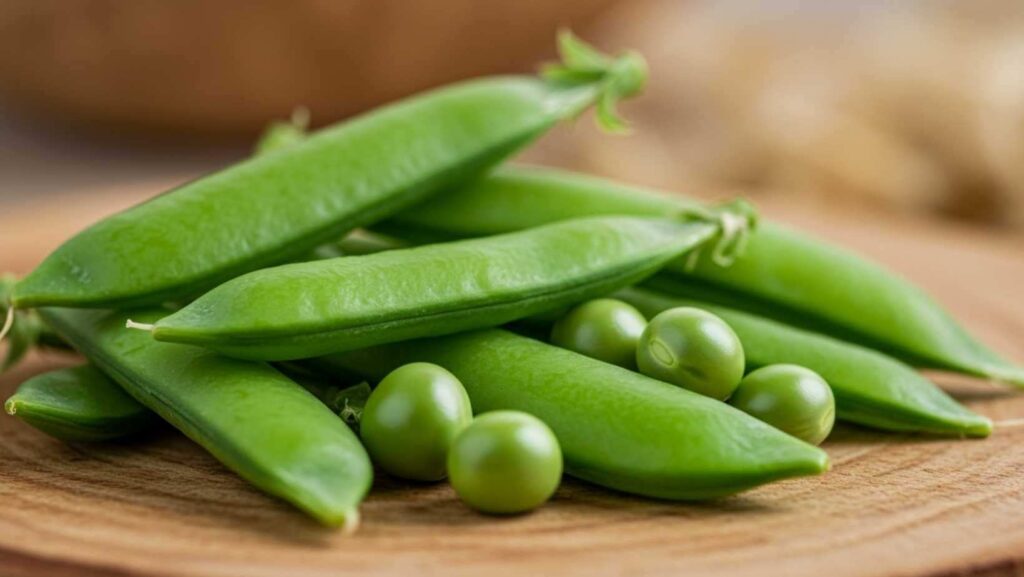
would you want to know why snow peas are flat? According to my personal experience, snow peas are flat because they are picked before the peas that are contained within the pod have reached their full maturity.
This ensures that both the pod and its contents stay soft. The entire pod may be consumed due to its flat design and thin walls, which allow for its consumption.
However, that is not all; as you continue reading, I will provide you with further information on the topic matter.
Now, let’s get started
Why are my snow peas flat
When compared to the sugar snap peas, which are puffier and contain larger peas within their pods, the snow pea pods that are considered to be regular should be entirely flat.
If you choose not to harvest the peas, the seeds will begin to develop instead of the peas themselves.
Consequently, this will result in the snow pea ceasing to produce new pods.
In order to provide a more in-depth explanation:
The harvesting of snow peas occurs when they are still immature:
The pods of snow peas are picked when they are flat, and the peas that are contained within them are little and immature, meaning that they have not yet reached their full maturity.
Their identity is a component of the flat form that they have:
Snow peas are characterized by their flat shape, and it is recommended that they be harvested when they are in this stage in order to achieve the optimum flavor and texture, respectively.
The ability to harvest at the appropriate time is essential:
The peas will be more mature if you wait for the pods to grow spherical and plump. However, the pods may become tough and less tasty if you wait for them to reach this stage.
A greater amount of yield is encouraged by frequent harvesting:
Snow peas should be harvested regularly as they grow since this will encourage the plant to continue generating more pods.
This is because the plant will be concentrating on developing the next generation of blossoms and peas.
What causes snow peas to curl
There are a number of causes that might cause snow pea leaves to curl, the most common of which are environmental stresses and deficits in nutrients.
A few examples of these are drought, an excessive amount of moisture, variations in temperature, an inadequate amount of sunshine, and nutritional imbalances consisting of deficiencies in nitrogen or potassium. Other illnesses and pests might be responsible for leaf curl.
Drought is one of the environmental stressors.
When the soil is excessively dry, plants have a difficult time maintaining the turgor of their leaves, which can result in withering and curling.
Overwatering: Root rot can be caused by excessive wetness, which can also affect the plant’s ability to absorb nutrients and degrade the structure of the leaves.
An excessive amount of direct sunshine can lead leaves to get scorched, while an inadequate amount of sunlight can cause them to become stretched out and curl.
The leaves can be damaged by strong gusts, which can also lead them to curl on their own. A symptom of stress caused by the environment, pests, diseases, or nutrition is the appearance of curled leaves.
In order to address the condition, adjust care techniques such as light and water.
In addition to ensuring that snow peas are healthy, regular monitoring helps prevent future curling.
How do you make snow peas not stringy
The string that runs along the side of the pod of snow peas should be removed before cooking in order to avoid the snow peas from becoming stringy.
One method for accomplishing this is to create a small slit on either end of the pod with a paring knife and then carefully remove the thread from the pod.
As an additional option, you may use scissors to cut off the ends, and then you can remove the string by pulling it off.
A Step-by-Step Guide:
Firstly, get the peas ready:
The snow peas should be placed on a chopping board.
2. Trim the ends: Using a paring knife, create a small slit on each end of the pod, just a bit from the tip, without cutting all the way through. This will allow you to trim the ends.
3. Remove the string: To remove the string, grab the tips that are hanging down and pull along the side of the pod that is concave while doing so.
Another option is to use scissors to cut off the ends and then remove the string by pulling it off.
4. Optional slicing: Once the thread has been removed, you’ll have the option of slicing the snow peas in half diagonally or lengthwise, depending on your preference.
5. Prepare the snow peas as required: Add the snow peas that have been cooked to the dish that you need, such as stir-fries, soups, or salads.
Why do they call them snow peas
Snow peas are frequently referred to as Chinese pea pods, and their origins may be traced back to Southwest Asia.
Snow peas can endure both cold and snow, as their name suggests.
Generally speaking, snow peas are accessible throughout the whole year; however, their prime season is from spring through early winter.
In order to provide a more in-depth explanation:
Determination:
Snow peas are one of the first vegetables to be planted in the spring since they are a crop that thrives in chilly weather conditions and can even withstand light snowfall.
Appearance: The pods of snow peas can have a white appearance, particularly when light reflects off of them.
In addition, the name comes from the white blossoms that bloom on the vine as it is growing.
Early Harvest: Snow peas are picked early, frequently before the peas that are contained therein have reached their full maturity.
These are picked even before the peas that are contained within them have reached their full maturity, which may be another explanation for the moniker.
In conclusion, the term “snow peas” is most likely a mix of their capacity to withstand cold weather and their occasionally white look, which makes them an appropriate name for this versatile vegetable.
What are snow peas good for
Because of the high levels of vitamin C, vitamin K, and fiber that they contain, sugar snap peas and snow peas may provide a variety of health advantages.
These benefits may include a decreased risk of cardiovascular disease, improved management of blood pressure, improved gastrointestinal health, and weight loss.
Listed below is a more in-depth examination of the benefits that snow peas offer:
A Vitamin-Rich Formula:
Both vitamin A and vitamin K may be found in snow peas, making them an excellent source of vitamin C, an antioxidant that helps the immune system. Snow peas also include vitamin K.
It is important to note that fiber, along with other nutrients, has a role in maintaining a healthy microbiome in the gut.
An adaptable ingredient in the kitchen, snow peas may be consumed raw, steamed, or included in a wide variety of meals, including salads, stir-fries, and more.
Final thought
Now that we have established why snow peas are flat, Snow peas are a vegetable that is both nutrient-dense and adaptable, and they have the potential to make a positive contribution to one’s overall health and well-being.
This is because snow peas have a high amount of vitamins and fiber.