
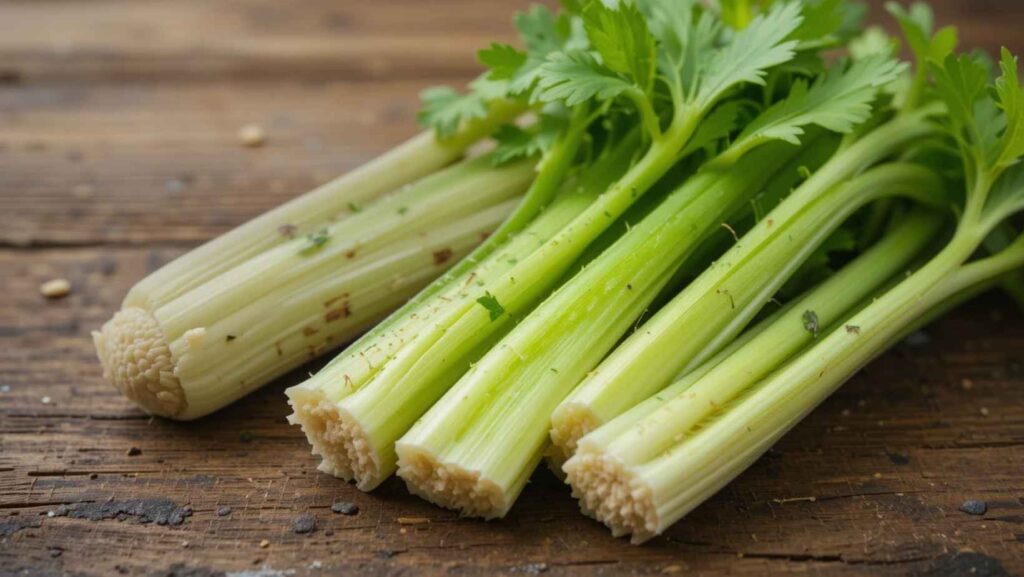
Would you like to discover which celery is beneficial to dogs?
Your dog may have raw celery as a nutritious and safe snack. Ensure the threads are removed and the stalks are chopped into little, edible bits.
If not, a full celery stick might cause an intestinal obstruction or even provide a choking threat.
Celery is frequently suggested as a weight-loss treat and is included in the list of vegetables suitable for dogs by several websites, including Vetstreet.com, a veterinary website.
Celery is a great source of fiber, vitamins A, C, and K, folate, potassium, and manganese, and it is very low in fat and cholesterol.
The crunchy vegetable may also help your dog’s breath smell better.
Celery is a fantastic source of vitamins and minerals for your dog’s health. It’s loaded with antioxidants, vitamins, and potassium.
These consist of the vitamins C, A, and K.
Moreover, its high fiber content helps support healthy digestive function in your dog.
Celery also contains a lot of water, which is important for staying hydrated.
Celery may be an excellent method to hydrate older dogs or dogs with renal problems and provide extra nutrients to their diet.
Celery complements almost any dish.
You may enjoy the benefits this beloved vegetable is known for by adding it to your soup, salad, or smoothie.
It’s a common refrigerator food for pet owners; therefore, our dog pals will probably become interested in trying a mouthful sooner or later.
Here’s all you need to know about feeding celery to dogs and if it’s healthy for them in case you’re unsure how to respond to your dog’s beseeching gaze.
How do you cook celery for dogs
Steer clear of offering your dog celery from stews, soups, or other meals to prevent an unexpected trip to the clinic.
Rather, choose a plain vegetable that is either fresh or steamed, sliced into portions that your dog may easily consume, and served without any additional sauces.
Celery is a good source of potassium, folate, and vitamins A, C, and K.
This vegetable is a great treat for overweight dogs since it is low in calories, fat, and fiber.
Medium-sized celery stalks, measuring 7 to 8 inches long, provide less than 6 calories. Celery is healthy for your dog’s teeth and gums and could even aid with breath freshening.
Celery may be fed raw or prepared to dogs.
Depending on the benefits you want your dog to receive from eating this vegetable, you may offer them raw or cooked celery.
If you want your dog to get the vitamins and minerals from celery, you may give them cooked celery, grind up raw celery in a blender, or even use a juicer to extract the juice, which you can then add to your dog’s usual meal.
Because it will be softer and simpler to digest when cooked, you could even discover that your dog enjoys it that way.
It won’t have as much of a stringy texture, which can turn off certain dogs.
As with anything new to eat, start modestly.
To begin, try giving your dog a little piece of celery, and after a day or two, observe any negative reactions.
It’s unlikely, but your dog could be allergic to celery.
For dogs, celery may be a nutritious and reviving treat that provides vitamins K, A, and C and minerals like calcium, potassium, and iron.
Its crunchy texture can act as a natural breath freshener, and its high water content might aid in keeping dogs hydrated.
Does celery help dogs poop
Celery’s fiber can support regular bowel motions and help your dog’s digestive tract function more normally.
Celery is a fantastic food for dogs that are constipated or have digestive problems.
Celery is sometimes referred to as the intestinal “toothbrush” or “dental floss” by some folks.
Dogs can indeed consume human food; as we all know, most of our puppies occasionally get a taste.
If you are careful about what meals you share and how you share them, this may be quite fine—even healthful.
To ensure they get all the nutrients they require in the right balance, dogs must consume complete and balanced dog food as their main source of nutrition.
To keep this in check, limit your dog’s consumption of table scraps and snacks to less than 10% of their overall caloric intake.
Even if there are a lot of meals that are suitable for sharing, you should always ensure that the foods you want to share are secure and harmless for dogs.
Dogs should never be fed any common foods or substances since they are poisonous.
Celery is one of the best options for a dog that has acquired a liking for green things compared to other fruits and vegetables.
In addition to having few calories and a high water content, it also has iron, potassium, calcium, and the vitamins K, A, and C.
The list of healthy dog treats might include a vegetable that is 95% water and includes healthy elements.
Celery may benefit dogs based on its nutritional makeup, but remember that full and balanced dog food should provide your four-legged pet with all the nourishment they require for a long, happy life.
Therefore, there is no nutritional reason for your concern about giving your dog celery for supper.
What does celery do to dogs
Celery is packed with important nutrients, with vitamin A one of the most abundant.
Your pet’s skin and coat will remain healthy thanks to vitamin A, so they’ll always look their best.
Another important ingredient in celery is fiber, which keeps your dog’s digestive tract operating properly.
Please be aware that if your dog consumes too much fiber, it may cause stomach problems.
If your dog seems to be experiencing more gas than normal, it might be a sign that they are receiving too much fiber.
Celery may also be beneficial to dogs suffering from arthritis.
How? Due to celery’s well-known anti-inflammatory qualities, the inflammation around your dog’s joints may be lessened. Your pet’s movement will be considerably easier as a result.
When fed in moderation, this nutritious vegetable can rank among the finest for your dog’s diet.
Celery is an extremely nutritious vegetable high in B5, C, and K vitamins, as well as thiamin, riboflavin, niacin, and vitamin B5.
Just make sure you offer celery with a protein-rich food simultaneously.
Feeding your dog organic celery in moderation with wholesome protein may be exemplified by our dehydrated turkey dish from our free-range poultry.
Snack on protein: Chopped celery combined with a tiny dab of peanut butter is a nutritious snack that satisfies your need for water, healthy fats, and protein.
Just be sure that the peanut butter is free of xylitol, as dogs are highly harmful to it.
Canine popsicles: To prepare a popsicle, combine chopped fruits and vegetables such as apples, blueberries, bananas, green beans, or broccoli with plain Greek yogurt.
Then, freeze the mixture!
How do dogs react to celery
It’s unlikely, but your dog could be allergic to celery.
Celery is something you should feed sparingly. Due to the high fiber content, giving your dog too much might result in diarrhea or upset stomach.
Celery has a high salt content for a vegetable, at 35 mg per stalk.
When given in moderation, celery can be healthy for your dog.
Celery is low in calories, high in vitamins and minerals, and high in fiber.
Celery can aid your dog’s hydration because of its high water content.
As an added plus, celery provides a nice crunch that most dogs like. Not to mention, celery helps dogs breathe better and have cleaner teeth!
A low-calorie treat is a celery.
Commercial dog treats may have chemical preservatives or additives and may also be heavy in calories.
Conversely, celery is devoid of these compounds, particularly if it is organic.
Chop celery sticks into bite-sized pieces and have them on hand for your dog.
Put the celery pieces in a plastic container, pour cold water over the celery, and refrigerate the closed container.
After a strenuous walk, these pre-cut celery bits will be convenient for a refreshing snack or training incentive.
You were likely unaware of celery’s ability to freshen your breath.
Your dog will produce more saliva in his mouth since celery is crisp and high in water content.
Saliva aids in the removal of plaque and germs that can produce foul-smelling canine breath.
Celery, for instance, can help your dog’s heart health by increasing blood flow and avoiding the production of dangerous cholesterol platelets.
Because celery includes anti-inflammatory and antioxidant compounds that can stop the development of tumor cells, it can also aid in the battle against cancer.
Finally, celery can also help your dog’s breath smell better by lowering oral bacteria and increasing salivation.
Can dogs have an allergic reaction to celery
It’s unlikely, but your dog could be allergic to celery.
Celery is something you should feed sparingly.
Due to the high fiber content, giving your dog too much might result in diarrhea or upset stomach.
Celery has a high salt content for a vegetable, at 35 mg per stalk.
Celery should be sliced into small pieces to avoid choking dangers.
Particularly for little dogs or dogs with dental problems, this is crucial.
Furthermore, excessive celery consumption might upset a dog’s stomach even though it is not hazardous to them.
Celery allergies may also affect dogs, so it’s crucial to watch out for any symptoms of pain or sickness when your dog eats celery.
Immunological responses in pets cause food allergies. Normally, that is what wards off pathogens and other potentially harmful substances.
When a dog or cat develops a food allergy, their body attacks itself because it thinks food is toxic.
Additionally, celery includes dietary fiber that promotes healthy digestion and helps shield dogs from constipation or diarrhea.
Additionally, fiber slows down the bloodstream absorption of sugar, which is advantageous for diabetic dogs and dogs at risk for the disease.
Furthermore, fiber prolongs the sensation of fullness in your dog, preventing frequent requests for additional food.
Celery is an excellent snack option for overweight dogs who need to control their weight but still want something nice to chew on between meals because it is low in calories.
Just be careful to feed it plain, free of sauces or dips, since these may include elements your pet shouldn’t be eating, such as onions or garlic, which can upset their stomach if consumed in large quantities.
An allergy is a hypersensitive response to an allergen (from food or an inhalant).
Your dog’s body overheats due to the overreaction of its defenses to certain allergens.
A few accompanying symptoms are red and itching skin, breathing difficulties, and agitation.
According to TCM, a state of “wind” is frequently created within the body as a result of the mix of warm (the heat of allergies) and cold (the dog’s body temperature), which is what frequently causes intensely itchy skin.
What are 3 foods dogs should not eat
Avocado
Although they may not seem healthy, avocados are not good for dogs. Persin, a chemical found in avocados, has the potential to poison dogs and induce vomiting and diarrhea.
Consuming avocados may also cause fluid in the chest and lungs. Breathing problems and oxygen shortage death may result from this.
Cocoa. Methylxanthines, stimulants found in chocolate, are extremely poisonous and can halt a dog’s metabolic process.
Chocolate, especially dark chocolate, can induce vomiting and diarrhea in small doses. Excessive consumption may result in mortality, abnormal heartbeat, and convulsions.
Garlic and Onions. These popular vegetables, staples in human diets, might damage your dog’s red blood cells, resulting in anemia.
It might harm her health even a tiny amount.
While certain foods aren’t considered harmful for dogs, they might nonetheless be problematic.
Even if your dog has eaten certain items in the past without showing any negative effects, it is still advisable to avoid them.
If your dog consumes any of the following and exhibits disease symptoms, get in touch with your veterinarian immediately.
conclusion
When given sparingly and carefully, celery is one “human food” that may make a wonderful addition to your dog’s diet.
It’s a fantastic source of fiber, vitamins, and antioxidants for your dog’s health. But, it’s crucial to be aware of the possibility of gastrointestinal distress and choking dangers.
As always, watch your dog’s response when adding new food to their diet. You and your dog may safely benefit from celery’s many health advantages if you keep these suggestions in mind!
Dogs can occasionally consume little portions of celery without risk.
It may be a simple method to refresh your pet’s breath and a nutritious, low-calorie treat that controls their weight.
As with most other foods humans consume, celery is best served in moderation.
Dogs may experience gastrointestinal problems and difficulty digesting too much celery.
Before giving your dog any new meals, see your veterinarian.
Since ancient times, people have grown celery (Apium graveolens), a wetland plant of the Apiaceae family, as a vegetable.
The tall, fibrous stalk of celery tapers toward the leaves.
You may consume and boil the stalks, leaves, or hypocotyl, depending on the cultivar and region. One spice that is utilized is celery seed powder.