
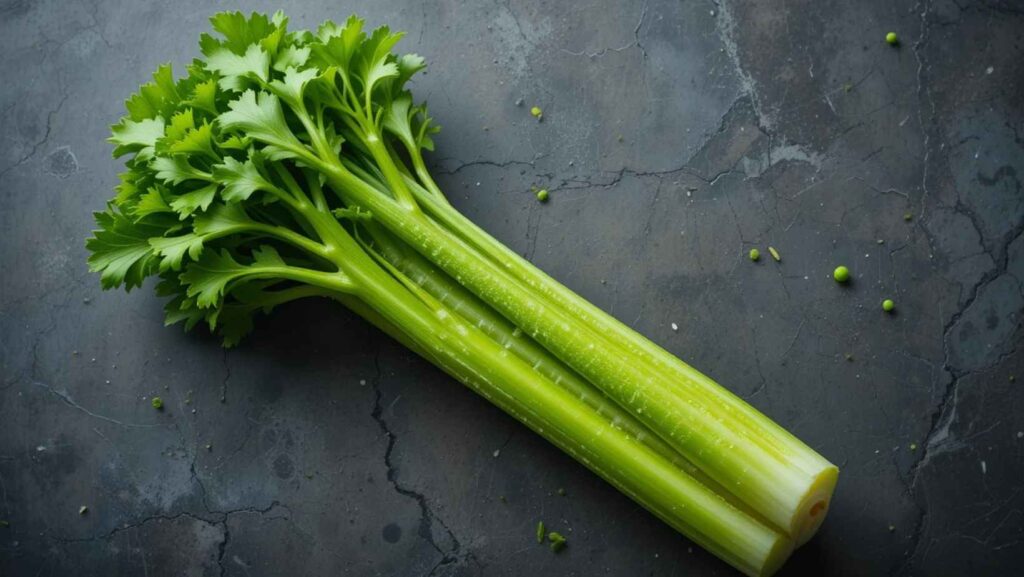
Would you want to know if celery is keto-friendly? My own experience has led me to conclude that, due to its low carbohydrate content, celery is indeed keto-friendly.
For those following the ketogenic diet, celery sticks are a common low-carb snack.
Despite not wearing a cape, celery is frequently referred to as a superfood due to its low-calorie content, 1.4 g of net carbohydrates per cup, and plenty of vitamins and minerals that are high in antioxidants.
It’s also substantial in fiber and 95% water, which prolongs feelings of fullness. However, that is not all; I will provide additional information on the topic as you continue reading.
Now, let’s get started.
Is celery keto-friendly
Celery is regarded as keto-friendly, yes. This is because of its high fiber and low carbohydrate content, which makes it ideal for a ketogenic diet.
For a number of reasons, celery is an excellent complement to a ketogenic diet:
Minimal Carbohydrate Content: Celery is a fantastic low-carbohydrate vegetable that is ideal for a ketogenic diet because it has just 2.97 grams of total carbs per 100 grams.
The easier it is for your body to get into and stay in a state of ketosis, the less carbohydrates you eat.
High in Fiber: For every 100 grams of celery, there are 1.6 grams of dietary fiber.
This makes it even more keto-compatible by lowering your intake of net carbohydrates (Total Carbohydrates – Dietary Fiber).
Low in Calories: Celery’s low-calorie content is another benefit of eating it while following a ketogenic diet.
With only 16 kcal per 100 grams, celery can help you stay in ketosis while maintaining your calorie deficit if you’re trying to lose weight.
Vital Nutrients: Celery provides essential nutrients in addition to being low in calories and carbohydrates.
It offers potassium, which is essential on a ketogenic diet to avoid headaches and exhaustion, two signs of the keto flu.
To sum up, celery is an excellent vegetable to incorporate into your ketogenic diet. It is a healthy and keto-friendly option since it is low in carbohydrates, high in fiber, and includes vital nutrients.
Does celery affect ketosis
No. A person on a ketogenic diet can consume celery sticks since they are low in calories and carbohydrates.
About 3 g of carbohydrates are included in 110 g of celery or roughly nine celery sticks. Sticks of celery make great dippers for nut butter like almond or unsweetened peanut butter.
Additionally, there may be some negative consequences from following a ketogenic diet, particularly during the initial weeks.
These consist of diminished mental energy or brain fog.
cramping in the muscles
stomach pain, increased appetite, constipation, weariness from activity, and irregular sleep patterns
nausea
nutritional deficiencies brought on by a decrease in fruit and vegetable intake
A person might want to eat nutritious snacks throughout the day to help fight off hunger and exhaustion.
Is celery root keto
The root of celery is precisely what it sounds like. It is the celery’s lower portion. That qualifies it as a root vegetable, in theory! It can be utilized in Celery root, often called celeriac, which resembles an enormous parsnip.
It may be consumed either raw or cooked. Before using it in recipes, remove the outer layer. Or simply heat it through.
Potassium, manganese, vitamin K, and vitamin C are among the essential vitamins and minerals found in celery root.
It is minimal in calories and high in fiber. Celery root can be a part of a nutritious diet, all things considered.
Celery root is the root vegetable with the least amount of total carbohydrates.
In comparison to other root vegetables, such as sweet potatoes, it is therefore easier to incorporate into your diet, even if it is not a ketogenic entrée.
What are Celery Health Benefits
Three of the most significant health advantages of eating celery are as follows:
strong antioxidant source. Vitamin C and beta carotene are two of the many significant antioxidants found in celery.
More than a dozen distinct kinds of antioxidants may be found in celery, and they all cooperate to help prevent the cellular damage that might result from exposure to dangerous free radicals.
aids in reducing the body’s chronic inflammation. Celery’s profusion of antioxidant chemicals also has the added advantage of reducing chronic inflammation.
Celery may, in fact, help prevent inflammatory disorders including cancer and heart disease.
can aid in the digestive system’s assistance. Celery’s high water content (96%) and soluble and insoluble fiber make it a great vegetable to include in your diet to help with digestion.
Celery can help maintain regular bowel motions, improve digestion in general, and even strengthen the immune system.
What Keto-Friendly Recipes Featuring Celery
Crispy leaves and robust stalks characterize fresh celery. Celery may be eaten raw or cooked, and it tastes great in smoothies, drinks, stir-fries, and soups.
Additionally, the celery leaves are nutrient-dense.
Additionally, celery is a crisp, keto-friendly, and healthier alternative to breadsticks or conventional carb-loaded chips for delectable dips like buffalo chicken or spinach and artichoke.
Try this celery-based keto dish from Ketogenic.com:
- Celery filled with keto
- Buffalo-style celery sticks
- Keto root fries with celery
- Salmon salad on a ketogenic diet
- Cornbread dressing on a ketogenic diet
- Chicken soup on a ketogenic diet
- Artichoke and spinach keto dip
- Tuna salad on a ketogenic diet
- Ants on a ketogenic log
- A ketogenic almond flour filling
- Caprese salad in the summer
- Keto spinach soup
Final thought
Now that we have etsbalished that celery is keto-friendly, Celery is great for ketogenic and low-carb diets.
Celery is low in net carbs and high in nutrients, making it a flexible keto vegetable.
Celery has little calories and many nutrients. It has plenty of fiber, vitamin C, and vitamin K.
Celery is a hydrating food due to its high water content, while antioxidants like beta-carotene assist the body fight off free radicals.
Benefits, including enhanced heart health, less inflammation, and better digestion, have been linked to regular celery eating.