
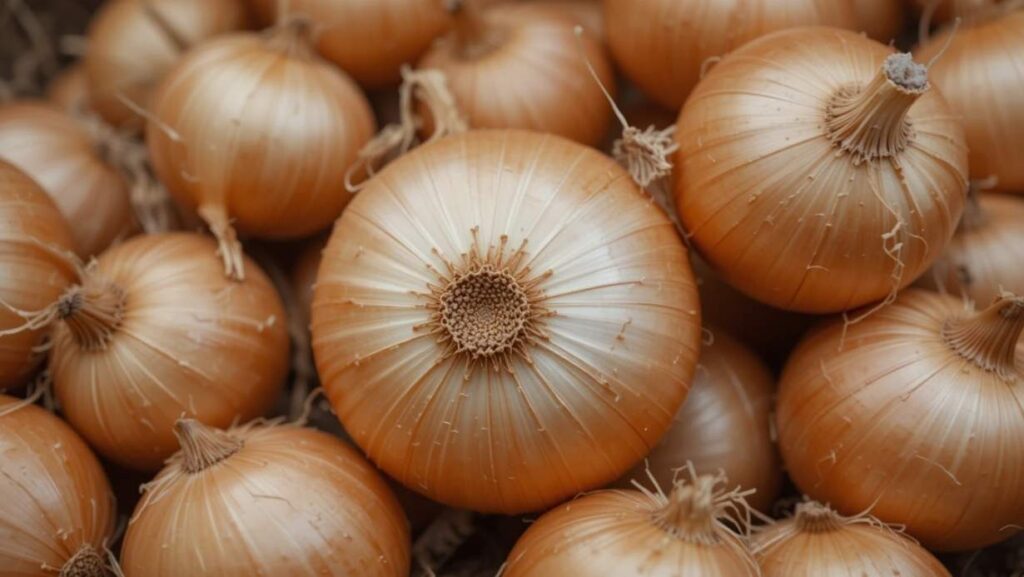
Do you want to know where to store onions? From my own experience, I know that onions need to be kept in a cool, dry place that is out of the light.
Because of this, the best thing to do is to keep them at room temperature in a pantry or somewhere else.
Cut onions can also be kept in the fridge for four to five days. Onions that haven’t been cut can be kept for months in a cool, dark, and dry place.
It is possible to store onions for one more year. Keep onions in a cool, dry, and dark place when you want to store them.
Light and water can cause mold and growing, which are both bad things but not very important.
So, keep your storage onions, like shallots, cippoline, pearl, red, yellow, and white types, in a dry, well-ventilated basket, container, or big basin.
That’s not all, though. As you read on, I’ll tell you more about where to store onions.
It’s time to begin.
Where to store your onions
Three things that are bad for onions are water, light, and heat. When the Alliaceae are introduced to these three things, they can sprout, become soft, and lose their taste.
As a result, it is very important to keep them in good shape. If you are lucky enough to have a cold, dry cellar in your home, this is the best way to store things.
If you use an open wooden box or wicker container, you can control the flow of air and keep your onions from getting wet. Be careful, because onion mildew can grow in places that have too much humidity.
If you live in an apartment, most experts agree that the best place to store onions is in a kitchen drawer.
This option has the perks of being dry, dark, and having a temperature that stays pretty steady. To keep things dry and stop smells, each onion should be wrapped in a plastic bag or newspaper.
As well as the fridge:
Onions shouldn’t always be kept in the fridge, despite what most people think.
Low temps can change the way they taste and make them feel like leather. This could be used as a short-term emergency fix during times of high humidity and warmth.
How to store onions for as long as possible
It is best to put onions in the fridge after they have been cut up or started.
Put them in plastic wrap, aluminum foil, or a sealed container to store them in an eco-friendly way. This will also keep smells from spreading in your fridge.
You can also freeze them; you can keep them in freezer-safe packages while they are still cut and peeled.
Cut the onions you eat during the week into thin slices with a knife and put them in the fridge to save time.
You will only need the exact amount you need for each day when you cook.
To save even more time, they can be kept chopped up in airtight cases with a little oil.
Just extract them to get ready.
In addition, onions must be picked correctly in order to be stored properly! It’s necessary to rub red or yellow onion bulbs between your hands to get rid of any dirt that’s still on them after they’ve been dried in the sun for a few days and had their leaves cut off with a knife.
After they are sorted, only bulbs that are strong, well-formed, and free of any holes or spots will be kept for keeping. The rest will have to be eaten.
For the next few days, the onions will be kept away from frost in a dry, cool place with good air flow.
They don’t need to be in the dark, but they also shouldn’t be in bright light.
Two ways can be used to store them:
3. In containers with open bottoms that allow air to flow well.
If you don’t have enough room to make a single layer in each box, you can make more than one, but you will have to move them around more often and with more care.
• Arranged in groups of about ten bulbs. It’s also possible to braid the stems.
Check on a regular basis for any signs of decay. It is possible to store onions for about six months.
How to store fresh onions
Spring onions should be kept in the fridge between 6 and 8 degrees, ideally in a compartment for vegetables or a container made just for this reason.
A fresh onion, also called an early onion, has a small, hard, shiny white bulb. The stems are very green and break easily.
Because they are so soft, these early onions shouldn’t dry out. Because of this, they should be kept in the veggie section of the fridge.
Place them in a jar that can’t be broken or cover them with a clean, slightly damp cloth. You only need to take out the amount of raw onions you need.
After washing them well, lay them out to dry on absorbent paper. Take out the roots. You can eat both the bulb and the leaves, which smell great.
To soft new veggies like carrots, peas, and onions, they go really well with them.
How to store dried onions
To keep dried onions fresh, keep them somewhere dry, at room temperature, and away from light and water.
To keep them from breaking down faster, you shouldn’t store them with other fruits or veggies.
Additionally, don’t store them in the fridge because that may give them a nice smell and make them soften.
The best way to keep your onions dry is to store them in the Onion Chest. It lets the best amount of air flow through while blocking light to help with even more saving.
Usually, dry onions, which are also called “storage onions,” are used. To store them for a long time, choose them at the end of the season when they are still big.
If these are your own onions, pick them when the roots dry out and the plant starts to die.
Check out his skin; it should be sticky and free of spots. Dry the onions in a place that is dry, well-ventilated, and not wet.
Once the stem has dried out fully, they will be ready to eat. The onions should then be kept somewhere dry, away from light and direct sunlight.
The temperature in the room should also be just right—not too hot or too cold.
What are the best tips for storing your cut onion safely
1. Put metal foil around the item.
Putting your chopped onion in aluminum foil before putting it in one of the sections is an easy way to keep bad smells from spreading through your fridge.
It won’t cause any problems or smell bad if you keep it this way for a week.
2. Get a bunch of onions.
With shapes like onions, tomatoes, and lemons, these small storage cases are perfect for keeping foods like scallions fresh for a long time without making your fridge smell bad.
It’s an easy, waste-free, and good for the environment way to keep all your fruits and veggies fresh!
3. Freeze the material again
Before putting the onion in the freezer, chop it up and put it in a container or frozen bag that won’t let air in. This will make it last longer. It works for a year. Please take it out of the freezer a few minutes before you eat it.
4. Just leave it
One common way to keep onions fresh for longer is to can them to use in jams and jellies.
What are the onion Storage errors to avoid
Near potatoes: Onions and potatoes are known to be absolute enemies when it comes to keeping food fresh.
A process that potatoes give off into the air includes ethylene gas and water that can help onions sprout faster. Make sure they stay away from each other for safety reasons.
To keep a lot of things:
If you let onions hang lightly on top of each other, they could bump into each other and get bruised, which would make them go bad faster.
You can use plastic bags that are made to let air flow, or you can do the same thing with old stockings.
Final thought
Now that we know where to store onions, we can talk about how to keep each type of onion fresh.
The main differences between us are storage onions (which are dry) and early onions, which are also sometimes called young white onions.
Onions picked early don’t last long and are easily broken. For the best preservation and longest shelf life, I suggest that you wrap them in a damp towel and put them in the veggie box of the fridge.
In this case, they must last at least one week. Like garlic heads, dried onions need to be kept in a cool, dry place with good air flow that is away from light.
Like garlic, onions need to be kept from getting too wet to avoid sprouting, mold, and dying.