
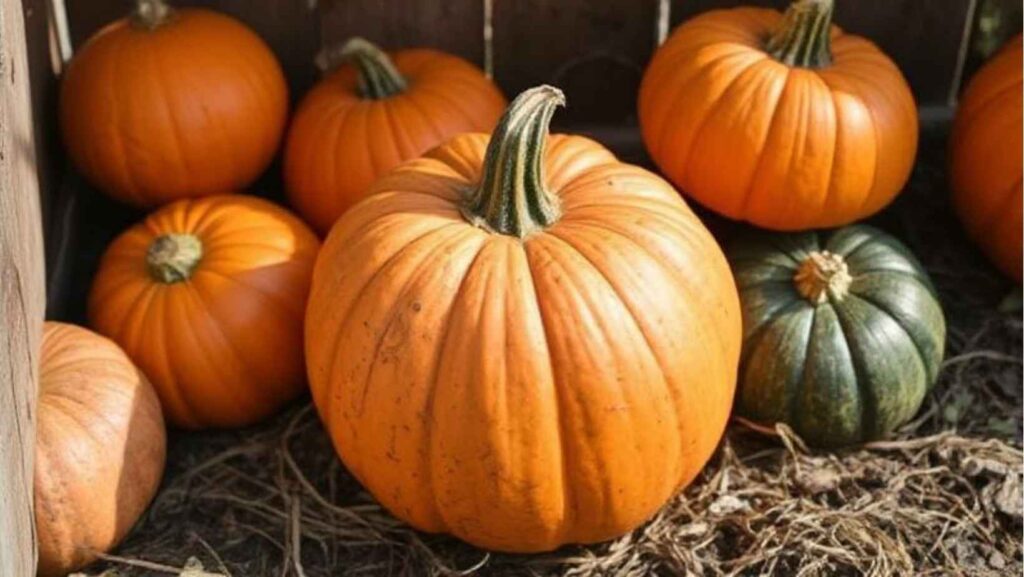
Would you want to know when to harvest pumpkins? Harvesting pumpkins often takes place in the fall, typically between the end of September and the end of October, according to my own experience.
The pumpkins are ready to be harvested when the vines begin to die back, the stem becomes brown and dry, the peel becomes tough and resists being punctured with a fingernail, and the pumpkin makes a hollow sound when it is gently tapped.
However, that is not all; as you continue reading, I will provide you with further information on the topic matter.
Now, let’s get started.
When should I harvest my pumpkins
When the peel is firm, and the pumpkin has formed a rich, consistent orange color, it is time to harvest it.
Another option is to leave mature pumpkins in the field or garden until a mild frost or freeze kills the vines.
Pumpkins should be handled cautiously to prevent cuts and bruises during harvest. Each fruit should have a few inches of stalk left on it.
A pumpkin with a handle or stem that is 3 to 5 inches long looks better. Additionally, stemmed pumpkins have a lower chance of rotting.
Pumpkins should not be carried by their stems. The stems could break off if they can’t bear the weight of the pumpkins.
Once the pumpkins have cured, keep them somewhere dry and cold. 50 to 55°F is the ideal temperature range for storage.
Pumpkins should be kept in a single layer, away from one other, when being stored.
Proper air circulation slows the growth of germs and fungi that cause deterioration and keeps moisture from building up on the fruit’s surfaces.
Piling the pumpkins together produces more heat, which might cause part of the fruit to spoil. Any pumpkins exhibiting indications of rotting should be promptly removed and disposed of.
Harvesting pumpkins: when are pumpkins ripe
The pumpkin season can begin in late August and go until the end of October, depending on the growing circumstances and variety of squash.
It is better to give pumpkins a head start because they need a long growth season. Pumpkins should be planted under cover in April so that the fruits may be harvested in September.
Pumpkins should be kept on the vine until they are ready to be harvested, despite the temptation to do so. When your pumpkins reach the mature color you want, you know it’s time to harvest them.
For the Uchiki Kuri squash, this usually tends to be orange, brown, or even red.
Pumpkins also develop a hard skin that is sufficiently hard to withstand fingernail damage and produce a hollow sound when tapped when they are ready to be harvested.
When the stems turn brown, and the foliage dies back, it’s another indication that your pumpkins are ready to be harvested.
Clip the fruits from the vine, leaving around 8 to 10 cm of stalk intact, and harvest your pumpkins.
Since pumpkins are hungry plants, fertilizing them will help guarantee that the fruits mature on schedule.
To promote blossom development and fruiting, fertilize your pumpkins with a fertilizer strong in potassium and phosphorus as the blooms start to show.
Because Plantura Liquid Tomato Food is naturally high in these two minerals and soluble in water, it can be used to fertilize pumpkins and is simple to use while watering.
How to Harvest Pumpkins
When the time comes to harvest your gourds and pumpkins, clip the fruit from the vine using sharp pruners. For pumpkins, leave a 3- to 4-inch stem or handle; for gourds, leave a 1-inch stem.
Here’s a more thorough explanation:
1. Verify the ripeness:
Look for a pumpkin that has a rich, vivid color.
If your thumbnail leaves no impression when pressed into the skin, the pumpkin is probably ripe.
The pumpkin should sound hollow when you tap it.
It should have a firm, brown stem.
2. Harvest the pumpkin: Cut off the stem using a knife or sharp scissors.
Keep the stem of the pumpkin at least 3–4 inches long.
The stem of the pumpkin might break off easily, so don’t carry it by that.
3. Handle carefully: When moving and lifting the pumpkins, use gentleness.
Do not shatter or bruise the rind since this might cause it to decay.
4. Think about curing: Pumpkins may be cured for a few days after harvesting by keeping them in a warm, dry, well-ventilated room.
This permits the pumpkin to develop more and hardens the peel.
Can mini pumpkins be harvested at the same time as full-size pumpkins
In most cases, tiny pumpkins are harvested before full-size pumpkins because they mature more quickly than full-size pumpkins.
Typically, little pumpkins achieve their full color and have a tough, difficult-to-penetrate rind at the same time.
Additionally, the vines begin to yellow and shrink as the pumpkin reaches maturity.
It is important to harvest each pumpkin individually since they do not all mature at the same time while they are growing on a vine.
Instead of thinking that a certain ripening timeframe applies to all of the fruit, it is crucial to pay attention to signs that each pumpkin is ripe and ready to pick.
This is true for any pumpkin, even small pumpkins. In spite of the fact that they are all the same size, pumpkins of various varieties mature at varying speeds.
How long do pumpkins last once harvested
Pumpkins may be stored for two to five months (uncarved) if they are picked when they are ripe, healthy, and free of illness.
Store your pumpkin inside in a cool, dry location to extend its shelf life.
Variables Impacting the Lifespan of Pumpkins:
Conditions of Storage:
A cold, dry atmosphere (50–60°F/10–16°C) with enough air movement and a relative humidity of 50–70% is ideal for storage.
Type of Pumpkin: Some kinds of pumpkin, such as Hubbard squash, may survive up to six months.
Harvest Time: To extend the storage life of pumpkins, it is essential to harvest them when they are completely ripe and have a firm rind.
Disease and Damage: A pumpkin’s lifespan can be considerably shortened by any illnesses or physical harm.
Curing: To help harden the rind and enhance preservation, pumpkins should be cured for ten days at a warm, humid temperature (approximately 85°F).
Decay Indications:
Skin softening and obvious deterioration, particularly where it contacts a surface at the bottom.
Fluid leakage.
Collapse, browning, and drying pulp, particularly in carved pumpkins.
Advice for Increasing the Lifespan of Pumpkins:
Select nutritious pumpkins: Choose pumpkins that are free of injury or rot and have a firm, complete peel.
Leave the stem: To assist the pumpkin in continuing to acquire nutrients and avoid rot, leave a few inches of stem on it when harvesting.
Properly store pumpkins in a root cellar, basement, or garage that is cold, dry, and well-ventilated.
Avoid stacking: To provide enough air circulation, store pumpkins on a single layer.
Examine frequently: To stop the rot from spreading, periodically look for indications of decay and remove any afflicted pumpkins.
Final thought
Now that we have established when to harvest pumpkins, In the right conditions, pumpkins may be kept for many months.
If they are taken when they are grown and healthy, uncarved, entire pumpkins have the potential to stay anywhere from two to five months in a cool, dry area.
There are a number of elements that determine the real longevity, including the circumstances of storage, the type of pumpkin, and the presence of infections or damage.