
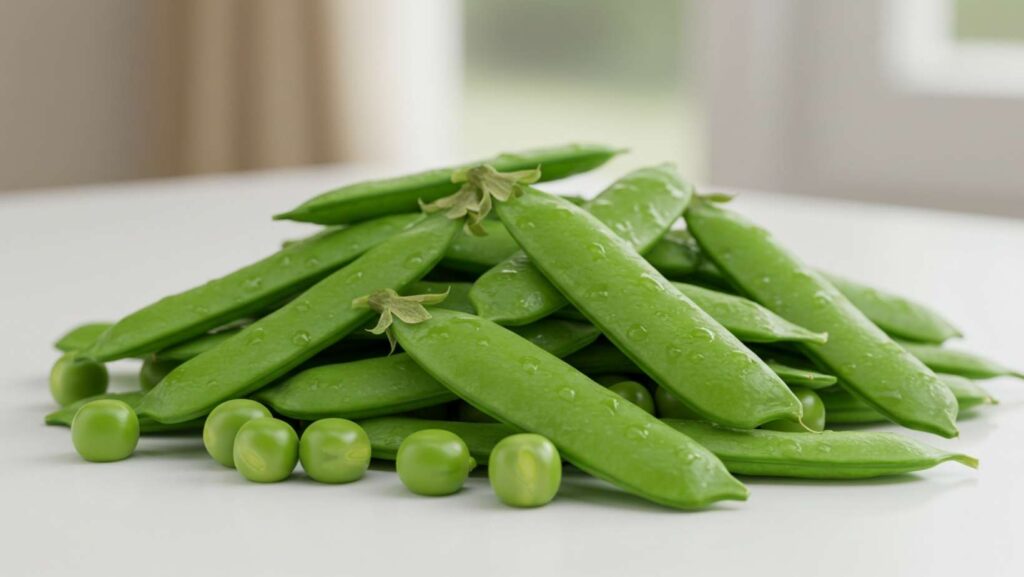
Would you want to know about snow peas for rabbits? According to my observations, rabbits can consume snow peas—including the pods—but only in small amounts.
Because of their high sugar content, they are a fantastic treat to have occasionally but shouldn’t be a regular component of their diet.
When given sparingly, they provide rabbits with a crunchy and nourishing treat.
They are a fantastic addition to your bunny’s vegetable diet and are wonderful for their health because they are high in fiber and vitamins C and K.
But that’s not all; I’ll explain more about the subject as you continue reading.
Now, let’s get started
Can my rabbits have these peas
Yes, you may feed the leaves and stems of snow peas to your rabbit. They don’t harm. Give the pods, on the other hand, while the grains are still fresh and nearly flat.
Please don’t give them their dried grains since they may choke on them and because they have less fiber and more starch.
These peas include carbs, lipids, proteins, vitamins A, B1, B2, B3, B5, B6, B9, choline, C, D, E, and K, making them a good addition to your rabbit’s diet.
They are also abundant in a variety of minerals.
As a precaution, you should be aware of the correct way to introduce any new food to your rabbits in order to prevent diarrhea and other gastrointestinal problems.
Only weaned bunnies, not weaning kits, should undergo this progressive process over a week or so.
Until your pet is completely accustomed to a new meal, you should usually start with a very small amount and only introduce one at a time.
See how its stomach will respond in a day. You can gradually increase the quantity if there are no stomach issues or soft stools.
You also need to be aware of the proper amounts. You should blend around four to six different kinds of greens to create a fantastic nutritious mix that gives your pet most of the nutrients it needs.
For every two pounds of body weight, your pet necessitates approximately one minced cup of greens.
You may include the leaves or stems of snow peas in your healthy mix of four to six greens. Make sure the source is cleansed and organic or free of agricultural chemicals.
As with other non-leafy vegetables like carrots, broccoli, broccolini, squash, and zucchini, you should serve the fresh, immature green snap pods as an occasional treat.
One teaspoon is plenty for each two-pound rabbit. Keep in mind that your rabbit only needs one treat each day. As a result, avoid giving them fruits or other veggies that aren’t leafy later.
What are the Benefits of Snow Peas in a Rabbit’s Diet
Can rabbits safely eat peas? This is a question that many rabbit owners have. Peas can provide your rabbit with a few advantages if they are fed correctly.
Their nutritional value, which contains fiber, vitamins, and protein, is largely responsible for these advantages.
A deeper look at the potential advantages of peas for your pet rabbit is provided below:
Dietary fiber, which is included in peas, promotes a healthy digestive system. Still, hay’s high fiber content is crucial for a rabbit’s general intestinal health.
Vitamin C: While rabbits are capable of producing vitamin C on their own, their immune systems can benefit from extra sources, such as peas.
Protein: Compared to certain other vegetables, peas have a greater protein level, which can aid in the growth of muscle, particularly in young bunnies.
Despite these advantages, peas should only be given rarely to rabbits due to the hazards involved.
What are the Risks of Feeding snow Peas to Rabbits
Understanding the health problems associated with overfeeding peas is essential when investigating the subject of whether rabbits can consume them.
Because of their sensitive digestive systems, they need a diet strong in fiber and low in sugar.
Overfeeding peas can lead to the following frequent problems:
Rabbits may experience gastrointestinal issues like bloating, diarrhea, and GI stasis if they consume too many peas because of their high carbohydrate and sugar content.
A potentially fatal illness known as GI stasis causes the digestive system to slow down or halt completely.
Obesity: Due to their high-calorie content, rabbit peas can cause weight gain and obesity in small animals like rabbits.
Intestinal Blockages: Because peas are high in carbohydrates, eating too many of them may result in blockages in the digestive system.
Because rabbits need continuous digesting to keep healthy, this is very dangerous.
It’s important to keep an eye on how much peas you give your rabbit and make sure it’s only a portion of a well-balanced diet to prevent these issues.
Why Shouldn’t Rabbits Eat Cooked Peas
The digestive tract of rabbits is quite sensitive. Rabbits are designed to absorb only raw, plant-based diets, in contrast to humans, who can consume both raw and cooked foods.
Here’s why cooked peas cause issues:
1. Fibre Loss
Peas lose part of their natural fiber content when they are cooked. This vital fiber is absent from cooked meals, which can cause gastrointestinal issues including bloating or GI stasis, which in rabbits can be fatal.
2. Rich in Starch and Sugar
Natural sugars and carbohydrates are found in peas, particularly green peas. These sugars become more concentrated when cooked, which is bad for rabbit health. Excessive sugar intake can result in:
Gaining weight
upset stomach
either bloating or diarrhoea
Cooked peas are a dangerous option for rabbits, who require a diet strong in fiber and low in sugar.
3. Modifications to Texture
Peas grow mushier and softer when cooked. Rabbits’ teeth are constantly developing and are naturally worn down by eating hard, fibrous material.
Soft food doesn’t assist with this, which over time may cause tooth issues
How to Safely Feed Peas to Rabbits
1. Select Fresh Peas Free of Pesticides
Whether it’s garden peas, sugar snap peas, or snow peas, always choose fresh peas. Pesticides can damage your rabbit’s digestive tract, so be sure they are clear of them.
Pea pods can also be given in little amounts, but steer clear of sweet peas since they are poisonous to rabbits.
2. Give it a good wash
Wash the peas well before feeding to get rid of any chemicals, pesticides, or debris that could be on the surface.
Fresh veggies are usually preferable to canned or frozen ones, which may have extra sugars or salts.
3. Begin Small
Can rabbits eat peas, in case you were wondering? Moderation is the key. Start by giving your rabbit a tiny amount of peas—no more than a teaspoon at first—and see how they respond.
Keep an eye out for symptoms of stomach trouble, such as tiredness, diarrhea, or bloating. You can periodically give your rabbit peas if it appears to be doing well, but never more than a few at once.
4. Mix with Additional Leafy Greens
Don’t limit yourself to peas; rabbits need variety. Provide a variety of healthy fresh vegetables, including bell peppers, zucchini, carrot tops, bok choy, dandelion leaves, cilantro, and romaine lettuce.
This guarantees that they receive a variety of nutrients. For example, you may serve peas with little amounts of fresh cilantro, green beans, or Brussels sprouts.
5. Restrict the Frequency
Peas should only be given to your rabbit occasionally due to their high carbohydrate content. Feeding them only once or twice a week is a decent rule of thumb.
Final thought
Now that we have established snow peas for rabbits, Incorporating snow peas and their plant components, such as snow pea sprouts and leaves, into a rabbit’s diet is a way to provide it with the nutrients and health benefits it needs.
The digestion is improved, oral health is maintained, and they provide necessary vitamins and minerals.
These are just some of the benefits they offer.
On the other hand, it is very necessary to feed them in moderation and to adhere to safety guidelines in order to avoid any potential stomach disorders or other complications.
You must seek the advice of a veterinarian before making any modifications to the diet of your rabbit.