
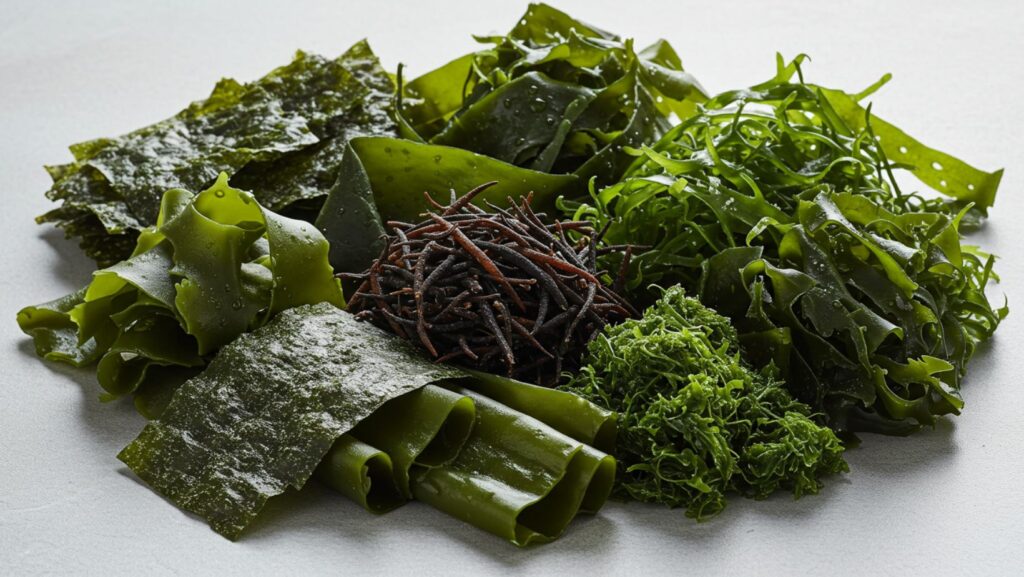
Do you want to learn more about sea vegetables and whether seaweeds are classified as sea vegetables?
Although seaweed is the more common word, the more accurate description of the many healthy meals we acquire from the ocean is sea vegetable.
Sandra would add dried wakame flakes to the potatoes while they are done cooking. Sometimes she makes salad out of dried sea veggies by rehydrating them.
As a wrap for her snacks she uses Nori sheets and a selection of fresh veggies.
Shhe loves to shred Irish moss into small pieces and then sprinkle over popcorn.
I will tell you more seaweed also known as sea vegetables and its health benefits to mankind.
Let us dive in to get started.
Can I Eat Seaweed Instead of Vegetables
Because of the high iodine content of most seaweed, eating large quantities of it over long periods of time can be harmful.
Although most individuals can tolerate high amounts of iodine, hyperthyroidism is one of those conditions that can be more severely affected.
Hatanaka claims that seaweed has more minerals, such as magnesium and iron, than pulverized vegetables, even when consumed in lower quantities.
Vitamins A, K, folate, and B12 are all found in seaweed, albeit not all varieties of seaweed have the human-digestible form of B12.
Wakame and other brown algae contain fucoxanthin, which speeds up the body’s metabolism and aids in weight reduction.
Fucoxanthin comes from plants and is completely natural.
Especially problematic areas of fat, such belly fat, are targeted. The body will burn off that stored fat faster if your metabolism is cranked up.
Carbohydrates included in seaweed serve as prebiotics, or fibers that are not digested yet nourish beneficial microorganisms in your gut.
The sugars in seaweed promote the expansion of these “good” bacteria and raise levels of the short-term fatty acids that maintain a healthy gut lining.
Are Sea Vegetables Healthy
Two nutrients the thyroid gland needs to produce hormones are iodine and tyrosine found in sea vegetables.
Generally speaking, sea vegetables such dulse and kelp have less mercury than fish.
Sea vegetables tend to acquire less mercury as they are not at the top of the food chain, however, some kinds of fish can be heavy in mercury owing to biomagnification in the food chain.
Your thyroid cannot perform as it should without adequate iodine. Low iodine may induce weight fluctuations or tiredness.
Iodine is found in most seaweed, hence if one eats a lot of it over a long period, one might take too much.
Although many people can manage high amounts of iodine, some are more sensitive to its consequences, which can include hyperthyroidism.
Researchers speculate that sea greens may help explain Japanese lifespan and illness prevention.
Since they are among the few plant foods that have both DHA and EPA, seaweed are great sources of omega-3 for vegetarians or vegans.
By blocking or reducing the damage pathways and raising the antioxidant capacity of cells, seaweed shields and heals the renal cells.
Therefore preventing binding and aggregation of CaOx crystal to renal epithelial cell lining and retention of crystals to renal tissue.
What Is an Example of a Sea Vegetable
Ocean vegetation are classified into five categories: phytoplankton, red algae, kelp, seagrass, and sargassum.
Euphotic (sunlight), disphotic (twilight), and aphotic (midnight) are the three categories into which these sea plants are classified.
They are classified according to the amount of sunlight they require for survival and development.
- Kelps, a variety of large, leafy brown algae, are used to create extensive forests in close proximity to the shore.
- Salacornia.
- Dull.
- Nori (Pyropia sp.), red algae, is a famous edible seaweed most often used to wrap sushi in Japanese cuisine.
- Irish Moss is outlined here.
- The sea’s purslane.
One million plant species call the ocean their home.
Here, we are examining the most prevalent examples of aquatic flora. An ocean plant that is frequently observed at the seashore is phytoplankton.
This green algae frequently floats and is frequently transported to coastlines by the passage of waves.
There is good news: The majority of sea vegetables are extremely nutritious, provided that they were not harvested in close proximity to an area with contaminated water.
Salicornia, dulse, kombu, wakame, sea purslane, and Irish moss are all ubiquitous and extremely nutritious sea vegetables.
Is Eating Seaweed Good or Bad for You
It is possible to consume an excessive amount of iodine by consuming a significant amount of seaweed over an extended period.
Many types of seaweed contain high levels of iodine.
While the majority of individuals are capable of enduring elevated levels of iodine, a small number are more susceptible to its effects, which may manifest as hyperthyroidism.
Seaweed has become an increasingly prevalent component of cuisines worldwide.
It is the best food source of iodine, a mineral your thyroid gland needs to work properly.
In addition, it is enriched with antioxidants that safeguard your cells from injury, as well as vitamin K, B vitamins, zinc, and iron.
Eating raw seaweed is generally regarded as secure for the majority of individuals.
This being said, there may be some adverse effects associated with its regular or excessive consumption.
In particular, individuals with thyroid disorders, neonates, and adolescents should refrain from consuming excessive amounts of iodine.
It may cause an interaction with specific medications. .
While potassium is generally beneficial, it can be detrimental to individuals with kidney disease. Seaweed is a rich source of this mineral.
Hatanaka reports that seaweed is also rich in numerous nutrients.
Hatanaka asserts that seaweed can provide a considerably greater quantity of nutrients than pulverized vegetables, including magnesium and iron, even when consumed in lesser quantities.
Seaweed is renowned for its antioxidants, vitamins, and minerals, which are known to preserve the skin and counteract the symptoms of aging. Its natural iodine content, however, is the true secret.
What’s The Difference Between Sea Vegetables and Seaweed
The phrase “sea vegetable” is used to refer to any and all types of seaweed that may be consumed.
This product is available in the form of dried sheets or flakes at the majority of food stores, and it is also used as a component in other items.
The term “sea vegetable” is the more accurate term that is used to describe all of the delicious and healthy foods that we offer that come from the ocean; yet, the majority of people still refer to them as “seaweed.”
In spite of the fact that this category has a great number of subspecies, it is often sold as either “kelp” or “kombu” or both.
What Are the Safest Sea Vegetables
Large and leafy brown algae called kelp build thick forests near the coast.
Salicinea.A nutritious powerhouse loaded in vitamins, minerals including iodine, and antioxidants is kelp. It could even lower intestinal fat absorption, improve cardiovascular health, and even prevent cancer.
Dietary fiber, protein, iodine, B vitamins and potassium define dulse nutrition as both macronutrients and micronutrients.
Although there is no suggested serving size, adding one to two teaspoons to meals as a garnish or flavor enhancer will definitely give a spectrum of nutrients for your diet.
Nori has a rather high vitamin and mineral content. Particularly iodine; also includes C, A, B1, B2, B6, niacin.
Furthermore high in protein (up to 50% of its dry weight) and recognized to help prevent the development of cholesterol deposits in the blood vessels.
By offering antioxidants and anti-cancer characteristics capable of up to 95% reduction of aberrant cell development, one can lower cancer risk.
Because Irish Moss is high in iodine, it should assist those with hypothyroidism—a disorder in which your body lacks sufficient thyroid hormones, which control metabolism.
Metabolism controls activities including your heart rate and breathing as well as turns the food you consume into energy.
But, especially if you currently take medicine for your hypothyroidism, discuss your decision to use sea moss with your doctor.
Rich in the naturally occurring steroid, ecdysterone, sea Purslane leaves are a strong supply of vitamin C.
Furthermore well-known for their haemostatic and anti-venom effects is this plant.
Harvest either the whole herb by the root or just pick new stems from this prolific plant as it develops.
How To Eat Sea Vegetables
Because they do not include any sugar or fat, they do not require any cooking. Raw seaweed is consumed by certain individuals.
It is common practice in Japanese and Korean cuisine to offer fresh, raw arame that has been tossed with sesame oil and served alongside lettuce.
Drying sea veggies rather than selling them fresh is a common practice since it helps to maintain the nutrients that they contain.
It is possible to consume them in their dried state; for example, you may use them as wraps or crumble them out and sprinkle them on salads and grain bowls.
Alternatively, you could rehydrate them. Rehydrate by placing in water for five to ten minutes, or until it becomes soft.
It is recommendable to ingest seaweeds in their uncooked state rather than cooked.
Most of our seaweeds are air-dried, which enables them to maintain the nutrient density that they naturally accumulate from the ocean as they grow.
Seaweed’s nutritional value may be reduced when cooked, as heat can modify the properties of certain components, such as enzymes and specific vitamins.
How much sea vegetables per day
To optimize their nutritional value and flavor, it is unnecessary to consume an excessive amount.
The average daily intake of seaweed is only approximately 4-7 grams, which is typically consumed in the course of 2-3 tiny servings throughout the day in Japan, where approximately one-third of the adult population consumes it almost daily.
To rehydrate, immerse in water for 5 to 10 minutes until it becomes pliable. Next, incorporate the softened seaweed into stir-fries or salads.
It is possible to consume an inordinate amount of seaweed, particularly when it contains high levels of iodine, which can affect thyroid function.
A small 2020 study suggests that the ingestion of seaweed may lead to a high level of iodine exposure, which can increase the risk of developing a thyroid condition.
According to a 2019 review, heavy metals may also be present in seaweed.
Conclusion
It is true that seaveggies are a source of nutrient-dense food that may have numerous positive effects on one’s health.
Even though it is not consumed to a significant degree in Western nations, seaweed is an essential component of the culture of many Asian countries.
There are a lot of seaweed items that are available for purchase, and a lot of them have been extensively processed and, in some cases, deep fried!
When you read about the amount of fat that is contained in some of the most popular seaweed snacks, you might be startled. Seaweeds sold by Pacific Harvest are uncooked and raw in the majority of cases.
Among the varieties of seaweed that are safe to consume and have minimal levels of arsenic are wakame, kombu, and nori.