
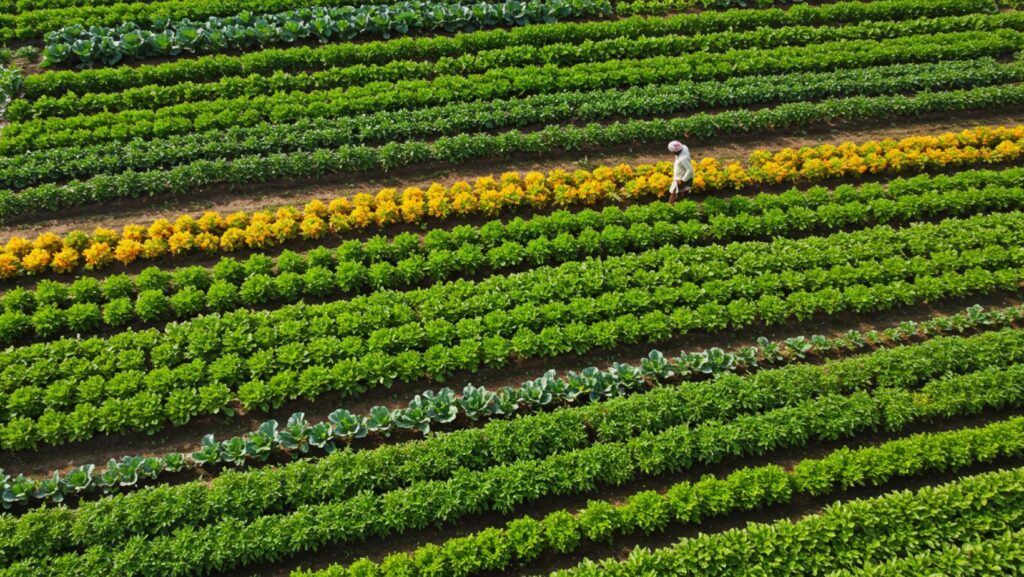
Would you want to know about Organic vegetable farming? In light of my experience, Growing vegetables without the use of artificial chemicals like fertilizers and pesticides is known as organic vegetable gardening.
It gives people, the climate, and the soil priority. Organic vegetable cultivation for export is a very lucrative business with a developing demand.
Building a profitable agribusiness requires careful planning, organic methods, certification, and access to customers.
Begin modestly, grow steadily, and maintain your dedication to excellence.
This book will provide you with the information and pointers you need to launch your vegetable farm, regardless of your level of gardening experience.
Now let get started
What is Organic Vegetable Farming
Growing vegetables without the use of artificial chemicals like fertilizers and pesticides is known as organic vegetable gardening. It’s similar to caring for your garden in the most organic manner.
Growing vegetables in an environmentally and health-friendly manner is known as organic vegetable farming.
We employ natural techniques to aid in the veggies’ growth rather than potentially hazardous chemicals. This is how it operates:
Healthy Soil: We begin by ensuring that the soil is in good condition. The nutrients that plants require to flourish are abundant in healthy soil. We add vermicompost, for example.
No Chemicals: None of the chemicals we use might harm the plants or the insects that support their growth.
Respecting the Environment: Organic farming respects the environment as well. We strive for sustainability by using less water and avoiding trash since we don’t want to damage the environment.
Healthy and Tasty: Because organic farms cultivate their produce in nutrient-rich, healthy soil, the veggies they produce are not only healthful but also taste wonderful.
What is Types of Organic Farming
There are two kinds of organic farming:
Pure Organic Farming: This approach does not use any artificial chemicals. In pure organic farming, the fertilizers and insecticides come from natural sources such as milk, cow manure, etc.
Integrated Organic Farming: This method addresses ecological demands by combining nutrition and pest control. It incorporates a number of techniques for balanced and sustainable farming.
The freshness of the veggies is one of the greatest features of small vegetable farms.
Farm-fresh veggies are harvested when they are ready, as opposed to those that travel great distances to get to your neighborhood supermarket.
They are, therefore, more nutrient-dense. You’re also lessening your carbon impact and helping out local farms.
How to start your Organic Vegetable farm
First, set garden goals
Your vegetable garden adventure begins with your dream or goal.
Imagine your dream garden in drawing or writing. Consider your garden goals: producing wonderful tomatoes to save money, bringing kids outside to grow food, or establishing a pollinator habitat.
Plan what to plant depending on what you want to eat. Start with the “must-haves,” like you would when buying a car or house.
Step 2: Watch and evaluate You Own It
Before starting, observe to guarantee success. You should observe the sun’s path on your land and search for sun and shade as the light changes, as many plants need at least six hours of direct sun.
Many veggies are thirsty and might suffer without excellent drainage, so check where the water drains after a big rain. Deer and bees, which consume gardens, should be observed.
This phase requires assessing your time and availability. Realistic time estimates help you choose the right garden size.
Container gardens are great for quick gardening. Small raised beds are an alternative for people with two to three hours a week. Gardening is addictive, so beware!
3. Create Healthy Living Soil
Garden failure is most often due to poor soil. Soil underpins your garden. In addition to supporting your crops, it nourishes the vegetables that feed you.
Avoid dumping organic compost on a raised bed or in-ground garden.
A garden fork should remove this subsoil, then add soil builders in layers: two inches of organic compost, newspaper, or cardboard, four to six inches of compost, and mulch.
Decomposing materials nourish and preserve soil microbes, building soil over time.
Step 4: Select Seeds and Plants
There are benefits and downsides to consider when choosing garden seeds or transplants. Transplants are faster but more expensive because they’re several weeks old when planted.
Planting from seed saves money and increases diversity.
Root vegetables and fast-germinating plants must be cultivated from seed since their fragile roots cannot survive transplanting.
Source is crucial for seeds and transplants. Choose firms that cultivate non-GMO, chemical-free, organic, sustainably, or responsibly.
I examine several seed businesses on my site since sourcing is extremely crucial.
The Turtle Creek Biodynamic Seed Initiative and other Green Business Network members sell reputable seed brands at GreenPages.org.
Step 5: Layout and plant your garden
Drawing a simple garden layout doesn’t require artistic talent. Consider these factors while placing plants in your garden:
Growing “up” with plants that climb trellises and have a small garden footprint might help you grow more in less area.
How much room, light, or shade does each type need? Seed catalogs and packs contain this.
Companion planting reduces the gardener’s effort by pairing plants that support each other. Nasturtiums, marigolds, and aromatic plants repel tomato and cucumber bugs.
Corn makes an excellent climbing plant trellis and dense crops like peas and beans shade out weeds and contribute nitrogen.
what are the Key Principles of Organic Vegetable Farming
Soil Success: Traditional creativity is built on the foundation of soil. We concentrate on preserving consciousness and using traditional techniques to manage the soil’s resources and structure.
To improve soil quality, standard farmers buy fertilizer, use animal manure, compost, and cover yields.
This guarantees that the soil is nutrient-rich, which supports healthy plant development and produces veggies of superior quality.
Biodiversity: In order to maintain an acceptable normal system, ordinary creation encourages the use of various plant species and assembles groups.
In addition to promoting soil success and creating a more grounded ranch atmosphere, growing several kinds of vegetables on comparable land can reduce the chance of disturbing effects and infections.
In typical ranches, agroforestry, crop rotation, and intercropping are common methods that support biodiversity.
Natural Weed and Pest Control: Organic farmers use standard methods to control weeds and pests.
This includes sidekick planting (growing bug-repelling plants), standard vermin management (bringing in productive insects like ladybugs), and the use of traditional expert enemies like neem oil.
Instead of using specialized pesticides to control weeds, most ranchers rely on cover crops, mulching, and hand weeding.
Sustainable Water Management: Appropriate water usage is necessary for normal creation.
The use of regular mulch, water securing, and stream water systems all contribute to water conservation and soil moisture awareness.
In addition to ensuring the long-term value of water resources, this lessens the farm’s natural impact.
This ensures the protection of collected data and shields the environment from the possible risks associated with genetically modified organisms.
what are The Processes of Organic Vegetable Farming
Traditional vegetable development begins with planned strengths and seed selection. Farmers use non-GMO, conventional seeds to maintain standards.
The following developments describe the conventional vegetable production cycle:
Normal farmers apply compost, green waste, and animal dung to the soil. It improves soil structure, supplement content, and water support.
Cover crops like vegetables fix nitrogen, making soil more usable.
Planting and Yield Agitation: Growers spacing veggies according to time and climate. Traditional farming relies on crop rotation to minimize soil fatigue and complications.
To preserve soil health and prevent yield disappointment, farmers pick vegetables in different fields each season.
Average farmer uses manure, garbage, and biofertilizers to boost crops.
Common data sources progressively deliver additives, promoting unanticipated plant growth and soil quality. We steer clear of planned excrements that might affect the environment and soil.
Disturbance and Weed Association: Farmers utilize neem oil, significant bugs, and unpleasant plants to manage vermin and weeds.
Mulching, hand weeding, and cover crops help ranchers control weeds without chemical herbicides.
Water The pioneers: Experienced water In usual creation, the board is huge. The spillwater structure directs water to plant roots, decreasing waste.
Normal mulch retains soil moisture, minimizing the need for watering.
Harvesting and Post-pick Management: We pick vegetables at their optimum for flavor and nutrition.
The board painstakingly prepares, organizes, and bundles veggies after harvesting to preserve freshness.
Normal ranchers avoid artificial chemicals and medicines after harvest.
What are Benefits of Organic Vegetable Farming
Better Produce: Conventional vegetables are grown without the use of chemical composts, herbicides, or scheduled insecticides.
This guarantees their independence from detrimental occurrences, improving their security and quality for customers.
regular produce has greater amounts of detrimental development, minerals, and opposing subject matter experts than produce that is typically produced.
Food production is more reasonable when the soil is solid since it is more resistant to disintegration, dry periods, and other organic loads.
Assistance for Small-Scale producers: By reducing their need for costly planned inputs, ordinary growth often keeps up with confined-scope producers.
As a result, it gives them access to upscale commercial areas where common veggies may command higher prices, giving them more financial prospects.
Reduced Water Pollution: By removing compound floods brought on by pesticides and produced manures, regular creation lowers water pollution in linked streams, lakes, and groundwater.
This enhances the regularity of buildings and helps keep water sources clean.
Final thought
Now that we have established Organic vegetable farming, Obtaining fresh veggies such as spinach, coriander, and other such items from small organic vegetable farms is an excellent method to do so.
In addition to providing us with a diverse selection of vegetables, these farms emphasize organic farming practices.