
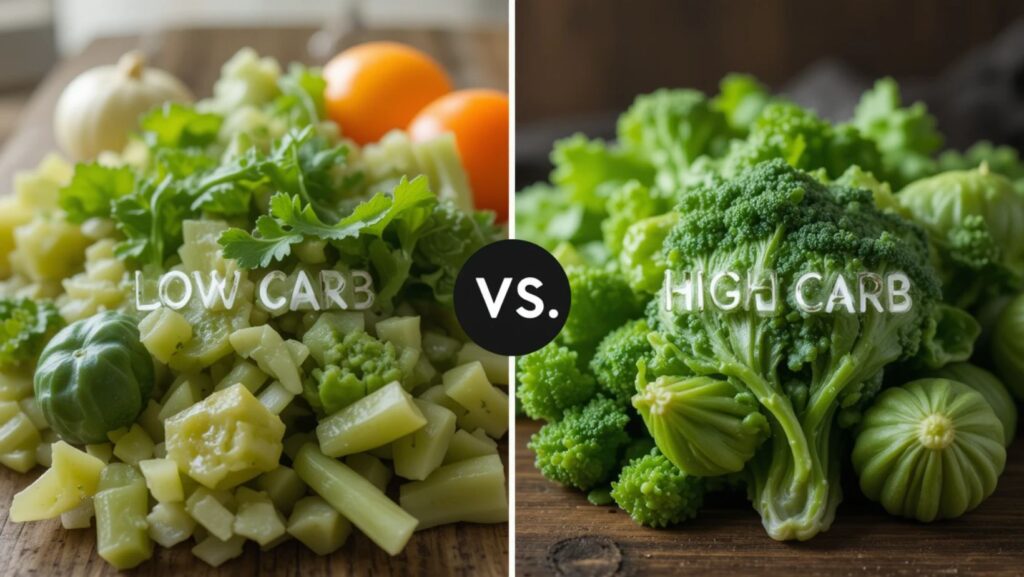
Would you want to know about Low-carb vs. high-carb vegetables? According to my observations, low-carb vegetables are typically non-starchy options, such as leafy greens (kale, spinach), broccoli, cauliflower, zucchini, and cucumbers.
Conversely, high-carbohydrate veggies encompass starchy root vegetables like potatoes, sweet potatoes, maize, peas, and beets, which possess a markedly elevated carbohydrate content per serving.
Low-carb vegetables are vegetables that do not contain starch, such as kale, spinach, and cucumbers.
On the other hand, higher-carb vegetables are starchy vegetables that have a higher calorie level, such as corn, peas, and potatoes.
Meanwhile, some vegetables fall somewhere in the middle, such as root vegetables and winter squash, which contain fewer carbohydrates than the higher-carb vegetables.
However, that is not all; as you continue reading, I will provide you with further information on the topic matter.
Now, let’s get started
What are low-carb vegetables
The majority of underground-growing vegetables, sometimes known as root vegetables, and some other vegetables, including maize and peas, generally have higher levels of starch, a complex carbohydrate, than other vegetables.
These higher-carb vegetables are referred regarded be “starchy” vegetables because each serving has more than seven grams of net carbohydrates (which is calculated by subtracting the grams of fiber, an indigestible carbohydrate that our systems cannot break down) from the total grams of carbohydrates.
However, if you’re watching how many carbohydrates you eat (for example, on a low-carb or keto diet), you should limit yourself to even lower-carb veggies (also known as “non-starchy” vegetables), which have five grams or less of net carbohydrates per serving.
Although a wide variety of veggies can be considered low-carb, you can generally assume that anything leafy and green is OK.
To be clear, the body converts the carbohydrates found in all veggies into sugars that it may utilize as fuel.
Low-carb veggies are vital for everyone, even if many low-carb dieters substitute them with meals high in fat or protein (such as nuts or animal protein).
Low-carb vegetables are abundant in a variety of minerals, frequently containing magnesium, phosphorus, potassium, and vitamin C, and they offer some fiber and water for a small amount of calories and carbohydrates.
What are Higher and lower-carb vegetables
Are you curious about which veggies are regarded to have a greater carbohydrate content and which ones are not?
If you want to know anything, here it is:
- Higher carbohydrate content
- Kumara made from potatoes
- The Taro Yams
- Cumin Pumpkin Corn
- Reduce your carb intake.
- An artichoke, as well as hearts
- Arugula root
- Branches of bamboo
- In addition to other Asian greens, bok choy
- Brussels sprouts
- Sprouts of Brussels
- cabbage (cabbage)
- carrots (carrots)
- Capsicum pepper
- Cucumbers and celery seeds
- Vegetables known as courgettes
- Cucumbers
- Eggplant, also known as aubergine
- Broccoli greens
- The herbs
- Onions and Kale
- The leafy greens
- The bean sprouts with mung beans
- Fungal spores
- Onion and Okra
- Sugar snap peas, often known as peas, Radish Rocket
- Succotash with silverbeets and spaghetti
- Spinach (plural)
- a tomato-based turnip
There are water chestnuts. This is important to keep in mind since the carbohydrate level of the vegetables varies.
For instance, when you consume a large quantity of some of the vegetables that have a lower carbohydrate content, such as peas, the total amount of carbohydrates in a serving will be larger than the same amount of lettuce, for example.
What are the low-carb veggies
Unsure which low-carb veggies to eat? Remember this low-carb veggie list when you shop for the good stuff. You’ll receive a variety of flavors, textures, and nutrients with 20 alternatives.
1.. One cup of chopped tomatoes has 4.84 grams of net carbohydrates.
2. Broccoli
Broccoli is highly nutritious and packed with vitamins K and C. It also has 3.67 grams of net carbs per cup.
vitamin C heals wounds, and hard-to-find vitamin K builds bones and tissues.
3. Cucumbers
Crisp, crisp cucumbers have 1.74 grams of net carbohydrates per 1-cup serving and are 95% water, making them a terrific way to eat your water.
They also contain anti-inflammatory polyphenols called lignans.
4. Cauliflower
Besides fiber and B vitamins, cauliflower provides choline, which boosts memory. Its 2.98 grams of net carbohydrates per 1-cup serving make it a low-carb vegetable for roasting, stir-frying, or rice substitutes.
5. Mushrooms
Mushrooms have a meaty, umami flavor and are strong in heart-healthy B vitamins riboflavin, niacin, and pantothenic acid.
B vitamins are essential for heart energy production. Mushrooms provide 1.58 grams of net carbohydrates per cup.
6. Zucchini
A low-carb favorite, zucchini noodles have just under 3 grams of net carbohydrates per 3/4-cup serving. Zucchini, a good source of vitamin C, can be grilled, sautéed, or spiralized into noodles.
7. Lettuce
The average 1-cup portion of lettuce has five calories and half a gram of net carbohydrates. Variable types have variable carb counts and nutritional benefits. Additionally, lettuce includes omega-3 fatty acids.
These nutritious fats boost immunological, hormonal, and cardiovascular health.
8. Celery
Celery is a fantastic low-carb snack since it holds hummus, guacamole, and other dips with 2.02 grams of net carbohydrates per two medium stalks. It’s vitamin C-rich.
What is a high-carb diet
Although a high-carb diet has no formal definition, the following advice is provided:
“Generally speaking, between 45 and 65 percent of your total calories come from carbs.
Therefore, a high-carb diet would be at the higher end of that range or would involve consuming more than two-thirds of your calories from carbohydrates.
Additionally, you may have heard that the DASH or Mediterranean diets are strong in carbohydrates.
However, many people who adhere to the DASH or Mediterranean diets may find that their intake of carbohydrates increases.
The reason for this is that you are consuming plant foods high in fiber, which are mostly carbs, such as whole grains, fruits, vegetables, and legumes.
How Many Carbs Are in Vegetables
It’s advised to eat 2.5 cups everyday.
What’s 1 cup? One cup usually means 1 cup of raw or cooked veggies or 2 cups of raw leafy greens.
No matter the source, people with diabetes must track their carbs. This list of veggies by carb content will help you eat more vegetables while staying on track.
List of low-carb veggies from lowest to greatest carb content.
Spinach (raw): 1 cup: 1 g carbohydrate.
Spinach offers the highest nutrients per calorie of any vegetable. It turns out Popeye was right.
Spinach is flexible and high in vitamins A, K, and C. Eat spinach fresh, boiled, stewed, or from the garden with these healthy recipes.
Garlic (raw): 1 clove: 1 g carbohydrate.
Usually, you may smell this sweet allium before seeing it. Although garlic is rarely used to flavor recipes, it is a healthy vegetable. Garlic fights cancer, among other health advantages.
Kale (raw): 1.4 g carbs per cup.
The poster child for healthy vegetables is kale. It’s full of vitamins and antioxidants that prevent chronic diseases.
Romaine lettuce (raw): 1.6 g carbs per cup shredded.
One cup of romaine lettuce provides 22% of your vitamin A and 40% of your vitamin K and may surprise you. This hidden green boosts eyesight, blood flow, and hydration.
Final thought
Now that we have established Low-carb vs. high-carb vegetables, Although they might differ in the quantity they offer, all fruits and vegetables include carbs.
Vegetables with less carbs include leafy greens, cabbage, peppers, cucumbers, zucchini, broccoli, cauliflower, and avocados.
Winter squashes, maize, and root vegetables are regarded as veggies with a greater carbohydrate content.
While a high-carb diet might provide you lots of energy and fiber, a low-carb diet can leave you feeling exhausted.
When you plan your meals, you should keep in mind that eating a lot of carbohydrates might also mean consuming more refined foods, which have little nutritional value, but eating a lot of protein and healthy fats can allow you to drink more of the latter.