
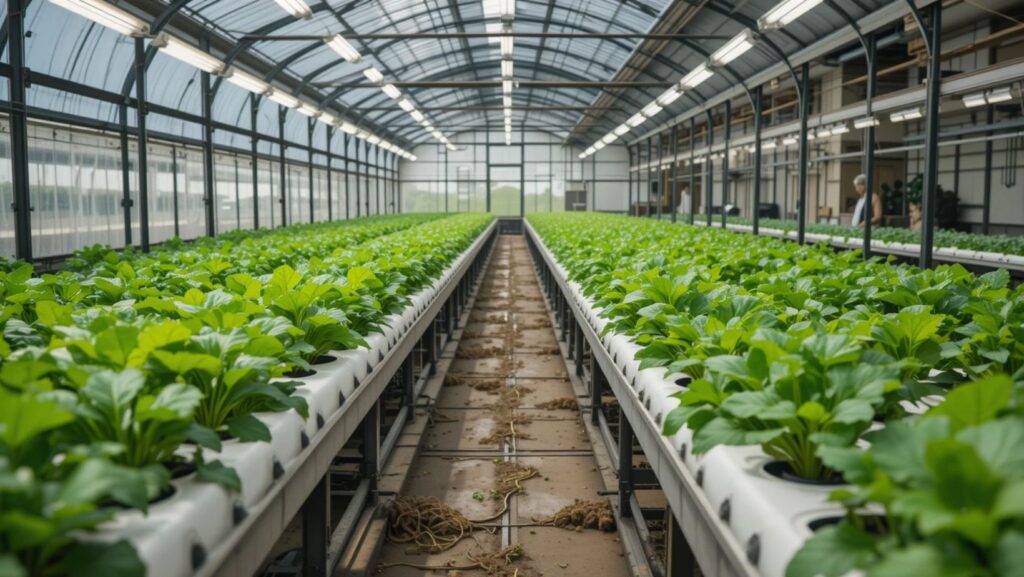
Would you want to know about Hydroponic vegetable farming? My experience has shown me that hydroponic vegetable gardening involves growing crops in water rather than dirt.
The plants are nourished by adding nutrients to the water in which their roots dangle.
Though it may seem like a difficult undertaking, producing vegetables hydroponically can be accomplished effectively with the right information and growth techniques.
However, that is not all; I will provide additional information on the topic as you continue reading.
Now, let’s get started
What is the meaning of hydroponic vegetables
Hydroponics is a method of cultivating plants that involves the use of a nutrient solution that is based on water rather than soil.
This method frequently involves the utilization of an aggregate substrate or growth medium, which may include vermiculite, coconut coir, or perlite.
Small-scale farmers, hobbyists, and commercial companies all turn to hydroponic production systems for their agricultural needs.
Are hydroponic vegetables better
When it comes to the total amount of nutrients that are present in crops, Hydroponics offers a distinct advantage.
Hydroponics provides a controlled environment in which nutrients are provided directly to the roots of plants, in contrast to traditional soil-based farming, in which plants hunt for nutrients in the soil.
The utilization of this tailored strategy enables effective nutrient absorption, which ultimately leads to increased nutrient levels in hydroponic plants.
On the other hand, hydroponically produced vegetables can contain much higher amounts of vitamins, minerals, and antioxidants when compared to their counterparts that are grown using conventional methods.
What vegetables grow best hydroponically
Leafy greens are the preferred option for many businesses and health-conscious customers when it comes to hydroponic gardening.
These nutrient-dense plants come in a variety of tastes and health advantages, from traditional choices like romaine to popular superfoods. A closer look is as follows:
Arugula
With its abundance of calcium, folate, and vitamins A, C, and K, Arugula is more than simply a salad green.
It is a flexible option for salads, wraps, and even as a pizza topping because of its peppery bite.
Retailers should be aware that Arugula’s distinct taste profile may draw in a specialized clientele of health-conscious shoppers.
Ideal Growing Environment: Arugula grows best in a hydroponic system with a pH between 6.0 and 6.5 and likes moderate light levels.
Shelf Life: Arugula keeps well in the refrigerator for up to 10 days.
Culinary Pairings: Soft cheeses like goat or feta, citrus vegetables, and almonds all benefit from its peppery bite.
Additional Health Benefits: In addition to its abundant nutritional profile, Arugula has antioxidants that may help lower inflammation and promote eye health.
Butterhead: A popular hydroponic lettuce, butterhead is prized for its rich nutritional profile, which includes antioxidants like lutein and beta-carotene, as well as its buttery feel.
It’s a flexible alternative for merchants wishing to expand their vegetable area because it works well for salads and lettuce wraps.
Ideal Growing Conditions: A hydroponic setting with a pH between 6.0 and 6.5 and moderate light levels is ideal for butterhead growth.
Shelf Life: Butterhead lettuce keeps well in the refrigerator for 10–14 days.
Culinary Pairings: Light meats like grilled chicken and crisp vegetables like apples go nicely with its buttery texture.
Increased Health Benefits: Butterhead lettuce is a strong source of iron and antioxidants.
Collard Greens: These vegetables are high in nutrients and cultural significance. They are becoming more and more well-liked by a variety of foodies and are a favorite in soul food kitchens.
Collard greens, a less fashionable but no less nutrient-dense substitute for kale, are packed with vitamins and minerals.
Ideal Growing Conditions: A hydroponic environment with a pH of 6.0 to 7.0 is suitable for collard greens since it is somewhat acidic.
Shelf Life: Collard greens keep well in the refrigerator for up to 10 days.
Culinary Pairings: These greens go nicely with robust tastes like garlic and onion, as well as heavy meats like a pig.
Additional Health Benefits: Collard greens provide a lot of fiber and substances that might help reduce cholesterol.
What are the vegetables that can be grown in Hydroponics
Ten hydroponic vegetables:
1. Lettuce
Required Temperature: 7–21 °C
Ideal pH: 5.6–6.2
Many leafy lettuce cultivars thrive in Hydroponics. Romaine lettuce is the healthiest due to its chlorophyll concentration. It features gentle, fragrant leaves and huge, erect, full-bodied heads.
Lettuce grows in small spaces because of its thin root system. It takes 4-5 weeks of correct feeding and maintenance to harvest good lettuce.
2. Arugula Requires 10-18°C
Ideal pH: 6.0–7.5
Hydroponic Arugula is fragile. Its leaves are nutritious and succulent. When cultivated in a hydroponic farm, Arugula produces more consistently.
This herb is rich in antioxidant phytochemicals and sulfur-containing glucosinolates that detoxify.
3. Kale Required Temperature: 24–28 °C
Optimal pH: 5.8–6.3
When grown in frigid temperatures, kale tastes better.
Kale is more nitrogen-sensitive than other hydroponic plants, and leaf tips burn when nitrogen levels are too high. It needs a customized nutrition solution to grow.
Kale ready for harvesting takes six weeks. If half picked, it can regenerate.
4. Tomato Required Temperature: 14.5°C to 26°C
Ideal pH: 5.5–6.5
Commercially cultivated hydroponic tomatoes are popular. It may be grown vertically using string or wires in a hydroponic farm because it is a vine crop.
Two tomato varieties exist: determinate and indeterminate. Proper pruning and assistance may keep indeterminate varieties tall and vegetable. The bushier determinate tomato types are harder to prune.
As a versatile produce, tomatoes seldom disappoint in market demand.
5. Mustard Greens Require 15-24*C temperature.
Ideal pH: 5.6–6.7
Mustard greens are high in antioxidants, fiber, and micronutrients and low in calories. Also rich in vitamin C and K.
Young mustard green leaves taste mild, but as they mature, they taste rich.
With sufficient nourishment and care, the leaves may grow 15–18 inches in six weeks. Harvest leaves when 6–8 inches long.
6. Swiss Chard Requires 15-25°C
Ideal pH: 5.6–6.4
Swiss chard has a delicate texture and delicious taste. Swiss chard seedlings sprout in 7-12 days and mature in 30–40 days.
It regrows after partial harvesting.
Swiss chard has more vitamin K than other plants.
What are the Benefits of hydroponic farming
Enhanced yields: Hydroponic farming has the potential to result in enhanced yields.
Effective use of water Hydroponic farming has the potential to be more effective in terms of water utilization.
A lower risk of illness Hydroponic farming has the potential to lower the danger of diseases and pests that are transmitted through the soil.
In certain cases, hydroponic farming can result in crops of a greater quality than traditional agricultural methods.
Utilization of resources: Hydroponic farming has the potential to maximize the utilization of resources like water, fertilizers, farm area, and energy.
How hydroponic farming works
Roots are permitted to dangle in water while plants are being cultivated.
In order to provide nourishment for the plants, nutrients are added to the water.
For the purpose of providing the roots and stems with the necessary physical support, inert substrates such as vermiculite, coconut coir, or perlite can be utilized.
There is also the possibility of using trellis systems to offer support to the stems and roots of the plant.
Small farmers, amateurs, and commercial companies all make use of hydroponic farming equipment and techniques.
Final thought
Now that we have established Hydroponic vegetable farming, Hydroponics is being considered as a potentially vegetableful route for the future of agriculture.
Its capacity to produce crops that are rich in nutrients, its rapid growth rates, and the possibility of organic production make it an enticing alternative for farming that is environmentally responsible.
The use of Hydroponics has the potential to increase food security, mitigate the negative effects of agriculture on the environment, and diversify farming techniques.
Through the utilization of Pure Greens container farms, Hydroponics has the potential to contribute to the development of our future food systems.