
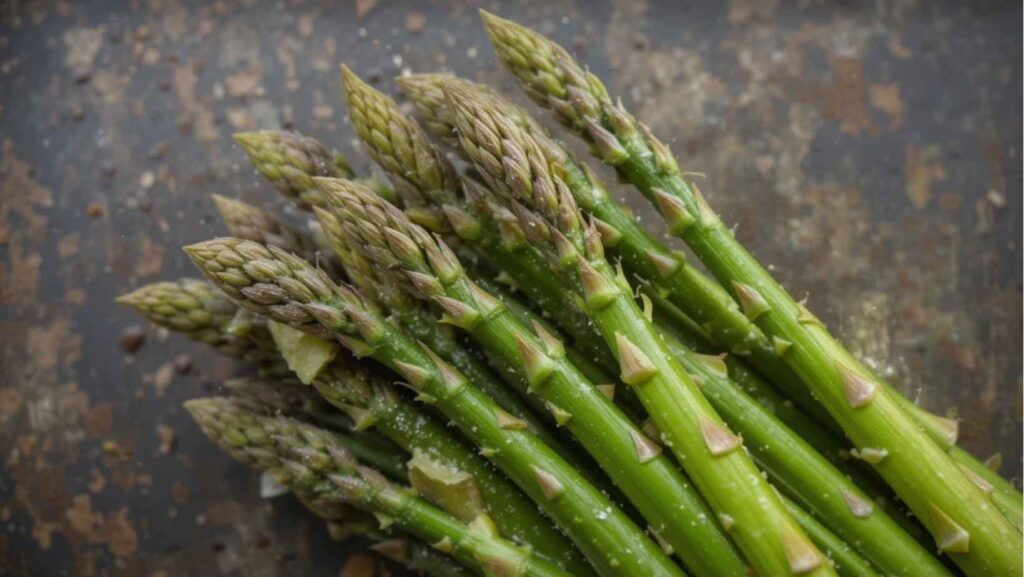
Would you want to know if eating too much asparagus is bad for you? Due to the high fibre content of asparagus, consuming excessive amounts may cause digestive discomfort, including gas, bloating, or diarrhea.
This is based on my own experience, despite asparagus being typically considered a healthy vegetable.
However, that is not all; as you continue to read, I will provide you with further information on the subject topic.
Now, let’s get started.
What happens when I eat too much asparagus
“There are no life-threatening side effects of eating too much asparagus, “but there may be some uncomfortable side effects such as gas and a noticeable smell to the urine.”
It is possible to have an allergy to asparagus, in which case you should avoid eating it whenever possible.
It is more likely that individuals who are sensitive to other members of the lily family, such as onions, garlic, and chives, would also be allergic to asparagus.
A runny nose, hives, difficulty breathing, and puffiness or swelling around the mouth and lips are common symptoms of an allergic reaction.
In order to provide a more in-depth explanation:
Concerns Regarding the Digestive System: Although asparagus is an excellent source of fiber, which is essential for the health of the digestive tract, consuming high quantities of asparagus may induce digestive discomfort in certain individuals.
The fiber included in asparagus has the potential to ferment in the digestive tract, which can result in issues such as gas and bloating.
Consuming an excessive amount of fiber from asparagus may result in diarrhea in certain individuals.
Urine that smells pungent: Asparagus contains asparagusic acid, which can be broken down into sulfuric chemicals that can generate a distinct odor in the urine, sometimes characterized as “rotten-like.”
There is a possibility that some people are allergic to asparagus, which can result in symptoms such as a rash on the skin, watery eyes, and difficulty breathing, all of which can be quite uncomfortable.
What Are the Side Effects of Eating Asparagus
When some people consume asparagus, they have a peculiar odor in their urine. This is probably the most well-known adverse consequence of eating asparagus.
The following question was posed to over 7,000 individuals as part of research: “After eating asparagus, you notice a strong characteristic odor in your urine in response to this prompt.”
A little over forty percent of those who responded claimed that they did.
The majority of individuals would become aware of the odor within a two-hour timeframe after consuming the vegetable.
What are the reasons that some individuals encounter this phenomenon while others do not? Two primary causes are at play here.
The odor may be attributed to several factors, one of which is the mechanism by which the gastrointestinal system and body metabolism respond to the vegetable.
Asparagus is a source of asparagusic acid, which leads to the production of sulfur compounds during digestion.
These sulfur compounds are responsible for the distinctive odor present in urine.
However, not everyone digests the acid in a manner that causes the sulfur to be released, and as a result, not everyone’s urine will smell.
Some individuals are just unable to smell the odor, which is the second explanation.
Researchers have found that certain individuals have a genetic composition that prevents them from detecting the odor of asparagus when they go to the bathroom after eating a meal that emphasizes its consumption.
The only thing you need to be concerned about is a momentary odor that may be present in your urine, regardless of whatever category you belong to.
Is it OK to eat asparagus every day
The vegetable known as asparagus is both nutrient-dense and tasty, and it may be consumed on a daily basis.
It is an excellent addition to a diet high in fiber, as it is low in calories and contains a wealth of vital vitamins, minerals, and antioxidants.
This will help to maintain a healthy digestive system.
When consumed, however, asparagus may potentially result in the following adverse effects:
In certain individuals, consuming asparagus may result in flatulence, stomach cramps, and gastrointestinal discomfort due to its high fiber content.
Because asparagus includes asparagusic acid, it has the potential to decompose into sulfurous chemicals, which might cause your urine to smell rather peculiar.
Those who use lithium may experience ill effects as a result of the medicine’s interaction with asparagus, which may cause the drug to be retained in the body more than usual.
A skin rash, watery eyes, and difficulty breathing are some of the symptoms that may be experienced by someone who is allergic to asparagus.
What is the nutritional value of asparagus
In addition to being a significant source of vitamin B6 and calcium, asparagus is composed of 93% water and has a low salt content.
- It is magnesium zinc.
- Protein and dietary fiber diet
- The beta-carotene
- Vitamin C, vitamin E, vitamin A, and vitamin K
- (Thiamine)
- The riboflavin
- a Rutin
- This is niacin.
- The acid folic
- Iron –
- The element phosphorus
- potassium (K)
- Copper and Manganese
- Selenium (Se)
The trace mineral chromium is responsible for regulating the insulin’s ability to transport glucose from the bloodstream into the body’s cells.
Because the asparagus plant has a relatively high concentration of the amino acid known aspartic acid, the plant is the source of the name for this particular amino acid.
Is too much asparagus bad for your kidneys
“When consumed in small amounts, asparagus is considered to be a food that is low in potassium.”
Additionally, it is safe to consume as part of a balanced diet and will not harm your kidneys.
Asparagus, specifically asparagus with six stalks or fewer, is an excellent complement to a diet low in potassium, which is recommended for individuals with renal disease.
When it comes to preventing asparagus pee from occurring to you, however, there is nothing you can do.
Ultimately, it is not a major problem, and many of us have experienced it.
In light of this, you shouldn’t avoid asparagus because of the smell of urine. In point of fact, the next time you get a whiff of that particular aroma, y
ou should give yourself a pat on the back for selecting a vegetable that is high in nutrients; you should think of it as a perfume of success.
Can You Eat Raw Asparagus
It is a common misconception that asparagus must be cooked before it can be eaten; however, this is not entirely accurate.
In fact, you probably don’t even need to prepare it to make it a nutritious addition to your diet.
Boiling asparagus softens the plant fibers that would otherwise be difficult to chew and digest, making the vegetable more accessible to the consumer.
On the other hand, if it is prepared properly, raw asparagus may be chewable and just as delicious as any cooked variety of the vegetable.
Remove the woody ends of the spears first, just as you would when preparing them for cooking. This is the procedure you should follow.
It is possible to bite right into them at this stage; however, the experience is unlikely to be enjoyable given the current circumstances.
Instead, use a vegetable peeler, grater, or a sharp knife to chop or shred the spears into very small pieces. The chunks will be simpler to chew if they are thinner than they are thick.
For tenderizing the tougher sections of the stem, you may also consider tossing the pieces in a simple dressing consisting of olive oil and lemon juice or vinegar.
Doing so is also an excellent way to add a touch of flavor to the dish.
How to Prepare and Cook Asparagus for the Best Taste
Before you eat asparagus spears, you’ll want to trim off the white, woody ends, usually by at least ¼ inch.
Asparagus can be served whole or chopped into ½ inch pieces. Raw asparagus makes a great addition to a salad, but more often than not, you’ll find it cooked.
It can be prepared in virtually any way: roasted, sautéed, steamed, or stir-fried.
If you’re in a hurry, you can cook asparagus in the microwave. Place the spears in a microwave-safe dish with about ¼ cup of water and heat for 4 to 7 minutes or until tender.
The spears should be somewhat crisp when they’re cooked. You’ll know you’ve cooked them too long if they’ve lost their bright green color.
Overcooking them will result in a loss of flavor and destroy some of the nutrients. People enjoy asparagus plain or with a bit of olive oil, salt, and pepper.
Asparagus also pairs well with spices like dill and allspice, as well as herbs like marjoram.
Final thought
Now that we have established that not eating too much asparagus is not bad for you, cooked or raw, asparagus is a vegetable rich in nutrients and can be consumed in any form.
Cooking is the most common method of preparation due to the firm texture of the food. As an alternative, raw spears that have been marinated or cut very thinly can be just as tasty.
There is a possibility that cooking asparagus will increase its antioxidant activity; nevertheless, cooking may also cause a loss of nutrients.
Vitamins that are sensitive to heat, such as vitamin C, are particularly susceptible to this phenomenon.
If you want to get the most out of the health advantages of asparagus, you should think about including both cooked and raw asparagus in your diet.
From a nutritional standpoint, you can’t go wrong with any option.