
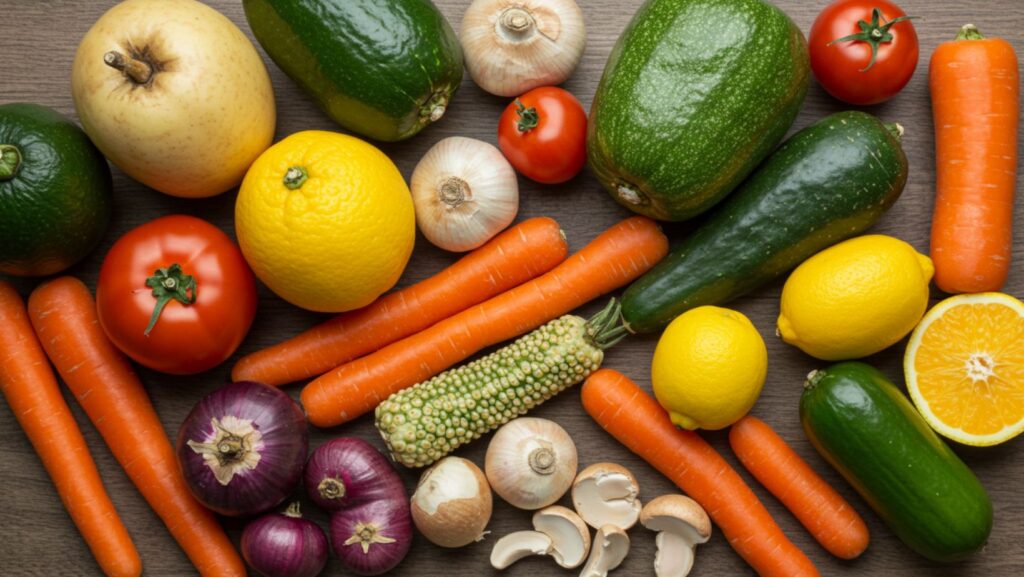
Would you want to know How vegetables impact gut bacteria? A more diverse and healthy gut microbiome results from the production of short-chain fatty acids (SCFAs) like butyrate, which have anti-inflammatory properties and support intestinal cell health.
Additionally, the phytochemicals in vegetables can influence the composition and activity of gut microbiota, potentially inhibiting harmful bacteria and supporting beneficial ones.
Based on my experience, vegetables have a significant impact on gut bacteria by providing dietary fiber, which acts as a prebiotic, feeding beneficial bacteria in the gut and promoting their growth.
A lot of veggies can help maintain the health of your digestive system.
Some are high in water content, some are high in fiber, and some include plant components like polyphenols that support intestinal microbes.
A varied and healthy gut flora may be supported by eating a wide range of vegetables and other plants.
However, as you continue reading, I will provide further information on the topic.
Now let get started
Do vegetables help gut bacteria
Indeed. Cruciferous vegetables are abundant in a variety of dietary components, including dietary fibers like cellulose, hemicelluloses, and pectin, as well as other substances like lignans and glucosinolates, which are capable of acting as metabolic substrates for certain bacteria that are found in the human gut.
Bacteroidetes, for instance, are capable of completing the conversion of cellulose into SCFA.
It has been demonstrated that some Peptostreptococcus and Eggerthella that have been isolated from feces are capable of metabolizing lignans in vitro, including secoisolariciresinol.
In vitro studies have demonstrated that glucosinolates are used by a number of different species of gut bacteria.
These bacteria include E. coli, Bacteroides thetaiotaomicron, Enterococcus faecalis, Enterococcus faecium, some Peptostreptococcus spp., and Bifidobacterium spp.
Therefore, the components of diets that are high in cruciferous vegetables have the ability to impact the growth of certain bacteria in the bacterial community that is found in the human gut, which might ultimately result in a change in the composition of the community.
There is a possibility that the community shift seen in this study was caused by a few of these particular components; nonetheless, it is highly probable that it was caused by the cumulative impacts of all of these components.
Which vegetable and vegetables are gut friendly
In the process of determining which vegetable and vegetables are most beneficial to the microbiota of the stomach, diversity is the most important factor to consider.
there should be “variety in the type and families of vegetable and vegetables, as well as variety in the ways that they are prepared, and variety in the frequency on a daily, weekly, and seasonal basis as applicable and accessible.
the following vegetable and vegetables are particularly good to gut health, despite the fact that the majority of vegetable and vegetables are abundant in both soluble and insoluble fibers and contain beneficial components:
veggies that belong to the family Brassica According to a reliable source, Brussels sprouts, cabbage, kale, arugula, asparagus, and broccoli are all vegetables that belong to the allium family.
Chives, onions, garlic, leeks, shallots, and scallions are examples of vegetables that have been fermented
Other examples include fermented vegetables like kefir, kimchi, sauerkraut, yogurt, miso, and natto, as well as fermented vegetable such bananas, figs, pears, berries, apples, apricots, apples, and kiwis.
what are the The Best Vegetables for Gut Health
To begin, increasing the amount of plant-based foods you consume (vegetable, vegetables, legumes, and so on) can help improve your gut health overall.
This is because these foods are abundant in nutrients and fiber, which are beneficial to the bacteria that live in your gut. However, there are several vegetables that could be the true MVPs.
Increasing the amount of veggies that are strong in antioxidants is one way to improve the health of the digestive tract.
Spinach, Swiss chard, kale, and other vegetables belonging to the “leafy green” family are some examples of the types of vegetables that are beneficial to the stomach.
It is for a few different reasons why the consumption of leafy greens and intestinal health go hand in hand.
To begin, leafy green vegetables include a sugar molecule known as sulfoquinovose, which is necessary for the provision of beneficial bacteria to your digestive tract.
As the quantity of beneficial bacteria in your digestive tract rises, they reduce the likelihood that harmful bacteria will be able to reproduce and establish themselves in your digestive tract.
In addition to providing our bodies with a considerable quantity of sulfoquinovose, these leafy green vegetables are also an excellent source of folate, vitamin C, and vitamin K.
We provide our bodies these nutrients every time we consume them. In addition, leafy greens are loaded with fiber, which has been linked to better gut health.
Fiber helps to feed the beneficial bacteria that live in your gut and keeps things moving in your digestive system (in other words, it helps you defecate).
Understanding about vegetables and gut bacteria
Having a high fiber content is the major factor that influences the bacteria that are found in the gut.
This is because the fiber is digested by microbes in the gut, which results in the production of short-chain fatty acids (SCFAs) that are helpful for the health of the gut.
Diversity is essential:
When you consume a wide range of vegetables that contain different forms of fiber, you encourage the growth of a greater diversity of gut bacteria, which in turn contributes to a microbiome that is more diversified and robust.
Phytochemicals: Plant substances such as polyphenols and antioxidants, which are abundant in vegetables, have the potential to have antibacterial characteristics, giving them the ability to possibly assist maintain the balance of bacteria in the gut.
Vegetables that have been fermented: Lacto-fermented vegetables, such as sauerkraut, can further improve gut health by adding more probiotic bacteria.
What is the relatrionship between Leafy greens and gut health
the bacteria that live in your gut, also known as microbiota, enjoy feeding on a specific sugar molecule that can be found in leafy green vegetables.
There is no need to be concerned about the fact that sugar is just another term for carbohydrates.
A possible explanation for how specific beneficial bacteria protect your stomach and promote health might be provided by this research.
leafy greens are necessary for the purpose of nourishing your microbiota in a manner that is distinct from the way that dietary fiber and prebiotic fiber carry out their functions.
When the inhabitants of your digestive tract are able to consume the food that they desire, they will proliferate.
They each have children, and those children in turn have children of their own, who in turn have children of their own, and so on.
If you have a greater quantity of beneficial bacteria in your digestive tract, they will be able to prevent bacteria that are less favorable from reproducing and colonizing your digestive tract. The entire situation is related to real estate.
The bacteria that are desired force out the ones that cause problems.
To tell you the truth, there is only a limited amount of room, and it is healthier for your digestive system and your overall health to have more of the good guys.
Final thought
Now that we have estsblished How vegetables impact gut bacteria, Consuming at least thirty different kinds of plants on a weekly basis can be advantageous to the health of our digestive tract.
Foods such as vegetable, vegetables, whole grains, nuts, seeds, and legumes should be consumed on a daily basis.
Consuming these foods can either promote the growth of good bacteria in our stomach, such as Bifidobacteria, or inhibit the growth of bacteria that are harmful to our health.
Our gut microbiota is better able to maintain its equilibrium and health as a result of this.