
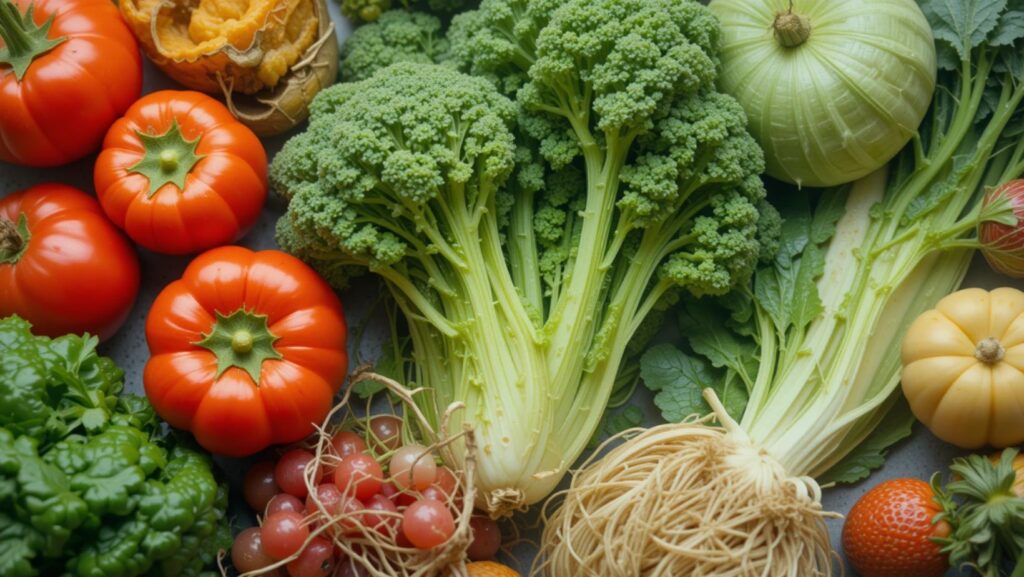
Would you want to know How vegetables help lower cholesterol levels? In my experience, soluble fiber, which binds to cholesterol in the digestive tract and aids in its removal from the body before it can be absorbed into the bloodstream, is the main way that vegetables can help lower cholesterol levels.
Because they raise the risk of heart disease and stroke, high cholesterol levels can be detrimental.
Conditions like atherosclerosis can result from plaques that constrict the arteries and impede blood flow caused by an excess of LDL (bad cholesterol) in the arteries.
Serious side effects, including heart attacks or strokes, may arise from this.
Because they contain soluble fiber, which binds to cholesterol in the digestive tract and eliminates it from the body, several veggies can help decrease cholesterol levels.
Continue reading to learn more about veggies that might help reduce cholesterol.
Now, let’s get started
Why Vegetables Are Beneficial for High Cholesterol
It’s not true that all cholesterol is “bad.” The formation of cell walls, as well as the production of vitamins and hormones, requires the presence of this waxy material.
An issue arises when there is an excess of cholesterol because it has the potential to develop thick deposits on the inner walls of your arteries, which causes them to become more constricted and less flexible.
This results in a condition known as atherosclerosis, which raises the likelihood that you may suffer from cardiovascular disease and stroke.
Because they contain a particular kind of fiber known as soluble fiber, vegetables are beneficial to the cardiovascular system.
When soluble fiber is present in the body, it binds cholesterol and then eliminates it through bowel movements.
Other cholesterol-lowering elements, such as antioxidants and plant sterols, can also be found in vegetables.
The molecules known as plant sterols have a structure that is comparable to that of cholesterol.
They can lessen the amount of cholesterol that is absorbed by the intestines, which in turn can result in lower levels of cholesterol in the blood.
What are the Best Vegetables To Include In Lowering Cholesterol
Five Plants That Reduce Cholesterol:
Cholesterol-related issues can occasionally be fairly complex. On the one hand, cholesterol is essential for many bodily functions and cannot be obtained without it;
On the other hand, taking excessive amounts of it can be harmful and increase the risk of heart-related conditions or problems. You are more likely to get fatty deposits in your blood vessels if your cholesterol is high.
Your arteries will eventually get so clogged with these deposits that enough blood cannot flow through them.
Occasionally, these deposits may suddenly disintegrate, forming a clot that may cause a heart attack or stroke.
The following vegetables can aid in reducing the body’s cholesterol levels:
Broccoli is delicious, filled with heart-healthy nutrients, and can be cooked in a variety of ways to help you maintain a healthy cholesterol level.
Broccoli’s high vitamin C content makes it excellent for diabetes, cholesterol, and heart health.
Broccoli also contains the antioxidant beta-carotene, which helps lower the oxidation of LDL cholesterol, or “bad cholesterol,” in the blood.
Using cauliflower may help prevent cardiovascular disease because of its strong antioxidant content and anti-inflammatory properties.
Furthermore, they are an excellent source of vitamin C, which is crucial for maintaining healthy blood vessels and, thus, lowering blood pressure.
Beans may improve the general health of your cardiovascular system since they are high in vitamins, minerals, fiber, and other vital elements.
Because they are high in soluble fiber, beans can lower cholesterol.
Consuming meals high in fiber may help decrease the dangerous cholesterol in the blood.
The reason for this is that fiber and cholesterol will stick together and be naturally eliminated from the body, which will also reduce cholesterol levels.
Some high-fiber foods that should be incorporated into a diet to lower cholesterol levels are spinach, carrots, and other green vegetables.
What are the seasonal vegetables to lower bad cholesterol levels
seasonal veggies that can aid in lowering the body’s elevated cholesterol levels.
1. Spinach
Green leafy veggies must be a part of your diet. In addition to being packed with vital vitamins and minerals, spinach also aids in the body’s removal of harmful cholesterol, making it the ideal seasonal vegetable.
It can truly prove to be a great vegetable to help lower bad cholesterol when combined with an active lifestyle.
You may eat it both raw and cooked. For this, raw baby spinach salad is a great addition to your diet.
2. Broccoli
As a vegetable rich in fiber and a repository of calcium and vitamin C, broccoli supports heart health.
Its high fiber content aids in binding and eliminating harmful cholesterol from the body. Incorporate both raw and cooked broccoli into your diet.
3. Carrots
Beta-carotene, which is abundant in carrots and very fibrous, helps keep LDL from oxidizing in our bodies.
It also aids in blood cleansing and encourages excellent heart health.
4. Beets
As root vegetables, beets are a fantastic source of both soluble and insoluble fiber. Additionally, it contains a lot of nitrates, which aid in dilating blood vessels and lower blood pressure.
It aids in the body’s reduction of harmful cholesterol.
5. The asparagus
Like the plants listed above, asparagus is a fantastic source of important vitamins and minerals, including folate.
This promotes a healthy heart, enhances blood circulation, and helps the body get rid of harmful cholesterol.
6. Cabbage
An extremely fibrous vegetable, cabbage has anti-inflammatory and antioxidant qualities that can help prevent heart disease.
It is also a great source of vitamin C and aids in the removal of harmful cholesterol as well as the regulation of blood pressure.
7. Brussels sprouts
Brussels sprouts, which belong to the same family of cruciferous vegetables, are great for decreasing cholesterol and supporting heart health. A better stomach, a healthier body, and a healthier heart.
What are Vegetable Can Lower Cholesterol and Improve Heart Health
Green beans entered the list of the 100 healthiest foods at number 73 because of their saponin concentration, which can help decrease cholesterol.
Consuming foods high in saponin, a phytonutrient present in grains, pulses, green beans, and peas, may help decrease cholesterol, have anti-inflammatory and anti-cancer effects, and even aid with blood glucose regulation.
Saponins aid in the intestinal trapping of bile salts and low-density lipoprotein, or LDL, the “bad” cholesterol, preventing their absorption.
LDL is reduced as a result, while HDL, or high-density lipoprotein, the “good” cholesterol, remains unaffected. Saponins may minimize the risk of heart disease since they help lower LDL levels.
Green beans are also a wonderful source of nutritional fiber and are low in fat and salt. Green beans provide three grams of fiber per serving.
In order to prevent cholesterol from being taken into the body, soluble fiber helps bind it in the stomach.
A five-gram daily increase in soluble fiber consumption can effectively lower LDL and total cholesterol levels.
What are the fruits and vegetables that reduce cholesterol levels
Eggplant: Compared to other plants, eggplant has a significantly lower calorie count. However, due to its high fiber content, it might lessen the body’s absorption of cholesterol.
Apple
Pectin and soluble fiber, often known as vitamin C, are abundant in apples. Therefore, you may quickly lower the quantity of harmful cholesterol that remains in your body if you consume one apple every day.
Onions: The chemical flavonoid quercetin in onions can dissolve cholesterol in blood arteries.
Therefore, eating an excessive amount of onions will cut cholesterol and maintain heart health.
Citrus fruits: Oranges, lemons, and berries are soluble sources of pectin, a fiber that is abundant in citrus fruits. There are blood vessels throughout it.
It will maintain heart healthy and dissolve fat.
Garlic: Garlic contains a lot of allicin, a chemical that protects the heart. Additionally, it has a strong immune system, which may help decrease cholesterol. The advantages of eating a tooth green every day are widely recognized.
Ladyfinger: Bronchitis has the same cholesterol-lowering properties as eggplant. It has a few calories and a lot of fiber.
Blood sugar levels can also be used to regulate diabetes.
Beans: All veggies are high in fiber. However, it is preferable to cook beans in water and then drain them since they are heavy in fiber and starch. If not, beans will raise the harmful fat content.
Chile: Although it is harmful to the stomach, chile can dissolve bad fats that are stored in the body. Chili is actually a member of the garlic family. Chilli is also an allium.
What are the Heart-Healthy Veggies You Can Grow Yourself
It should come as no surprise that veggies are good for you. But which are the most effective in improving heart health? Here are several examples:
● Broccoli: Broccoli is one of the healthiest veggies you can eat since it lowers LDL and is high in vitamins, iron, and antioxidants, all of which can lessen your chance of developing cancer.
Referred described as “the Queen of Greens,” kale is a leafy green that is rich in vitamins A, C, and K, among other minerals. It also lowers LDL cholesterol and is rich in fiber, iron, and antioxidants.
In addition to preventing heart attacks by removing LDL cholesterol from your arteries, spinach also helps to prevent age-related macular degeneration, which prolongs your vision.
● Radishes: If you want to cultivate your own, radishes are a great addition to any salad and can be grown in almost any place due to their shallow root structure.
Anthocyanins, which lower LDL, are abundant in radishes. Additionally, they shield arteries and veins against hardening and inflammation.
Brussels sprouts are a nutrient-dense food that lowers LDL cholesterol and helps the body cleanse.
You may easily cultivate several of those above in your garden all year long. The greater the nutritious worth of vegetables, the shorter the distance from their place of cultivation to your plate.
Try to choose in-season or local vegetables even if you are unable to create your garden.
Final thought
Now that we have established How vegetables help lower cholesterol levels, Alterations to your food and lifestyle can have a substantial influence on your cholesterol levels, however, there is a correlation between high cholesterol and an increased risk of heart disease.
Increasing the amount of fiber in your diet is one of the most effective adjustments you can make to your diet.
You may do this by eating the recommended amount of veggies, which is between 2.5 and 3.5 cups per day.
Brussels sprouts, which are high in antioxidants, are a vegetable that we adore because of the cholesterol-lowering advantages they provide.
Use these Crispy Smashed Brussels Sprouts or Garlic-Parmesan Roasted Brussels Sprouts as a starting point for your culinary adventure.