
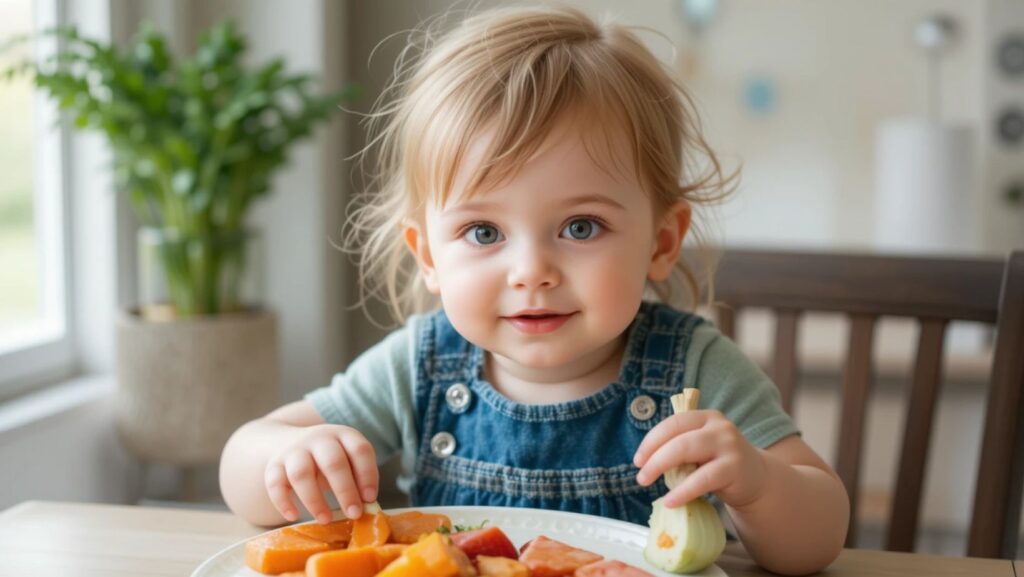
Would you want to know How to introduce vegetables to toddlers? Considering everything I’ve experienced, When introducing vegetables to toddlers, it’s a good idea to offer a variety of vegetables, make them fun, and involve them in the process.
Vegetables include vital vitamins, minerals, and fiber that support your child’s growth and overall health.
Consuming a variety of vegetables is crucial for immune system support and digestive health maintenance.
However, since kids are naturally inclined to sweeter, higher-energy foods, it might be challenging to entice them to eat veggies.
Rather than forcing kids to eat, the goal is to make vegetables fun and approachable. But that’s not all; as you read on, I’ll go into further detail regarding the subject.
Now, let’s get started.
What are The Best Vegetables for Toddlers
Certain veggies, particularly those with a softer texture or sweeter flavor, are simpler to introduce than others. The following are some of the greatest veggies to provide young children:
Sweet potatoes are popular with most children since they are naturally sweet and full of vitamins A and C. Serve them as chips, mashed potatoes, or roasted potatoes.
Carrots: Because of their sweetness and texture, carrots are a toddler favorite, whether they are raw or cooked.
Peas: A simple vegetable to provide, peas are delicious, soft, and enjoyable to eat with their fingers.
Cucumbers are cool and refreshing, making them ideal for hot days and toddlers going through the teething stage.
Broccoli Broccoli is high in iron, fiber, and vitamin C. It may be grilled or steam-cooked and tastes delicious with a dip.
Butternut squash is a vegetable that is suitable for toddlers due to its naturally sweet flavor, particularly when it is roasted or pureed.
Avocado: Although officially a fruit, this vegetable-like addition to their meals is full of vitamins and healthy fats.
Your child may learn to appreciate a broad range of vegetables if they are persistent, creative, and patient.
You’ll be one step closer to developing a healthy eater when those tiny plates are soon piled high with wholesome veggies.
Cheers to eating vegetables!
What are the Effective Ways To Trick Your Toddler Into Eating Vegetables
Trick your kid into eating vegetables:
Here are some strategies to get your kid to eat veggies. Some may seem questionable, but anything works!
Food pairings:
pairing veggies with meals your kid doesn’t like makes him consume them! He must choose between two unappealing foods on his plate.
Blending veggies into smoothies is a popular way. Why not? It’s one of the most successful.
You can combine half a cup of spinach, half a tiny banana, honey, and almond milk or water, and your baby won’t notice the spinach!
Many of your recipes conceal unpleasant flavors to convince your baby to eat vegetables!
Cooking veggies into soup is a great technique to entice toddlers to eat them. Your youngster will cheerfully drink the soup since he won’t know what’s in it.
Even his disliked veggies may be used to create soup. Many of your soups contain hidden veggies.
Popsicles are a favorite among toddlers and adults alike. You may hide greens and veggies in fruit juices and freeze them to produce colorful and delectable popsicles.
What a clever method to get your child to eat veggies.
Coating veggies with butter enhances their flavor. Butter includes essential vitamins A, E, and D3 for toddlers. Butter fat helps absorb vitamins from plants.
Allow your youngster to choose between two veggies. He will feel important and choose a veggie.
Different veggies each time.
Family Meals:
Eat veggies together during family dinners. Toddlers prefer to mimic adults, so if he sees everyone eating veggies, he will, too.
House sous chef:
Get your youngster to help in the kitchen. Helping you cook increases his likelihood of eating it.
You may casually explain how each ingredient will make him healthy, strong, and powerful, like his favorite superhero while cooking.
Shop Assistant:
Shop for vegetables with him in the market. He can assist you in choosing veggies. This will engage him. You may tell him he decided the veggies from the market when you serve them later.
Numerous online videos depict popular cartoon characters or superheroes promoting vegetable consumption. Show it to your kid to fool and encourage veggie consumption.
Keep trying if your kid avoids some foods. Ten to twelve tastes are needed before a toddler accepts a dish. Try sneaking it sometimes until he gets used to it.
Toddlers enjoy bright and creative food decorations. Try arranging vegetables in different ways.
Cartoons, smileys, etc. are toddler favorite
What are the Best Vegetables for toddlers and young kids
The majority of vegetables are excellent choices for children, and the vegetables that are particularly beneficial for young diners are those that are rich in fiber, vitamins, minerals, and antioxidants. Bonus:
Many of these meals do not have a very robust flavor, making them ideal for individuals who are fussy eaters. I will now provide you a few examples:
Cucumbers with Carrots
Cauliflower, celery, cucumber, squash, sweet peppers, and sweet potatoes are the main ingredients. Toasted tomatoes
What are the Healthy vegetable recipes for toddlers and kids
Try these vegetarian-friendly dinner suggestions for finicky eaters:
Snakes of cucumbers: To create six half-moon shapes, cut three cucumber slices in half. Slices should be arranged to form a “snake” body, and a piece of shredded carrot should be added to form a tongue.
Pizzas made with vegetables: Add tomato sauce, shredded cheese, sliced broccoli, mushrooms, and red and yellow bell peppers to a small cauliflower pizza dough.
Ants on a log: Place a celery stalk with 1 tablespoon of peanut butter.
Potato face: Let your child “decorate” a baked or sweet potato with any veggies she wants, such as olives for eyes, broccoli for earrings, and cherry tomatoes for lips (and some shredded cheese for hair).
Caterpillars of vegetables: In a row, alternate slices of cooked squash, bell peppers, cucumbers, and zucchini of various colors. Alternately, add chunks of purple beets and cherry tomatoes to create a rainbow-colored caterpillar.
Quesadillas with vegetables: Cover one-half of a tortilla with sliced bell peppers, cooked black beans, carrots, and shredded cheese.
After folding the tortilla over, heat it for a few minutes on each side until it is just beginning to brown.
How to hide vegetables in food for toddlers
Hiding veggies is never a smart idea, and it is not a solution that can be used over the long run since it can lead to a lack of faith in food and the possibility of being fooled into eating anything.
Educating toddlers about veggies in their whole and their full shape at an early age is necessary in order for them to begin to embrace them.
It is helpful to be able to incorporate other vegetables into a homemade spaghetti sauce or pureed vegetables into a smoothie;
nevertheless, our toddlers are not learning to appreciate the distinctive flavor of each particular vegetable, nor are they connecting with or developing connections with the vegetable itself.
Final thought
Now that we have established How to introduce vegetables to toddlers, Eating and sleeping are two things that you cannot make a child do against their will, as most parents are aware.
This is particularly true for toddlers, who frequently use eating—or not eating—the food you place on their plates as a way to demonstrate their independence.
When they see veggies, many toddlers turn their noses up. Don’t lose up, though; even the pickiest eaters may find a few vegetables they enjoy (and some they adore!) with enough time and patience.
When serving fresh fruit and vegetables, bear the following in mind: Young children are at risk of choking on hard fruits and raw vegetables.
Make careful to cook them thoroughly and chop them into tiny enough pieces to avoid choking hazards.