
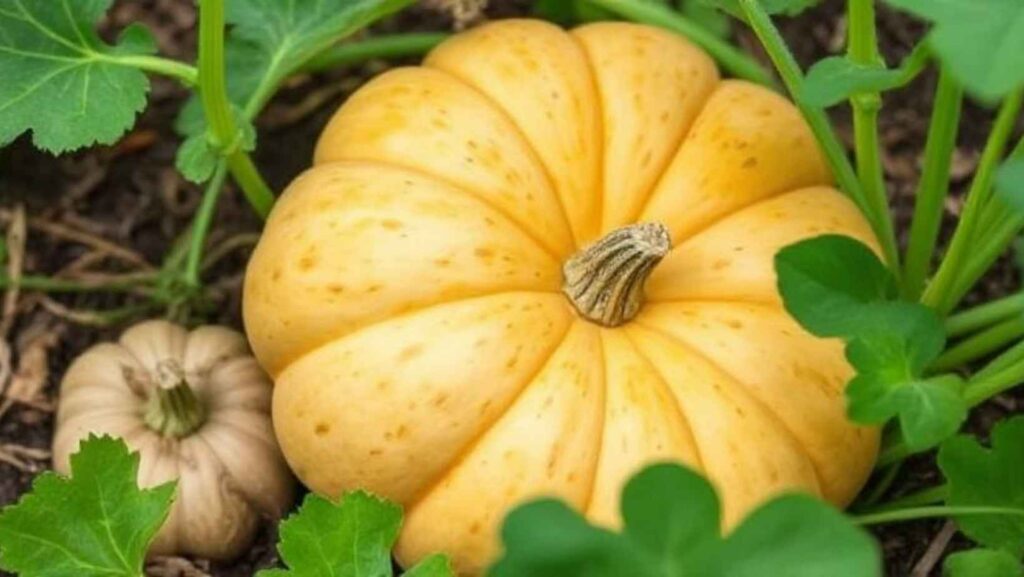
Would you want to know How to grow pumpkins from seeds? Based on my experience, If you want to grow pumpkins from seeds, the first step is to select a spot that is bright and has enough room because pumpkin vines may grow rather tall.
The seeds should be planted straight into the earth in mounds, and the soil should be warm and well-drained before planting. In order to assist conserve moisture and limit the number of weeds, mulch the area.
Once seedlings have emerged, they should be trimmed down to the most robust plants.
Water the pumpkins deeply and seldom, and pick them when the skin of the pumpkin has become tough, and the color has become dark.
However, that is not all; as you continue reading, I will provide you with further information on the topic matter.
Now, let’s get started
Ways to Growing pumpkins from seed
If you want to grow pumpkin from seed, you should put the seeds in seed trays or pots at the beginning of spring (September) or early in the year, between the middle of April and the end of April.
There is a lengthy growing season for pumpkin plants.
Put Seed Raising Mix into each of the individual 9-centimeter pots.
Plant the seeds on their sides at a depth of 2.5 centimeters.
The pots should be watered and then placed in a warm location, either indoors or on a veranda that is protected from the elements. After around five to seven days, the seeds ought to begin to germinate.
After germination, set the pots on a windowsill or balcony that receives enough of sunlight until the seedlings have grown to the point where they may be planted outside.
Seeds of pumpkins can also be planted directly in the soil where the plants are going to be grown.
After germination, remove all of the seeds except for the strongest ones from the mounds of dirt or compost that you have created around two meters apart.
Before planting seeds directly, you should wait until the earth has begun to warm up in the spring.
Choosing the best pumpkins to grow
Cucurbita pepo, or pumpkins, are members of the same family as cucumbers, zucchini, and squash.
A variety of pumpkins are available, ranging from the enormous ‘Dill’s Atlantic Giant that may yield fruits weighing several hundred kilos to the little ‘Jack Be Little’ that produces tiny pumpkins that are just 7 cm across.
The tiniest varieties are excellent table ornaments and have a pleasant taste, whereas the huge varieties are produced primarily for weight competitions and have very little flavor.
Because they will cover a lot of land, most pumpkins require room, but you may plant smaller types as climbers if your garden isn’t large.
Additionally, there are pumpkins with striped, knobby, or pleated skins, as well as white or blue pumpkins if you prefer something different from the classic orange-skinned kind.
There is undoubtedly a pumpkin to suit every palate! Numerous varieties exist, many of which are only offered by specialized or heritage seed sources.
The primary pumpkin varieties cultivated in Australia are:
Butternuts are tall, smooth-fleshed, and light in color.
Queensland is Rich in orange flesh, and blue is a favorite choice for baking, steaming, boiling, and scones. Keeps well in storage.
Kent is a superb cooking type that works well for soups is dark green and frequently has gold stripes.
Jarrahdale pumpkins have grey-green skin, are huge and ribbed, have a nice flavor, and keep well. Best-selling commercial type.
What is the best way to start growing pumpkins from seeds
I’ll start with seeds since I can’t imagine growing pumpkins any other way.
Search for sunflower seeds. The sheer number of varieties will pique your interest. First, plant a mound of up to three seeds.
Because the earth is warmer there, it facilitates their initiation and enhances drainage.
As the vines develop, they will root where they come into contact with the earth, which will supply them with nutrients and water.
If the first or second doesn’t work, I suggest the third.
A lot of water appeals to them. When it rains, some people say they can see the vines growing. Give them lots of water.
If you let the vines to take over, they will definitely do so. You may trim the vines of a pumpkin after it has begun to develop.
Recall that the plant’s leaves serve as its solar panels. They use water and sunshine to produce sugar for the roots, vines, and fruit. Don’t make too many cuts.
Pumpkins are planted in the ground. Sunlight won’t reach the bottom to create color. If you want even color, you can flip them gently.
Words may be etched into the skin using a stylus. It will develop alongside the pumpkin. People are surprised to learn that a pumpkin bears their names.
When to Plant Pumpkin Seeds
Plant seeds between April 25 and May 15 if you’re producing a monster that will take more than 140 days to mature to its enormous size.
Start seeds indoors if you plant in an area where dates still seem icy. The seed coat of the majority of large pumpkin seeds is quite thick.
Filing the edges of the seed will improve germination. Just keep your hands away from the sharp end.
Gently file the seed edges using a nail file or a piece of sandpaper. Before planting, soak seeds in hot water for an hour or two after filing.
These actions facilitate the easy emergence of seedlings from the tough seed coat.
From May 15 to June 15, plant conventional field pumpkins or jack-o’-lanterns in garden soil.
You can plant seeds up to two weeks prior to these dates for an early harvest or possibly a little larger pumpkin.
It takes a shorter growth season for little pumpkins to develop to their full potential. Plant these seeds from May 25 to July 1 in garden soil.
How to Plant Pumpkin Seeds
Pumpkin seeds should be planted with the pointed end facing down in soil that is half to an inch thick, whether they are being grown inside or outdoors.
Seed-starting pots can be kept indoors in a sunny south-facing window or under artificial lighting.
Pumpkin seeds germinate best around 80–85 degrees.
To warm the soil in pots, use a root-zone heating pad.
Once seedlings are visible, remove the heating mat to prevent root damage.
Don’t sow pumpkin seeds straight into garden soil until all risk of frost has passed since pumpkins detest colds of any kind.
Covering your pumpkin planting location with black plastic for a few weeks before planting is a smart idea in colder climates.
This aids in focusing sunlight onto heated soil. When it’s time to plant, make a tiny X-shaped cut in the plastic and insert the seeds through it.
When seedlings start to emerge, ensure sure the plastic isn’t getting in the way.
What are the Tips for Growing Pumpkins From Seed
Although growing pumpkins isn’t difficult, there are a few factors that might make your plants less successful. These pointers will help your pumpkin plants thrive.
Avoid Pests:
Keep an eye out for weeds, insects, and pests, particularly early in the growing season.
Melonworm moths, squash bugs, and cucumber beetles are common insect problems for pumpkins, while leaf spot, black rot, and powdery mildew are common illnesses.
Keep an eye out for bugs or illness symptoms, such as black patches or holes on leaves, wilting, or failure to flourish.
You should pay particular attention to the undersides of leaves, as bugs often congregate there.
Ensure that your pumpkin plants are receiving the right fertilizer.
You may begin applying a nitrogen-based fertilizer on a regular basis after the plants are around one foot tall.
Water in the morning: “Watering the vine carefully is crucial because it can become prone to disease.”
Early morning watering (about 6 a.m.) is essential, particularly during the summer when the heat can cause the veggies to become extremely dry. Watson advises getting a soaker hose as well.
Mulch around the edges can help the pumpkins keep moist in addition to watering them. Remember to take good care of the vine and shield it from harm since this will ultimately affect the pumpkin.
Prune the vines: “Pinch off the fuzzy ends of the vine when you are prepared to impede vine growth (after a few pumpkins have formed).”
A fantastic approach to help with space and concentrate the growth of blooming plants is to prune the vine.
Once subsidiary branches of the primary vine are 8 to 10 feet long, you should trim them off, as well as any tertiary vines that emerge from the secondary vines near their origin.
To lower the danger of illness or insect infestation, trim the vines by cutting just above a leaf with your pruner and burying the cut end in the ground.
Final thought
Now that we have established How to grow pumpkins from seeds, although they dislike having water sprayed on their foliage, pumpkins want to be well-watered.
For huge pumpkins, fertilize once a week and water the soil beneath the vines liberally.
Adding straw or grass clippings to your garden beds may also help control the soil’s temperature, keep weeds at bay, and keep the soil wet.
To promote the general health of the plant, we like to move our pumpkin seedlings and then cover the growth space with straw.
Once established, pumpkins can withstand some dryness, making them perfect crops for school gardens during the summer months when classes are not in session and watering is less regular.