
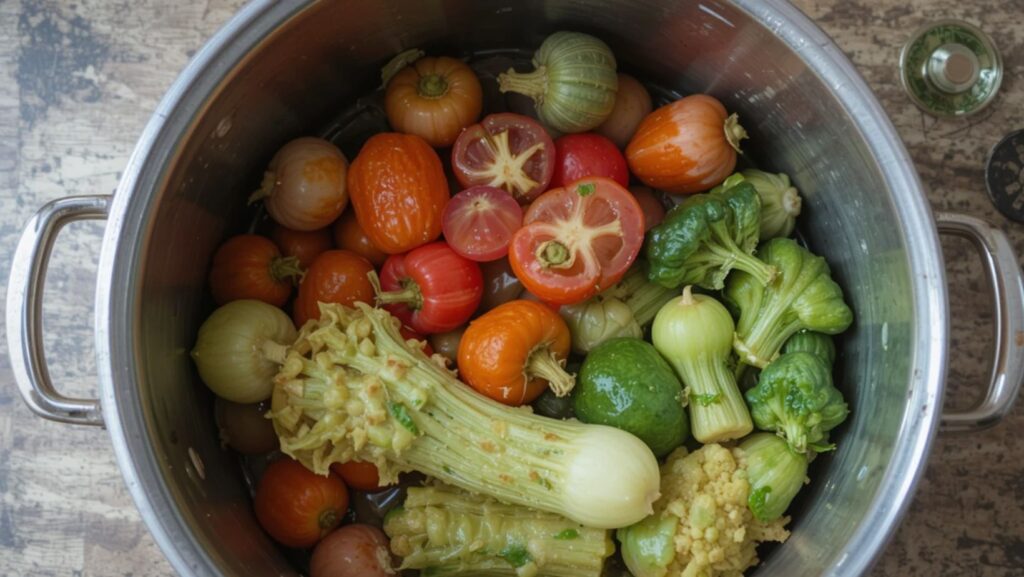
Would you want to know How to can vegetables at Home for long-term storage? My experience has shown that the best way to properly can vegetables at Home for long-term preservation is to use a pressure canner for most vegetables (with the exception of tomatoes) and adhere to USDA processing time and temperature standards to guarantee a vacuum seal and eradicate germs.
This may also be accomplished by adding the hot liquid you used to prepare the vegetables—or, if you’re packing them cold, boiling water—to the jar until it’s approximately 1 inch from the top.
Before sealing, make sure the jar is free of any air bubbles.
After that, transfer to a pressure cooker and cook at 10–11 pounds of pressure, which raises the temperature to 240 degrees.
But that’s not all; as you continue reading, I’ll provide additional information on the topic.
Now let get started
How to can vegetables for long-term storage
For home-canning vegetables, the only method that is considered to be safe is pressure canning.
Since vegetables are low-acid foods, they must be canned in a pressure canner at the optimum pressure in order to ensure that they are safe to consume over time.
The improper preservation of low-acid vegetables can result in the transmission of a potentially fatal foodborne infection.
Low-acid meals like vegetables contain the Clostridium botulinum bacteria, which causes botulism.
In vegetables and meat, the bacteria create spores that can only be eliminated by temperatures that exceed 240 degrees Fahrenheit for the appropriate period. This is the only way to eradicate the bacteria.
Using a pressure canner is the only way to successfully execute this task.
Before it finds itself in a wet, low-acid, oxygen-free environment or a partial vacuum, Clostridium botulinum is innocuous.
It is only harmful when it is under these conditions. The conditions that can be found within a jar of canned veggies are as described above.
Under these circumstances, the bacteria have the potential to multiply and create toxins that are harmful to both humans and animals.
How to Can Fruits and Vegetables
1. Canned cherries:
Cherry pie fillings, dessert toppings, cocktail garnishes, and more can all be made using canned cherries, which also make for an enjoyable do-it-yourself home canning project.
You may preserve cherries for year-round usage by following this canning recipe.
2. Canned cherry tomatoes: The water bath process is used to can cherry tomatoes. You may use canned cherry tomatoes to make bruschetta, spaghetti sauce, and stews.
3. Canned corn: One excellent method for preserving fresh corn for use in a variety of dishes is to can it.
Canning takes more work than buying canned sweet corn from the grocery, but the result is worth it. Canning maize requires a pressure canner.
4. Canned diced tomatoes: The water bath technique is another way to preserve diced tomatoes. Later, you may use the chopped tomatoes in tomato sauces, homemade ketchup, casseroles, stews, and soups.
5. Canned peaches: With a few easy steps, you can turn ripe peaches into canned peaches, which will provide you with a steady supply of preserves to use as a topping for ice cream sundaes, a salsa, or a filling for a peach pie.
6. Pear marmalade is made by boiling diced pears with sugar and an acid like lemon juice.
Pectin, a soluble plant fiber that thickens the mixture when cooked, is naturally abundant in pears. The majority of pear types, such as Anjou, Bosc, or Bartlett pears, can be used to prepare this jam.
To preserve pear jam for later use, can it be in a water bath. (Apricot jam, cranberry sauce, blackberry jam, peach jam, raspberry jam, rhubarb jam, strawberry jam, and blueberry jam are among the numerous jam recipes that may be preserved.)
What are The best vegetables for canning, preserving and eating any time you want
Tomatoes win easily. They don’t last long, so when a billion pounds of tomatoes arrive at once, you have to use them! You may use them raw or can them as juice, sauce, salsa, or ketchup.
Here are 10 more of the greatest veggies for canning and preserving, in alphabetical order for convenience.
Asparagus. Wash and trim asparagus. Pieces or spears.
Beets. Leave some stems and roots after trimming the tops. Remove skins by boiling. Larger beets can be chopped in half or halves.
Carrots. Wash, peel, slice, or dice.
Corn. Carefully cut the kernels from the cob without scraping.
Cucumbers. Cucumbers are classic canners. Use them raw or pickle them!
Beans green. Yet another classic. They can be canned raw. Clip the ends and can them whole, or chop them into one-inch pieces.
Okra. Leave pods whole or cut into one-inch pieces after washing and trimming the ends.
Peaches. I know. The topic is the best veggies for canning, not fruits. Why not preserve in-season peaches, one of my favorite things in life?
Peppers. Blister or boil peppers to remove skins. Keep little peppers intact and chop large ones in half.
Tomatoes. I know I stated this before, but it’s worth repeating. Off-season store tomatoes aren’t as good as homegrown.
Supermarket tomatoes are good for mid-winter stews and other recipes. Try preserving your garden’s late-summer harvest!
How to Harvest Vegetables and Preparing for Canning
Harvest when it’s at its ripest. For optimal taste and nutritional value, use vegetables like tomatoes, pumpkins, squash, and carrots when they are completely ripe.
Avoid using overripe food as this may compromise the quality of the canned goods.
Make sure everything is clean. To get rid of dirt, pesticides, and other impurities, give your gathered veggies a thorough wash.
Trim and peel vegetables, such as squash or carrots, to get rid of rough sections and skins.
Vegetables are blanched. The texture, color, and flavor of vegetables, such as tomatoes or green beans, can be temporarily preserved by blanching them in boiling water.
To halt the cooking process after blanching, immerse the veggies in freezing water.
Cut and sort consistently. To ensure that your canned products don’t deteriorate, chop veggies into uniformly sized, bite-sized pieces.
You should also throw away any bruised, moldy, or broken bits.
Make use of fresh spices and herbs. To improve taste, add herbs such as rosemary, basil, or thyme to the veggies before canning.
Because stale herbs can lose their flavor over time, use fresh or dried spices that aren’t too old.
Choose an appropriate canning technique. Use a water bath canner for pickled vegetables and tomatoes. To securely preserve vegetables like green beans, carrots, and squash, use a pressure canner.
What are the Temperature and Humidity Combinations to can vegetables at Home
Knowing the ideal ratios of humidity and temperature at Home is essential for preserving and storing veggies in order to keep them fresh and avoid spoiling.
Here’s how to control these situations using different storage techniques:
At 32°F (0°C), storage:
Some veggies need 32°F cold storage to stay fresh.
But in most household settings, it might not be easy to maintain this exact temperature.
Expect your fruit to have a shorter shelf life if storage conditions deviate from this ideal; vegetables can lose up to 25% of their shelf life for every 10°F increase in temperature over 32°F.
Room Temperature:
Because most houses are warmer, room temperature storage poses a problem for veggies that do best in cold (around 55°F/12.8°C) and wet environments, such as cucumbers, peppers, and eggplant.
Some hardier vegetables may be kept at room temperature (about 68–77°F or 20–25°C) with moderate humidity, but these delicate types have colder, more specialized requirements, so they should be eaten soon.
To make sure they are used while still fresh, keep them out of direct sunlight and in a cooler area of the house.
Home refrigerators: Leafy greens, berries, and other perishables do well in refrigerators that are configured to maintain temperatures between 35 and 40°F (1.7 and 4.4°C) and mid-range humidity levels (50 to 60% relative humidity).
To prevent early ripening, put certain vegetables in perforated bags to allow for some air to circulate and use crisper drawers to regulate the humidity of such veggies.
Even with these modifications, keep in mind that the refrigerator is still the best option for moderate-term vegetable preservation because longer storage times can still degrade the veggies’ quality and freshness.
Final thought
Now that we gac established How to can vegetables at Home for long-term storage, Preserving food gives you a wide selection of meals when fresh ones are scarce.
It also lets you enjoy summer vegetables year-round.
Good canning preserves fresh veggies for subsequent use. Non-research-based canned vegetables can be dangerous.