
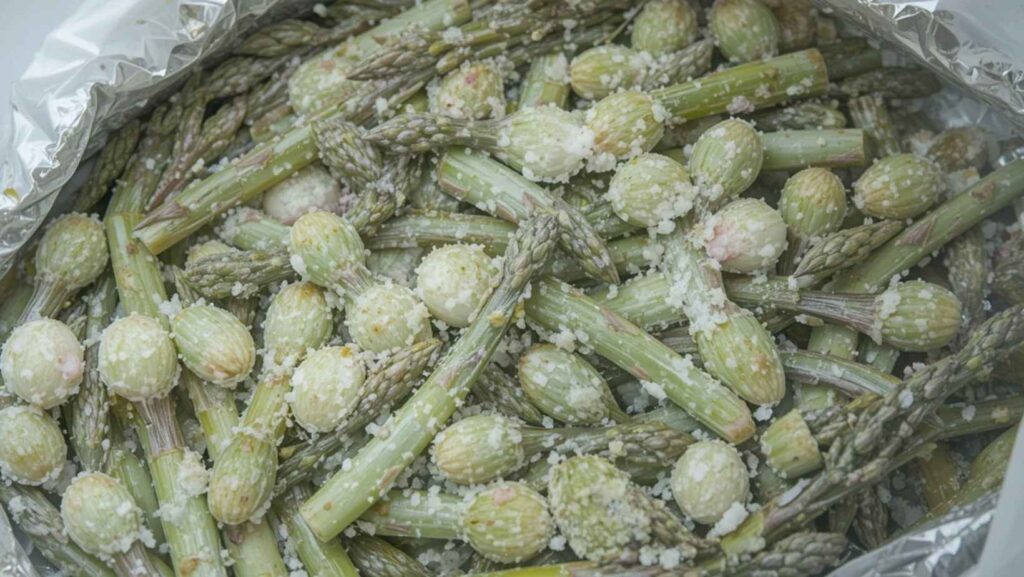
Would you like to know how long asparagus lasts in the freezer? According to my personal experience, frozen asparagus can be preserved in the freezer for a period of eight to twelve months, maintaining its best possible quality.
However, it can be consumed over a longer period of time.
The asparagus spears should be moved to an airtight freezer bag or container with a date label after freezing.
When stored in the freezer, asparagus may be stored for anywhere between eight and twelve months.
However, that is not all; as you continue reading, I will provide you with further information on the topic matter.
Now, let’s get started.
How Long Does Frozen Asparagus Last
To a significant extent, the answer to that issue depends on the conditions under which the asparagus is stored: maintain the asparagus in a frozen state at all times.
Asparagus that has been frozen and stored correctly will retain its optimum quality for approximately one year in the freezer; however, it will often remain safe to consume after this time has passed.
Breakdown in great detail:
When freezing asparagus, blanching it before freezing it helps to maintain its flavor, texture, and color.
The asparagus should be moved to an airtight container or freezer bag after freezing, and the date should be noted on the container or bag.
It is advised to utilize frozen asparagus within eight to twelve months to maintain the best quality.
Safe to Consume: Although it is possible to consume asparagus after this time range, the flavor and texture of the vegetable may become less appealing with time.
In terms of cooking, frozen asparagus doesn’t need to be defrosted in advance; it may be sautéed or steamed straight from the freezer.
Can You Freeze Asparagus
In a word, yes. The easiest way to freeze asparagus is to do it in complete spears or finely chopped form. Before freezing, the asparagus should be blanched to maintain as much of its color and texture as possible.
After you have your fresh asparagus in hand, the following are the steps to take in order to get it ready for being placed on ice:
Bring a saucepan of water to a boil on the stove.
After removing approximately half an inch from the ends of the stalks, proceed to wash the spears of asparagus.
Ice water should be poured into a large, thoroughly cleaned dish.
Asparagus that has been washed and trimmed should be cooked in boiling water for three to four minutes, with a longer cooking time preferred for thicker stalks.
The vegetables should be removed from the boiling water with a slotted spoon, and then the stalks should be quickly submerged in the ice water to terminate the cooking process.
The mixture should be drained in a strainer and then allowed to cool and dry on a tray covered with paper towels.
The stalks should be patted dry before being transferred to a tray coated with parchment paper and flash-frozen for approximately one hour.
After that, the pieces should be transferred to a zip-top freezer bag for extended storage.
Make it simple to keep track of your freezer’s “library” by labeling and dating each item. For use within three months.
What is The best way to freeze asparagus
Blanching, which involves rapidly boiling the spears of asparagus for a few minutes and then immediately “shocking” them in an ice-water bath to halt the cooking process, is the key to freezing asparagus in a way that increases the likelihood that you will really want to eat it later.
After the asparagus has been blanched, it should be rinsed well and patted dry.
It is possible to eliminate unwanted dirt and germs from most fresh vegetables by blanching them. This method also helps to prevent severe nutrient loss.
In addition, blanching asparagus before freezing can help reduce the number of textural changes that occur and maintain the asparagus’s brilliant green color.
Flash-freezing the asparagus is a simple additional step that freezes the spears or pieces separately, preventing them from clumping together in the freezer.
Although you may be tempted to chuck the blanched asparagus into a freezer bag at this point, it is recommended to flash-freeze it first.
How to freeze fresh asparagus
In order to freeze fresh asparagus, follow these five easy steps:
Asparagus spears should be trimmed. Either leave them whole or chop them into pieces that are either huge or bite-sized.
(For instructions on how to chop asparagus, please refer to these straightforward instructions.)
In boiling water, blanch the asparagus for 2 to 3 minutes or until it reaches a crisp-tender consistency.
To halt the cooking process, move the asparagus to an ice bath, which is a big basin filled with cold water.
You may use tongs or a sieve with a fine mesh to do this. Read all you need to know about blanching asparagus here.
Drain the asparagus well and wipe dry with paper towels or a fresh kitchen towel to make sure it is completely dry.
Arrange the asparagus spears or pieces in a single layer on a sheet pan, leaving space between them so they don’t freeze together. Then, freeze them for at least an hour until they solidify.
After the asparagus has been frozen, please place it in freezer bags and remove as much air as possible before sealing the bags.
Keeping in the freezer for up to six months is recommended.
What are the Steps For Freezing Asparagus
The shelf life of asparagus is short. You will only get three to five days out of a bundle of asparagus, even if you know how to preserve it.
You may avoid squandering money and gain more time by freezing asparagus.
There are a few procedures you must follow to prepare asparagus spears for freezing, as fresh asparagus cannot be frozen in its natural state.
Fortunately, they are really easy, and you’ll have frozen asparagus in no time.
What You’ll Require:
- The chef’s knife and colander
- A cutting board
- Large saucepan or stockpot
- A slotted spoon or tongs
- Baking tray coated with paper towels
- An ice water bowl
- Tea towels or paper towels can be used for drying.
- Zip-top plastic bags that can be sealed
Get the asparagus ready for freezing:
1. Arrange the spears of asparagus.
After breaking the rubber band, spread the spear bundle out. Look for ones that are wet, black, shriveled, or squishy.
Throw away these spears since they won’t survive a frost.
2. wash the asparagus.
After placing the asparagus in a strainer, rinse them thoroughly under cold running water in the sink.
3. Cut off the ends.
Remove the dry, woody ends; they are not worth eating. Trim the asparagus by cutting off all ends, approximately 1 inch, with a chef’s knife.
4. Arrange the spears.
Sort the spears in your bundle of asparagus according to size if they are all different thicknesses. Large spears will be added to the boiling water first, as they will take a little longer to cook than the pencil-sized spears.
You can more easily cook them in batches if you split them immediately, ensuring that nothing is overdone and everything is correctly blanched.
5. Top the asparagus
The asparagus should be placed in freezer bags.
After drying and cutting the asparagus, transfer the stalks or pieces to zip-top plastic bags that may be sealed. Before sealing, expel as much air as possible.
6. Put labels on the bags.
To help you locate the food in the freezer and determine whether it is still edible, write the date and the product’s name on the outside of the bag.
Final thought
Now that we have established how long asparagus lasts in the freezer after purchase, it should be put in the refrigerator as soon as possible.
It is essential to take precautions to prevent the freezing of raw asparagus, as freezing it without first blanching can result in the asparagus becoming mushy.
Maintaining a chilly temperature while preventing it from freezing is possible if you store it in the vegetable drawer of your refrigerator or on the bottom shelves.