
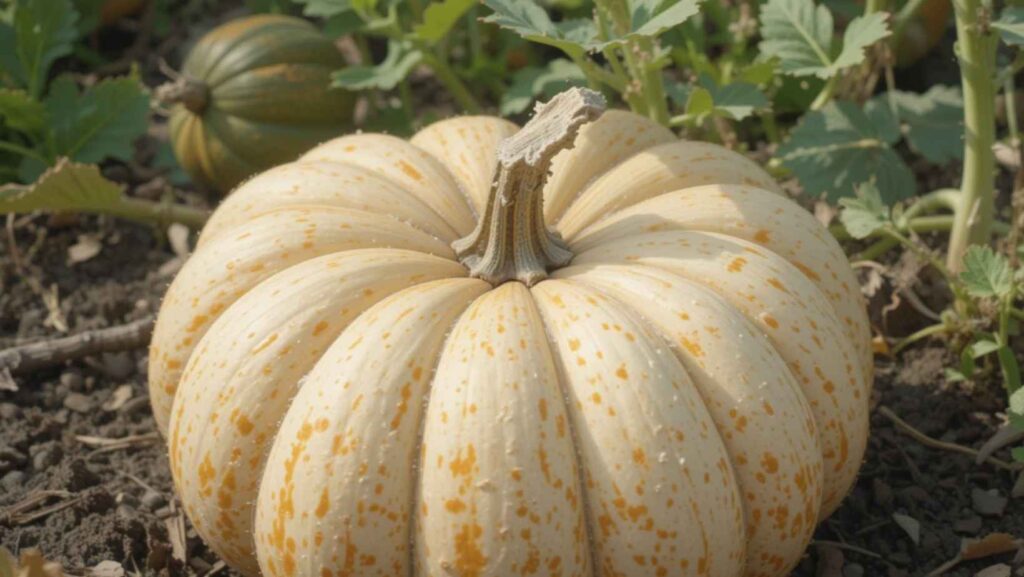
Would you want to know how long pumpkins take to grow? My experience has shown that, depending on the type and growing environment, pumpkins usually take 90 to 120 days to develop after planting.
While bigger kinds, like Musquee De Provence, can take 125 days or longer to mature, other smaller cultivars, like Jack Be Little, may mature in 85 days.
Pumpkins need 90–120 days to mature after planting. Cold-climate gardeners can start seeds indoors three weeks before the last spring frost.
Harvest your winter squash and pumpkins early in the fall to avoid frost damage. However, as you continue reading, that is not all. I’ll provide further information about the topic.
Now, let’s get started.
How Long Does It Take To Grow Pumpkins
When planted, pumpkins can take anywhere from ninety to one hundred and twenty days to develop, depending on the weather and the cultivar.
It may take up to 85 days for certain smaller types, such as the Jack Be Little, to reach maturity, although it may take up to 125 days for the bigger Musquee de Provence variety.
For ten days after sowing, pumpkin seeds will often begin to germinate. For a week, the vines will start to develop, and the actual leaves will begin to show.
You may anticipate the flowers to blossom within eight to ten weeks, and shortly after that, fruits will begin to develop.
As a general rule, it takes between forty and fifty days from the time the fruit first emerges until it is ready to be harvested. The pumpkins will develop quite quickly.
How long does it take for a pumpkin to grow fully
Different varieties mature at different rates. While the deeply lobed ‘Musquee De Provence’ pumpkin might take 125 days to mature,
the quicker-growing pumpkins reach full color in 90 to 100 days. It takes only 85 days for the little ‘Jack Be Little’ pumpkin to reach maturity.
Know the Variety: Check seed packs and catalogs for the maturity time when choosing pumpkin types.
The maturation time, sometimes expressed as “days to maturity,” is the total length of time needed from the day you sow the seeds in your garden until the crop is ready for harvest.
In order to account for regional weather fluctuations, maturation times are sometimes stated in a range such as 90–110 days.
When to Plant Your Pumpkin Crop: In order for them to reach full maturity by early October, pumpkins are usually planted in May or June.
Plants that mature more slowly in May and those that develop more quickly by mid-June.
If you live somewhere chilly, choose a fast-maturing type and wait until the soil is at least 60 degrees Fahrenheit before planting.
Start pumpkin seeds indoors two to four weeks before the last spring frost in locations with a short growing season. Put seedlings in the garden after frost is gone.
How to Grow Pumpkin in a Garden
Select a Location
Choose a well-drained, bright site with at least six hours of sunlight for your pumpkin patch. The vines of large pumpkins need at least one square meter to spread.
Step 2: Improve Soil and Sowing
Yates Dynamic Lifter Soil Improver & Plant Fertiliser should be used before planting. Rich in organic matter, it improves soil structure and water retention and attracts earthworms and beneficial soil bacteria.
Make one m-distance earth mounds. Sow 3-4 pumpkin seeds per mound and water thoroughly. After 6-10 days, seedlings appear. Later, thin to two strongest plants. Seed packs include seeding advice.
Fill tiny pots or punnets with Yates Specialty Potting Mix Cuttings & Seeds and spread seeds 2 cm deep to develop pumpkin seedlings to transplant into the garden. Maintain a slightly wet mix in a warm, sunny container or punnet.
When seedlings are large enough to handle, gently remove and dig holes large enough for all the roots.
Cover the roots but not the stem while planting seedlings. The soil around the seedlings should be the same depth as in their punnet or container. Well water.
Early Pumpkin Care—Step 3
Pumpkin seedlings are most at risk from snails and slugs in moist conditions. A little sprinkle of Yates Snail & Slug Bait protects seedlings.
Maintain soil moisture while plants grow. Sugarcane or pea straw mulch around the root zone keeps soil and roots wet.
Mulch prevents pumpkin fruit from touching the soil, reducing decay.
Pumpkin vines may be grown vertically with a strong arch or support. Young seedlings may require help finding and climbing the support, but they will.
Step 4: Water and Feed Pumpkins
Maintain soil moisture in hot, windy conditions. Water plants around the roots, not the foliage. This reduces powdery mildew risk.
Pumpkin plants need to be fed to grow strong leaves and prepare for flowering and fruiting.
To feed pumpkins, use Yates Thrive Natural Vegie & Herb Organic Based Pelletised Plant Food every 6-8 weeks. Water well after scattering pellets around the root zone.
Step 5: Vine Care
Pruning lengthy, wandering stems helps condense the plant.
Step 6: Harvest
Pumpkins are ready to harvest when the vine dies, and the stem hardens and browns. Tap the fruit, and it should sound hollow and have firm skin. Use secateurs to clip pumpkins from the plant, leaving a few cm of stem.
Step 7: Pumpkin Storage
spot harvested pumpkins in a bright, dry, airy spot for 10-14 days. Curing extends storage life. Area cured fruit in a dry, cold, dark area. Unharmed pumpkins may endure months if cured and kept properly.
What Are the Pumpkin Growing Stages
Let’s first examine the stages of pumpkin growth to have a better understanding of the life of a pumpkin plant.
Planting a seed in your garden’s soil is the first step.
Seed germination follows, and if the soil is warm, it usually happens in a week to ten days. At this point, you are ecstatic to see something green developing as the first leaves emerge from the ground!
The little seedling can now begin to produce real leaves, which should happen in about a week after the first leaves have appeared.
The plant is prepared for the last five pumping growth phases once the actual leaves begin to emerge.
These consist of the following:
Development of the vine. This happens quite fast, and in bright weather, the vines might grow noticeably longer every day.
Blooming is the next stage of pumpkin growth. After planting, the gorgeous, brilliant yellow blossoms typically begin to show up 8–10 weeks later. Ten days later, the female blossoms follow the male blooms.
Make sure the plant is getting at least one inch of water per week at this point.
When bees move pollen from the male flower to the female, the process is known as pollination.
Following pollination, the female blooms will shortly start bearing fruit, which might last for up to 55 days. As the fruit ripens, the deep green immature fruit will progressively change color.
Harvesting is the last phase. The vines will die and wither when the pumpkin is ready to be picked, and if you pound on the fruit, it will make a hollow sound.
When Do Pumpkins Grow
Related to gourds and squash, pumpkins grow in warm temperatures and mature in the fall, much like winter squash.
Hold off on planting until the air and soil have fully warmed. I often plant pumpkins in mid-to-late May; after all, the risk of frost has gone where I reside in zone 5a, Wisconsin.
Avoid planting pumpkins too early in the season since they are not resistant to frost.
It goes without saying that you should mulch and water your plants well until they establish themselves if you plant during warmer weather.
Because squash plants dislike constant moisture and are prone to fungal problems, take care not to overwater them.
You may plant the seeds indoors and move them outside after the weather has warmed up if you live in a really cold region or wish to start the season early.
Make sure the seeds are kept warm and get enough light when you plant them in a seed starting tray.
Grow lights are necessary for seed beginning if you’re starting a large number of seeds.
During the summer, the fruit and vines will keep growing. The fruit will start to mature around the end of the summer, and in very late summer or early October, the vines will begin to die.
This indicates that the fruit is ripe, but be sure by pounding it with your fingertip first. It is ready to be picked if it produces a hollow sound.
Harvesting, storing, and watering
I prepared another post on watering pumpkins that discusses when and how to harvest them, as well as how to store them if you’re interested in growing pumpkins this season.
Ways to Choosing the best pumpkins to grow
Cucurbita pepo, or pumpkins, are members of the same family as cucumbers, zucchini, and squash.
A variety of pumpkins are available, ranging from the enormous ‘Dill’s Atlantic Giant that may yield fruits weighing several hundred kilos to the little ‘Jack Be Little’ that produces tiny pumpkins that are just 7 cm across.
The tiniest varieties are excellent table ornaments and have a pleasant taste, whereas the huge varieties are produced primarily for weight competitions and have very little flavor.
Because they will cover a lot of land, most pumpkins require room, but you may plant smaller types as climbers if your garden isn’t large.
Additionally, there are pumpkins with striped, knobby, or pleated skins, as well as white or blue pumpkins if you prefer something different from the classic orange-skinned kind.
There is undoubtedly a pumpkin to suit every palate! Numerous varieties exist, many of which are only offered by specialized or heritage seed sources.
The primary pumpkin varieties cultivated in Australia are:
Butternuts are tall, smooth-fleshed, and light in color.
Queensland is Rich in orange flesh, and blue is a favorite choice for baking, steaming, boiling, and scones. Keeps well in storage.
Kent is a superb cooking type that works well for soups is dark green and frequently has gold stripes.
Jarrahdale pumpkins have grey-green skin, are huge and ribbed, have a nice flavor, and keep well. Best-selling commercial type.
Final thought
Now that we have established how long pumpkins take to grow, Powdery mildew, a fungal disease that forms white, powdery marks on the leaves and, in extreme situations, can restrict the growth of the plants, can harm pumpkins.
Regular watering lowers the chance of infection since plants are more vulnerable to powdery mildew during drought.
When watering, do not moisten the leaves. As soon as you see any impacted leaves, remove and discard them.
Fruits may fail to grow or fall off the plant while still tiny in chilly temperatures. The lack of pollination is the cause of this.
The issue normally goes away when the weather heats up.
Sometimes, a shortage of pollinating insects might result in a poor fruit set.
The amount of pumpkins that will grow can be increased via hand pollination, which involves moving pollen from male blooms to female flowers using a little paintbrush.