
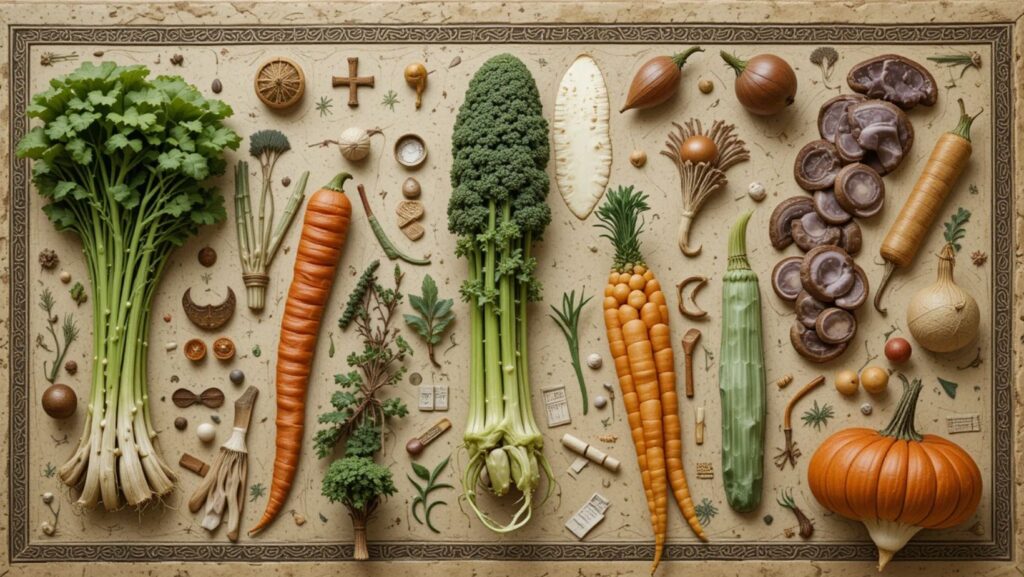
Would you want to know How ancient civilizations used vegetables as medicine? From what I’ve seen, ancient societies in Egypt, Greece, Rome, China, and India, among other cultures, made extensive use of vegetables for medicinal purposes.
They included them in their healing customs and recorded their therapeutic benefits in documents such as the Ebers Papyrus and Ayurvedic medicine.
In addition to successfully using vegetables as medicine to boost the immune system and provide the body with vitamins and minerals, Roman physicians also highly valued the therapeutic and
preventative qualities of radish, pumpkin, cucumber, celery, beetroot, cabbage, turnip, rutabaga, lettuce, onion, garlic, and other vegetables.
Now let get started
How were plants used to heal people in ancient times
The Sumerians and Egyptians utilized willow tree bark more than 3,500 years ago as an anti-inflammatory and pain reliever. Later, it was used to treat fevers and lessen the agony of childbirth in ancient Greece.
Aspirin was created by Bayer chemist Felix Hoffmann in 1897, and since then, it has improved and saved the lives of millions of people every day.
Its many advantages include lowering blood pressure, reducing pain and swelling, and avoiding heart attacks and strokes. Nowadays, aspirin is among the most widely used medications worldwide.
The Madagascar periwinkle, hawthorn, Foxglove, star anise, and wild Mexican yam, in addition to sweet wormwood and willow bark, have helped create medicinal innovations such as contraceptive pills and treatments for children’s cancer.
The Ayurvedic system of traditional Indian medicine and traditional Chinese medicine, the Madagascar periwinkle, which is currently the source of the childhood cancer medications vinblastine and vincristine, has a remarkably long history of use as a medicinal plant.
Hawthorn and Foxglove are examples of medicinal plants that have been used to treat hypertension and cardiovascular disease.
Other examples include norethindrone, which is derived from the wild Mexican yam and is one of the first active ingredients in contraceptive pills, and shikimic acid,
which is extracted from star anise and used in the production of Tamiflu, an antiviral drug that prevents influenza virus types A and B from acting on the body.
What are the medicinal uses of vegetables
A diet that is abundant in vegetables and fruits has the potential to lower blood pressure, reduce the risk of cardiovascular disease and stroke, prevent some forms of cancer,
reduce the risk of diseases that affect the eyes and digestive system, and have a beneficial influence on blood sugar, which can assist in maintaining a healthy appetite.
There is some evidence that eating fruits and vegetables that are low in starch, such as apples, pears, and green leafy vegetables, can even help one lose weight.
The low glycemic loading of these foods minimizes increases in blood sugar, which can lead to an increase in appetite.
When it comes to fruits and vegetables, there are at least nine distinct families, and each of these families contains the potential to include hundreds of different plant components that are good for wellness.
Consume a wide range of different kinds and hues of produce in order to provide your body with the diverse range of nutrients it requires.
Not only does this provide a larger range of beneficial plant substances, but it also facilitates the creation of meals that are visually pleasing.
What are the Tips to eat more vegetables and fruits each day as medicine
Have fruit at a location where it can be seen.
A sweet tooth can be tempted by placing a dish containing numerous whole fruits that have been washed and are ready to eat or by storing chopped colorful fruits in a glass bowl and putting it in the refrigerator.
Take a look around the produce section and pick out something different. In order to maintain a healthy diet, variety, and color are essential components.
On the majority of days, you should make an effort to consume at least one serving of each of the following categories:
Dark green leafy vegetables; fruits and vegetables that are yellow or orange; fruits and vegetables that are red; legumes (beans) and peas; and citrus fruits.
Avoid eating the potatoes. Choose other veggies that are rich in a variety of minerals and carbs that are processed more slowly on the digestive system.
Turn it into a dinner. Experiment with new dishes that call for a greater quantity of veggies.
Recipes like as salads, soups, and stir-fries are just a few examples of ways to increase the amount of delicious veggies that you include in your meals.
Did ancient civilizations eat vegetables
When you take a look at that, you will see remnants of plants as well as carbohydrates. On the other hand, there is evidence that has been preserved that indicates that early humans consumed a great deal of starchy vegetable foods.
There are also some indications that grains were used to make a flour-like product that was used in ancient times.
Which states that you are not allowed to consume grains since grains are a food that is grown on a farm; this type of stuff is considered to be anathema.
There is also the possibility of examining the human body in order to observe how humans have evolved in comparison to our ape ancestors, specifically with regard to the manner in which we digest food.
This includes factors like the structure of the intestines and the form of the teeth.
Again, if you take a look at it, you will notice that the signal is rather omnivorous. A significant amount of meat is not included.
Which vegetable is used in medicine
In Roman medicine, the therapeutic and prophylactic properties of vegetables such as radish, pumpkin, cucumber, celery, beetroot, cabbage, turnip, rutabaga, lettuce, onion, garlic, and other vegetables were highly valued.
Vegetables were successfully utilized as a medicine to strengthen the immune system, enrich the body with vitamins and minerals, and treat a variety of conditions,
including wounds and injuries sustained during surgery, various tumors and inflammations, diseases of the gastrointestinal tract, gynecological pathologies, fever, cough, diseases of the ENT organs, and skin diseases.
The leaves, stems, roots, and seeds of a wide variety of vegetable crops were utilized by the Romans for therapeutic purposes.
There is a chance that the medicinal potential of vegetables might be utilized in contemporary medical practice.
What is the healthiest vegetable in the world
The vegetable that contains the highest concentration of nutrients is watercress.
When it comes to the digestion of proteins and the production of neurotransmitters, it is beneficial since it has a high quantity of amino acids.
Despite having a relatively low-calorie count per serving, watercress has an impressive quantity of nutrients that have the potential to improve one’s overall health and well-being.
Additionally, it is an antioxidant. Those who ingest it two hours before exercising do not experience any discomfort in their muscles.
A significant quantity of iron, calcium, potassium, magnesium, and vitamin K are present in it, all of which work together to protect brain cells from being damaged.
This is the reason why watercress is thought to be very nutritious:
Strong in Nutrients:
The benefits of watercress include a high concentration of antioxidants, minerals (calcium), and vitamins (A, C, and K).
On the other hand, watercress is low in calories despite the fact that it is an extremely nutritious vegetable.
Cruciferous Family: Watercress, which is a part of the cruciferous family, which also includes kale, Brussels sprouts, and cabbage, contains isothiocyanates, which have the potential to protect against cancer.
Antioxidant-Rich: Watercress contains a high concentration of antioxidants, which have been shown to lower the risk of illness over the long term, particularly for disorders affecting the heart and bones.
Other advantages include the fact that watercress is said to aid in the recuperation of muscles and is even consumed by athletes in order to mend injuries that are the result of physical activity.
Final thought
Now that we have established How ancient civilizations used vegetables as medicine, There were a variety of substances, including blood, bones, animal fats, and minerals like ochre, in addition to plants that are still used today as sedatives (poppy and henbane), purgatives (senna, castor oil plant, and colocynth), and diuretics (squill), among other things.
Apples, almonds, peaches, pears, melons, pomegranates, walnuts, and plums were some of the fruits that the Romans consumed throughout the Gallo-Roman era.
Additionally, they consumed vegetables such as chickpeas, broad beans, cabbage, and broad beans, as well as radishes, leeks, and asparagus.