
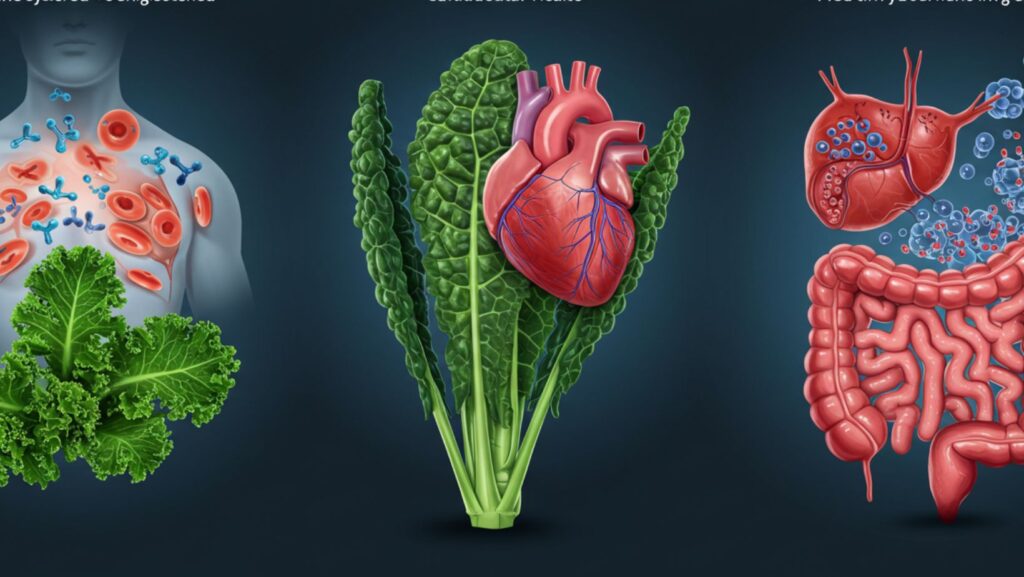
Would you want to know the Health benefits of eating Kale daily? My personal experience has shown that consuming Kale on a regular basis has a multitude of positive effects on one’s health.
Its rich vitamin, mineral, and antioxidant content may lessen the risk of cancer, improve heart and bone health, and boost the immune system.
However, that is not all; as you continue reading, I will provide you with further information on the topic matter.
Now, let’s get started
What are the Nutrition Value of Kale
There are 33 calories in one cup of raw Kasle, which is equal to 67 grams.
- 6 grams of carbohydrates
- Three grams of protein
- 206% of the daily value for vitamin A (derived from beta-carotene)
- 134% of the daily Vitamin C intake
- Nine percent of the daily value for vitamin B6
- Manganese: 26 percent of the daily value
- Calcium: nine percent of the daily value
- Copper: ten percent of the DCV
- 9% of the daily value of potassium
- A 6% daily value for magnesium
Kale contains at least 3% of the daily intake of thiamine, riboflavin, niacin, iron, and phosphorus.
In addition, Kale has a potent omega-3 fatty acid known as alpha-linolenic acid.
The aforementioned kale nutrition facts provide evidence of the positive effects that Kale may have on your health.
What are the Amazing Health Benefits of Kale
Below are some health advantages of Kale:
Beta-carotene, vitamin C, flavonoids, and polyphenols are abundant in Kale. Antioxidants protect against free radical damage.
Aging and many illnesses, including cancer, are caused by oxidative damage.
Quercetin and kaempferol are also abundant in Kale. These chemicals lower blood pressure, protect the heart, and fight cancer and depression.
Amazing Source of Vitamin C: This water-soluble vitamin regulates collagen formation and other vital processes. Kale has more vitamin C than spinach, orange, etc.
Reduces Cholesterol: Bile acid sequestrants may bind bile acids in the digestive tract and limit resorption.
This reduces body cholesterol. Bile acid sequestrants in Kale lower cholesterol. This reduces heart disease risk over time.
Cancer-Fighting Components: Kale is full of cancer-fighting chemicals. Kale’s sulforaphane may prevent cancer at the molecular level.
Cancer-preventing indole-3-carbinol is in Kale. Medical research shows that cruciferous veggies like Kale may significantly lower cancer risk. But additional research is needed to prove it.
Kale’s antioxidants, lutein and zeaxanthin, protect your eyesight. Several studies show that lutein and zeaxanthin intake reduces the incidence of macular degeneration and cataracts.
Kale helps you lose weight since it has fewer calories. Eating low-energy-density meals will help you lose weight. Kale has little protein and fiber. These two are key to weight reduction.
Kale Benefits Skin: Vitamins C, E, and K make skin healthier and younger. Antioxidant vitamin C brightens skin and fights fine wrinkles and free radicals.
Kale aids digestion and removes pollutants. The stems contain potent prebiotics for your gut flora, so don’t discard them. Kale sautéed in avocado or olive oil makes great breakfast dishes.
High fiber and sulfur content in Kale promote liver health. Both components aid natural detoxification and liver health. Kale also cleans the blood.
Good for Bones: Kale has more calcium than milk. Calcium is essential for bone health. The body uses this mineral for cell signaling, neuron function, and blood vessel maintenance.
What are the health benefits of Kale for men
Kale is high in antioxidants, vitamins C, K, and beta-carotene. It also provides nutrients for the eye, heart, weight, and other wellness.
. Kale includes several beneficial chemicals, some of which are medical. Scientists have found nine kale health advantages.
1. Rich in nutrients: Vitamin K, vitamin C, and manganese are found in Kale, which is low in calories. One cup (21 g) of raw Kale contains:
- 7 calories
- One gram carbs
- Fiber: 1g
- Vitamin K: 68% DV
- Vitamin C: 22% DV
- Manganese: 8% DV
- Vitamin A: 6% DV.
- riboflavin: 5% DV
- Calcium (4% DV)
Folate, vitamin B6, potassium, magnesium, and iron are all included in modest amounts per meal.
2. Rich in antioxidants: Kale, like other leafy greens, is antioxidant-rich. These include beta-carotene, vitamin C, flavonoids, and polyphenols.
3. Good source of vitamin C: This water-soluble antioxidant performs several crucial activities in cells. It is needed to synthesize collagen, the body’s most abundant structural protein.
Kale has three times more vitamin C than spinach and collard greens.
4. Bile acid sequestrants in Kale may reduce cholesterol.
5. May lessen heart disease risk: Kale includes chemicals that lower blood pressure, inflammation, and cholesterol.
6. Cancer-preventive compounds: Kale includes sulforaphane and indole-3-carbine.
7. May aid digestion: Fiber in Kale promotes regularity and prevents constipation.
8. May promote eye health: Kale is rich in eye-healthy carotenoids, lutein, and zeaxanthin.
9. May help control weight: Kale’s low calories and high fiber content might help you feel full and avoid overeating.
How to include Kale in your diet
It’s simple and adaptable to include Kale in your diet. It may be baked into crispy kale chips or used in salads, smoothies, soups, and sautés.
Though Kale has many health advantages, it’s important to keep in mind that in order to guarantee you obtain a wide range of nutrients, it’s preferable to eat a varied diet that includes a variety of fruits and vegetables.
Before making any dietary changes, it’s also crucial to speak with a healthcare professional or a qualified dietician, particularly if you have any particular health issues.
They may offer tailored advice on how to include Kale and other foods in a healthy, well-balanced diet.
How to Prepare Kale
In addition to being great raw in salads, Kale is also great sautéed, steamed, or even baked into crisps, which provide a great crispy alternative to potato chips.
Our favorite ways to eat this vegetable are listed below.
Raw: When consumed raw, Kale is incredibly nutrient-dense. Try it as an ingredient in a surprisingly tasty smoothie, as a basis for kale Caesar salad, or in your regular salad.
Do you dislike the strong flavor of Kale? It may be made sweeter by blending it with bananas and apple juice (or apple and water).
Stir-Fried: To make Kale a fantastic addition to stir-fries, remove the rough spines and chop or cut the leaves into strips. Kale may also be included in other recipes, such as scrambled eggs or spaghetti.
This waste-nothing quiche recipe uses any small leftovers you may have in your fridge, and stir-fried Kale is the ideal touch.
Kale leaves are robust when boiled. Kale is a great ingredient in soups and stews since it may soften when boiled while maintaining its lovely color.
(They may also be added at the end while the pasta is boiling for a quick and delicious one-pot supper, such as this dish of farfalle with lemon, shrimp, and Kale.)
Sautéed: Because kale leaves don’t get limp as other greens do, they are an excellent option for sautéed side dishes. Try serving sautéed Kale alongside steak, pork chops, or chicken.
For a rich garnish for baked sweet potatoes, sautéed Kale is prepared with coconut milk and a mixture of toasty spices.
Baked: To boost the nutritious content of casseroles, egg frittatas, and other baked foods, add Kale.
Kale’s texture will cause it to crisp up in the oven, adding a pleasing taste and texture.
Final thought
Now that we have established Health benefits of eating Kale daily, One vegetable you might want to stock up on is Kale, which is among the healthiest foods you can eat.
It’s packed with a variety of incredible nutrients that will keep you feeling great, energized, and ready to go!
In addition to iron, vitamin B3, phosphorus, B2, B1, manganese, calcium, copper, potassium, magnesium, and vitamins A, K, C, and B6, Kale has relatively little fat.
Better still, the fat includes omega-3 fatty acids, which may support heart health!
Adding more and more Kale to your diet is also really simple; all you have to do is toss it into some salads. Or check to see whether it’s present in any delectable liquids.