
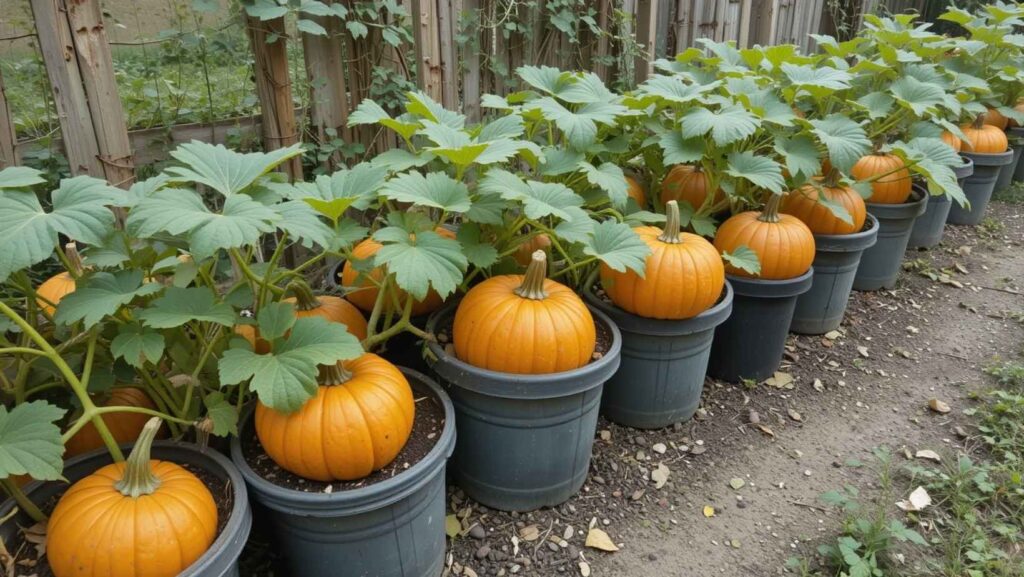
would you want to know about growing pumpkins in containers? I have personal experience that demonstrates that it is possible to cultivate pumpkins in pots, particularly if the appropriate preparation and care are taken.
In order to cultivate the vines, you will want an adequate container, soil that drains well, an abundance of sunlight, frequent watering, and maybe some support structures.
Additionally, in order to have a great harvest, it is essential to choose the appropriate pumpkin type and apply the proper soil fertilizer.
However, that is not all; as you continue reading, I will provide you with further information on the topic matter.
Now, let’s get started.
Can You Grow Pumpkins in a Container
You can indeed grow pumpkins in containers!
Growing pumpkins in containers is a fantastic alternative for people with limited space or for those who wish to try growing pumpkins for the first time, even though they are usually grown on huge garden plots.
Although growing pumpkins in pots call for more care and attention, the process can be profitable and fun.
Pumpkins may be effectively grown in a container garden if the proper growth conditions, soil, fertilizer, and container are used.
Feeding and postpartum care
To promote the development of blooms and fruit, give a high potash tomato fertilizer every ten days after the first fruits begin to show.
Fruits will not turn black on one side if you set them on a bed of straw or a piece of tiling to keep them off wet dirt.
They require regular watering. ” Remove all the little fruits from each plant, leaving only one, if you want to create giants that earn prizes.
How To Grow Pumpkins In Pots
Are you unsure about growing pumpkins in containers? Pumpkins may be grown from seeds or purchased as seedlings from a nursery. The steps for developing a pumpkin in a pot are as follows.
1. Determine the Appropriate Container Ensure that the container you select is capable of accommodating the pumpkin plant’s root system.
For pumpkin cultivation, a 15–20 gallon container with adequate drainage is the optimal choice.
2. Get the container ready.
Make sure the container has bottom drainage holes to minimise waterlogging.
How to define “growing pumpkins”? Add gravel or small rocks to the container bottom to aid drainage.
3. Pick the Type of Pumpkin
Select a type of pumpkin that can be grown in a container. Select dwarf or compact types that yield smaller pumpkins since they are more appropriate for growing in containers.
4. Make Use of High-Quality Potting Mix
Put a high-quality, nutrient-rich, well-draining potting mix in the container. Garden soil should not be used as it could not allow for proper drainage and result in subpar plant development.
A well-draining mixture of equal parts premium compost, peat moss, and perlite or vermiculite for better moisture retention and aeration is the ideal potting mix for growing pumpkins in pots.
5. Sowing the Seeds
Plant pumpkin seeds straight into the potting mix, as directed on the seed packet, or approximately 1 inch (2.5 cm) deep.
To provide enough seed-to-soil contact, moisten the soil gently after planting pumpkins in pots.
How to Choose a Pot for Your Pumpkins
When growing pumpkins in containers, the most important thing to keep in mind is to select the container with the utmost care.
When growing pumpkins, you need a fairly large pot.
If you are growing smaller pumpkin kinds, such as pie pumpkins, you might be able to get away with using a 10-gallon pot.
However, larger pumpkins would not be able to flourish in such a small container.
You will want a bigger pot that is at least 20 to 25 gallons so that you can cultivate the majority of pumpkin types.
When it comes to huge planters in the manner of whisky barrels, pumpkins are an excellent choice.
What are the Best Pumpkin Varieties for Pots
The best cultivars for growing pumpkins in raised beds and containers are little ones. But you may also cultivate types of big pumpkins.
The following are a few of the top ones for producing pumpkins in containers:
The First Pumpkin: Originally used to feed cows, this heritage type is now utilized to make delectable pie pumpkins.
Lumina Pumpkin: This kind is comparable to the “New Moon” type. Lumina produces smooth-skinned, white pumpkins.
Porcelain Doll: This cultivar has exceptionally pink fruits. The flesh of the medium-sized pumpkin is a vivid orange color.
Goosebumps: Their skin is smooth at first, but as they become bigger, warts appear.
One of the larger types with thick, white flesh is the New Moon. The white skin of the New Moon type is the source of its name.
Winner: This is a really large variety. Large pumpkins, often weighing between 75 and 150 pounds, may be carried by it.
Baby Boo: Named for its little “baby” size, Baby Boo is ghost-like white in hue. Sugar Pie: Despite being significantly smaller, this kind is just as sweet as its name suggests. Pies, cookies, and cakes are its primary uses.
Jack-o’-Lanterns: These circular, medium-sized pumpkins make great carving tools.
Jack-Be-Little: This small pumpkin cultivar takes 80–90 days to develop and can only reach a maximum size of 3–4 inches. For a colorful and abundant yield, you can plant rows.
What are the Requirements for Growing Pumpkins In Containers
Sunshine: Set the container in an area that gets at least six to eight hours of direct sunlight per day. Full sun is ideal for the healthy growth and fruit development of pumpkins.
They will develop more slowly in low light, and mildew will be drawn to the plant because of the moisture it retains.
Pick a location on a patio, balcony, or any other area that receives plenty of sunlight if you’re growing pumpkins in a tiny space.
Soil: Easy-to-heat soil is ideal for pumpkin growth in chilly locations. For growing pumpkins in pots, the potting mix you use has to be slightly water-retaining, have a high humus content, and drain well.
Additionally, you may add compost or manure while planting because pumpkins need a lot of organic matter.
Compost, peat moss, and perlite or vermiculite provide drainage and nutrient retention for pumpkin growth.
Watering: Keep soil moist but not wet. Container pumpkins need constant watering, especially during dry seasons.
Touch the soil to assess moisture; if it feels dry one inch below, water.
Avoid overwatering, which can promote root rot.
Pumpkins thrive at warm temperatures between 70 and 85°F (21 and 29°C) during the day and 60 to 70°F (15 and 21°C) at night.
Maintain 50%–70% relative humidity
When growing pumpkins in containers, keep the plants from becoming overcrowded and make sure there is enough air circulation between the pots to prevent fungal infections. The fertilizer
Because they are big feeders, pumpkin plants need a lot of fertilizer. First, for larger, meatier pumpkins, excellent soil is essential.
The finest fertilizers for early development are balanced ones, such as 10-10-10.
Every other week (after the plant is large enough to bloom), it is a good idea to move to a low-nitrogen fertilizer that is high in potassium and phosphorus, such as water-soluble 5-15-15 fertilizer.
Pruning: Pumpkins grown in containers benefit from routine pruning in terms of their yield and health.
To encourage ventilation and lower the danger of fungal infections, trim off any yellow or damaged leaves as well as any overgrown vines.
Once the plant has established enough pumpkins, you should pinch off the tips of the vines to reroute energy for optimum fruit growth.
Support: Container-grown pumpkins require assistance. You may use cages, pegs, or trellises to keep them from spreading on the ground and to improve air circulation.
Use plant clips or soft garden twine to carefully secure the vines to the support structure as the pumpkins climb vertically.
When growing pumpkins on a trellis, an A-shaped trellis is a suitable option. Supporting the vines lowers the chance of soil-borne illnesses, improves fruit visibility, and helps avoid breakage.
How Do I take care of pumpkins growing in containers
As I indicated before, pumpkins are thirsty and hungry plants. Naturally, they would require proper nutrition, given their large vines and fruit with a thick, glossy, lovely peel. Even the miniatures!
Instructions for watering:
At least one inch of water should be applied each week, particularly if the fruit is growing on the vine. To ensure that the roots receive the nutrients they require, water deeply.
However, make sure they are not sitting on damp dirt. Not many plants enjoy being overwatered.
To prevent wetting the leaves, water at the soil’s surface. That may encourage the fungus that causes powdery mildew, a common plant disease. It usually affects melons, cucumbers, pumpkins, and other vining plants.
Although it won’t necessarily kill the plant, it can impede the growth of younger plants and prevent fruit production.
Apply mulch to help retain water and keep weeds out (yes, weeds can grow in containers because of the wind).
Instructions for fertilizer:
Ideally, when you sowed the seedlings, you had previously combined slow-release fertilizer and/or aged compost.
These aid in maintaining a consistent baseline, and depending on the development stage, you may add a bit more during the season.
When plants reach a foot tall, many gardening experts advise using a high-nitrogen fertilizer to promote the growth of vines and leaves.
When flowers are ready to blossom, switch to a fertilizer with a higher phosphorus content. Avoid over-applying nitrogen fertilizer after blooms develop since this may prevent fruit production.
Lastly, when the fruit is developing, add a fertilizer high in potassium, such as potash.
To avoid burning the plants, carefully follow the directions for all fertilizers.
You can stay with a balanced fertilizer (such as 8-8-8 or 10-10-10) or use fish emulsion if you don’t want to tamper with the details.
TIP: Look for the three-part number, such as 5-10-10 or 6-8-3, to determine the fertilizer content. This stands for nitrogen, phosphorus, and potassium, or N-P-K. For further information on fertilizer,
Final thought
Now that we have established about growing pumpkins in containers, Pumpkins require a lot of sunshine to develop and bear fruit,
so it’s crucial to pick a spot that gets at least six hours of direct sunlight each day when growing them in a container on a balcony.
Additionally, make sure your container is packed with high-quality potting soil that has been enhanced with fertilizer or compost and that it has adequate drainage holes.
Because pumpkin plants may be heavy feeders, it’s critical to fertilize frequently and maintain a constantly wet but not soggy soil.
Because the developing vines may get rather big and heavy, you might also need to provide them with more support.
You may successfully grow a pumpkin in a pot on your balcony and savor the results if you give it the right care and attention!