
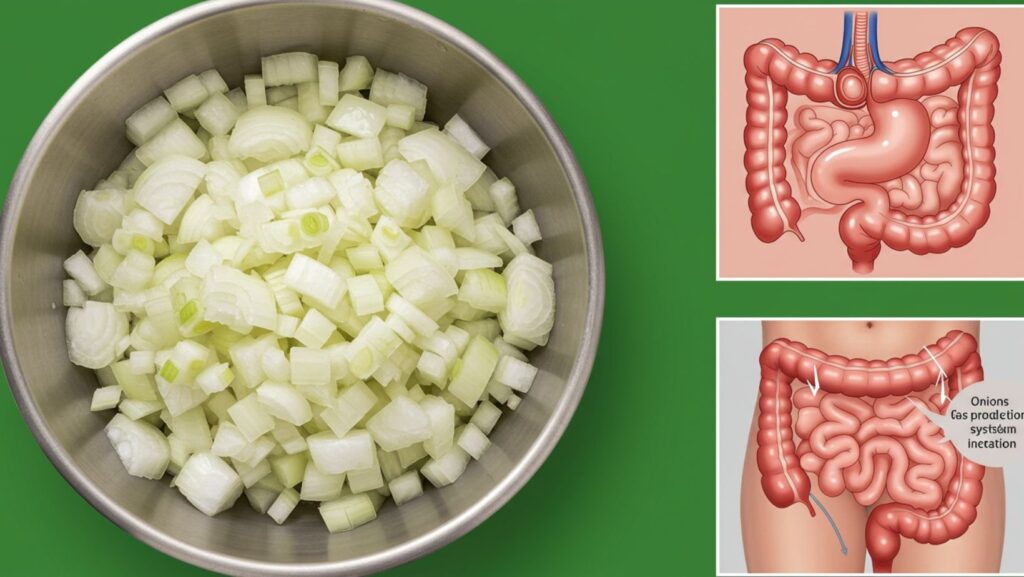
would you want to know if onions can cause gas? My experience leads me to say that Onions do contain fructans, which are difficult-to-digest carbohydrates, which is why they might produce gas.
Onions, garlic, agave, and leek are common sources of fructans, which are polysaccharides that produce gas.
These foods can cause bloating and other digestive issues, including gas and cramping in the stomach, even when taken in modest amounts.
Think about using low-FODMAP veggies like celery, fennel, or collard greens in place of onions. Garlic can be substituted with other herbs and spices, such as basil or chives.
But that’s not all; I’ll be teaching you more about the topic as you read on.
Now, let’s get started
Do Onions Cause Gas
Men, women, and children all cry when they see onions, yet we can’t stop eating them. It isn’t as easy to choose a dish without onions as it is to locate a burger without a bun.
It’s frequently surprising how a flavorful and adaptable vegetable like onions may upset your stomach.
Most Indian cuisines require onions as a basic component; it’s practically a rule to peel, wash, and slice them before cooking anything.
Even though they smell and taste pungent while raw, onions give food a unique flavor and improve its flavor when cooked, not to mention the other health advantages they offer.
Onions have a high nutritional content and flavor; however, some individuals may become bloated with gas after eating them.
Most people, however, are unaware that eating onions is the root cause of their digestive issues.
It’s time to address your problem if you want to prepare a spicy stir-fry for supper but are unsure if onions induce gas.
Do onions cause symptoms such as gas
You are not alone if you believe you have an onion intolerance. IBS patients frequently have an onion aversion.
The most common cause for IBS symptoms, is onions .
All varieties of onions are rated as high FODMAP on the Monash food app. Red onions, white onions, shallots, spring onions, and onion-based sauces are among them.
Onions’ fructans are the cause of the high FODMAP content .
FODMAPs can ferment in the large intestine and attract water in the small intestine. This might cause gas, bloating, diarrhea, and discomfort for those who have IBS.
Depending on your level of fructan sensitivity, the intensity of the symptoms brought on by onions may differ.
It is crucial to remember that intolerance and allergy are two very distinct things. An immunological reaction brought on by an allergy might cause symptoms including lightheadedness, nausea, or dyspnea.
Why do onions cause gas
Even though onions are known to produce gas, you have to realize that not everyone has the same problem to the same degree.
“Do onions cause gas?” is a common question for those with sensitive stomachs.
Although eating onions might create stomach issues, let’s examine the science of this and determine what produces flatulence.
Fructans, a kind of carbohydrate that is difficult for the small intestine to absorb, are abundant in onions.
The small intestine breaks down just 5–15% of fructans.
The intestinal microbiota in the colon ferment undigested carbohydrates, leading to gas generation.
Therefore, eating a lot of onions might produce this gas, which can exacerbate symptoms like bloating, flatulence, or cramping in the stomach.
In addition to fructans, onions also contain sulfur compounds that can cause digestive pain, such as thiosulphates and sulfides.
Be aware that sulfur compounds intensify the strong odor if you pass a gas that smells.
What are the Tips to reduce gas from onions
Sensitive stomachs and IBS sufferers may feel bloating and gas after eating raw onions.
Don’t be discouraged, though, if you believe you can’t include onions in your food. By following these easy guidelines, you can still add the flavor of onions to your food.
Make sure to cook the onions thoroughly. Consider frying onions before eating them rather than consuming them raw.
The symptoms of gas can be lessened by cooking the onions since it will help break down the fructans and make them simpler to digest.
Choose fewer servings of onions: Reducing the quantity of onions in your diet might help your digestive system.
To lessen the generation of gas, always pick smaller quantities or try combining them with other items.
Taking probiotics can help you regulate your gut bacteria and maintain a healthy digestive tract.
Include probiotic-rich foods like yogurt, kefir, kimchi, and kombucha.
It’s time to learn some cooking methods that will lessen the likelihood that they will produce gas:
Don’t boil onions in water: When onions are cooked in stews or stocks, fructans, which are soluble in water, may seep into the water and cause gastrointestinal distress when eaten.
Because fructans are insoluble in oil, it makes sense to cook onions in it.
Raw onions should be soaked in cold water. Even though cooking onions is usually preferable, you might try soaking them in cold water for at least half an hour before eating them raw.
Add onions to other veggies that are high in fiber: By cooking onions with high-fiber vegetables, such as broccoli, cauliflower, celery, carrots, etc., you may slow down digestion and avoid pain.
Add spices and herbs that are carminative: When cooking onions, adding herbs and spices like fennel, cumin, turmeric, ginger, etc., can help with digestion and lower gas production.
What Foods to combine with onions to make them less gassy
In spite of the fact that the question “Do onions cause gas?” is annoying to some individuals, we have demonstrated how you may get rid of the gassy consequences by following a few straightforward strategies for cooking.
One more thing that we have spoken about is how cooking onions with other ingredients might help alleviate stomach problems.
Here are some meals that you may try pairing with onions in order to have a better understanding of how they affect the health of your gut:
Leafy greens of cilantro or coriander
yoghurt, kefir, and other foods that are high in probiotics etc.
Olive oil and butter are examples of healthy fats.
Onion garlic
On the other hand, before you delve into these mouthwatering combinations, there are certain situations in which you should completely avoid consuming raw onions.
Why Are Onions Bad for You
Onions are generally safe to eat, but they can occasionally be harmful if you have underlying medical issues or if you eat too many of them.
Onions’ propensity to cause body odor and foul breath is one of the most common disadvantages of consuming them.
Rarely, people might experience allergic responses to onions, especially onion seeds, which manifest as skin rashes, eye watering, and itching when they come into contact with the onion or its extracts.
In those who are vulnerable, onions may exacerbate gastrointestinal distress symptoms such as heartburn, bloating, stomach pain, nausea, and vomiting, which can worsen irritable bowel syndrome symptoms.
When onions are consumed raw as opposed to cooked, these symptoms are comparatively more prevalent.
In particular, raw onions may increase your flatulence.
Generally speaking, onions are safe to eat in moderation while pregnant.
However, because there is no information on the safety of onions, pregnant and lactating women should avoid ingesting them in excess or as supplements.
Onions may impede blood coagulation, according to certain research. Therefore, if you have bleeding issues, you should avoid eating onions as supplements or extracts.
Avoid using onion supplements if you use antiplatelet medicines or other blood thinners without your doctor’s permission, even if there isn’t enough scientific data to be certain that they won’t mix.
Onions have been shown in certain human trials and animal research to reduce blood sugar levels.
Therefore, if you use anti-diabetic drugs and onion supplements, keep a constant check on your blood sugar levels.
It is preferable to stay away from such supplements before surgery because onions have been linked to a decreased blood glucose level and a propensity for bleeding.
Before surgery, you have to let your surgeon know if you take any medications or supplements, including ones that include onions.
Final thought
Now that we have established that onions can cause gas, I always advise my clients that if they’re having a lot of trouble with onions, they should probably take them out for a while.
However, if they’re noticing extra gas and you want to keep them in, you can help reduce gas by cooking the onion thoroughly, which will break down the sulfur and lessen any gas that may be produced later.
Therefore, if you are having a lot of trouble with that, sautéing, caramelizing, or even roasting onions will help lower the amount of gas produced.