
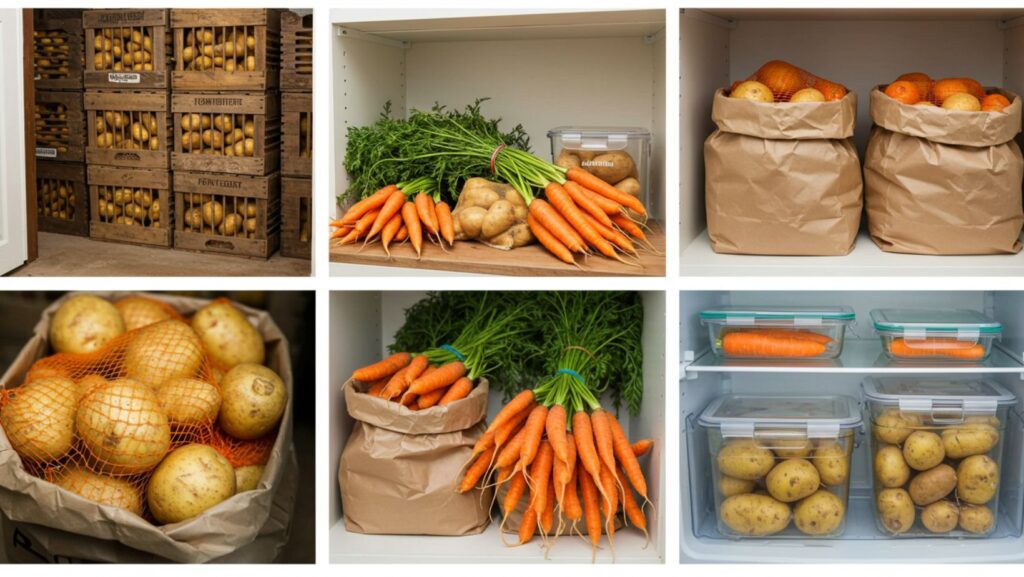
Would you want to know the best ways to store root vegetables like potatoes and carrots? In light of my experience, Carrots and potatoes are examples of root vegetables that should be stored for long periods in a cold, dark, and well-ventilated area, preferably between 32°F and 50°F (0°C and 10°C).
To provide enough ventilation, use containers such as slatted baskets, mesh bags, or wooden boxes. Perhaps the easiest way is to keep them “in-ground.”
To prevent freezing, wait until the ground surrounding the root vegetables has cooled before covering the rows with thick layers of hay, straw, or another material.
When rodents are not an issue, this can be effective. But that’s not all; I’ll teach you more about the topic as you continue reading.
Now, let’s get started.
How to Store Each Vegetable
Store beets unclean and with their tops. Long-term storage makes them better.
They thrive in the fridge and wetness, but don’t suffocate them! Do not bag them—they will mold. Crisper drawers function great.
If they seem dry, wrap them with a damp paper towel.
Cabbages: Make homemade sauerkraut with sea salt, shredded cabbage, and a jar or crock to boost nutrients.
Hung cabbage heads keep better than boxed ones. Check under top leaves for insects, or they’ll be eaten when you want them.
Cool, dry, and dark are preferable. Room-temperature cabbage loses vitamin C, so keep it cold!
Carrots have a medium shelf life. Remove tops (put in soup or smoothie immediately). Secure in a dark, chilly place.
Garlic: Lovely braiding, but optional. Do not wash, let them in the sun all day. Keep dry and dark. Paper bags work wonderfully for garlic too.
Leave onion in the sun for a day to “cure” and dry. Save amid darkness and dryness. One that sprouts may be planted in a container and placed on your windowsill for fast chives. Keep them away from potatoes.
Remove parsnip leaves without washing. Short-term storage (month). Keep cool.
Potatoes can be harvested or left in the ground throughout winter. Long-lasting storage. Keep dirt on them.
Store darkly. Avoid refrigeration. Potato dehydration is one option.
Radishes: Remove tops and keep unwashed.
Rutabaga: Stores best when smooth and uncut. Keeps for a week in the fridge. Consider powdering and dehydrating.
Storage: Store turnips unclean and with their tops. Long-term storage makes them bitterer.
For overwintering, squash prefers room temperature.
Sweet potatoes: Store in a dark paper or burlap bag at room temperature or cooler.
What are the Ways to Store Vegetables without a Root Cellar
Here are various ways to keep veggies without a root cellar.
1. Keep Vegetables Underground
The easiest way to keep veggies without a root cellar is in the ground!
Depending on the climate, this may be easy. As a Vermonter in zone 4, I know that these vegetables will not be available until the earth thaws.
Some local gardeners have successfully left carrots in the ground all winter, covered in a thick hay mulch.
However, ground-stored veggies may deteriorate due to rodent damage. I like harvesting vegetables in autumn.
This approach works best in warm climates.
Some crops you may leave in the ground are:
- Beets
- Carrots
- Turnips
- Parsnips
- Winter Radishes
Cover veggies with thick hay or straw mulch. Harvest vegetables as required, although frequent freeze-thaw cycles may cause rot. Pay attention to quality.
2. Make a Basement Cold Room
You can make a chilly room in an unheated (and empty!) basement corner. This is how we’ll keep veggies in our new house.
Creating a basement cold room includes sectioning off an area and installing siphon vents. This controls chilly outside air into your new cold chamber.
Add humidity to this storage compartment by putting pans of water or root vegetables in wet sand or sawdust.
The expense of timber and insulation to build a temperature-controlled area is a drawback.
But a subterranean cold room is one of the most efficient and long-lasting root cellar options, worth the expense.
3. Trash Can Root Cellar
Do you have a lidded metal garbage can? If so, consider this root cellar option.
This is one of the easiest ways to store veggies without a root cellar. Dig a hole the same size as the garbage can, set it inside, and fill it with root crops and straw, sand, or sawdust. Place the lid and tarp on top.
Use this method to bury an old chest freezer for additional storage!
4. Store vegetables in an extra fridge
Fruits and vegetables that store nicely in the fridge love cold. Refrigerators are contemporary root cellars!
Fill an extra fridge with carrots, beets, winter radishes, cabbage, and apples.
5. Make Pallet Root Cellar
Another inexpensive and easy DIY root cellar option.
Pallet root cellars produce pallet “rooms.” One pallet is the “floor,” four are the “walls,” and one is the “ceiling.”
Dig a huge square hole of the length, width, and height of a pallet plus 6-12″.
Line a pallet “root cellar” with plastic and put everything in buckets or plastic tubs to prevent water or pests from getting to your food, but this might be a simple and affordable way to keep food in the ground!
6. Garage or Outbuilding
If you live in an area with 35-50 degrees F winters and have an unheated garage, shed, or other outbuilding, you may store veggies without a root cellar.
7. Build Spring House
If your home has fresh water, a spring house is a great root cellar option. A fresh spring or stream, not a pond or stagnant water, is required.
Traditional spring houses store food and maintain a consistent temperature.
Spring houses are expensive and time-consuming to build, but they can store produce well!
8. Store Vegetables in Sand
Find the coolest portion of your home (usually a mudroom or north-facing room) and attempt the below strategy if none of the above alternatives are accessible.
This method has kept food fresh for a month or two, but not months.
Use storage containers and wet sand to preserve root crops in a root cellar.
This works best with old coolers or Rubbermaid containers. Keep vegetables separate by layering moist sand and vegetables. Keep your container in the coldest room.
A root cellar is one of my most valuable tools on our homestead, but it may not be right for your location, area, or budget. These root cellar solutions span the gap between ideal and available.
How to Properly Store Root Vegetables in the Kitchen
Root vegetables don’t perform well in cold storage, despite the fact that many of us keep items like potatoes, onions, garlic, and ginger root in the refrigerator’s vegetable drawer.
In fact, keeping root veggies together can alter their flavor, and excessive humidity in freezers leads to rot. The good news is that root vegetables may be properly stored in a simple and affordable manner.
First, remove root vegetables from the crisper drawers, such as potatoes and onions. Generally speaking, root vegetables should be kept at room temperature in baskets made of natural fiber or wire mesh.
Potatoes: Keep potatoes in metal containers, vented baskets, or even a robust cardboard box with holes pierced through the edges.
To prevent light from penetrating, make sure the container is covered with cardboard or newspaper. Your potatoes are getting too much light if they turn green. Keep them at a steady, low temperature.
Onions: Keep onions in a mesh produce bag or basket, away from other veggies (not in the same bin).
Make sure they are kept in a low-light, low-temperature environment, just like potatoes. This lets air in and light out, making it simple to rotate your stock.
Garlic: To extend the shelf life of both garlic and other root vegetables, keep them apart. Garlic requires complete darkness and low storage temperatures.
Think about keeping your garlic in a covered terracotta pot with openings for air.
Squash: You may have seen that squash in your refrigerator’s vegetable drawer deteriorates rapidly. The worst thing for this veggie is high humidity. Keep your squash at a consistent temperature in a cold, dark location.
Unlike potatoes and onions, squash can withstand temperatures as high as 60 degrees, but it won’t last very long at higher temps.
Carrots: Getting a carrot to rot is practically a must. Actually, you can keep carrots in the crisper drawer for a few months, but make sure the humidity control slider is on the lowest setting if your drawer has one.
Squeeze out the air before closing a gallon zipper bag containing one layer of carrots.
What are the Basics of Storing Root Vegetables in Sand
Temperature. When kept in sand, root vegetables need moisture and cold. Their optimal storage conditions are 32–40° F and 90–95% relative humidity.
Carrots and other vegetables are prevented from shriveling by high humidity. The same freezing temperatures and 80–90% relative humidity are needed for apples and pears.
container. Use wooden or cardboard boxes that are raised off the ground and supported by pallets.
You may also turn the refrigerator’s crisper drawer into a little root cellar. Bins made of plastic are also useful.
Location, location: All you need …is a 3.5′ x 7′ space.” It can accommodate twenty-eight half-bushels of vegetables.
Your vegetable storage space must be well-insulated, contained, and unheated. It’s simple to turn a closet or a piece of your basement into a root cellar.
kind of sand. After you’ve decided on a good spot to keep your root veggies, you’ll need “play” sand to pack them in.
Fine-grade sand that has been cleaned, dried, and screened is called play sand. Children’s sandboxes and landscaping projects frequently utilize this kind of sand. Local garden and home improvement stores typically carry it in 50-pound sacks.
Usually, play sand is just a little bit wet but not soggy.
Before packing the root vegetables, you can add some sand to a bucket, wet it with distilled water from a spray bottle, and then use your hands to toss the sand to distribute the moisture uniformly.
By keeping extra moisture away from the veggies, the sand helps maintain freshness and avoid rotting.
How to Prepare Vegetables for Cold Storage
Since root vegetables are never cleaned before being kept, it is crucial to think cleanly. Because their waxy coats assist them in retaining moisture, root vegetables all have skins that you don’t want to scratch.
Rinsing gathered roots with a little mist of water and then letting them dry in a cool, well-ventilated space is preferable. Don’t clean until right before cooking the vegetables.
Additionally, you need to chop off the tips as soon as possible since they drain the roots of moisture.
Cut off the long tails of turnips, radishes, and beets, and trim to ¼ inch (about half a centimeter) from the crown.
After that, move your root veggies indoors to dry.
My preferred method is to lay them out on a tray lined with cloth, pat them with a fresh kitchen towel, and then allow them to air dry for a couple of hours.
For instant use, set aside severely damaged or blemished roots, and after drying, loosely wrap the superior specimens in plastic bags.
Reused plastic food bags work well for most gardeners, but if you have a lot of carrots to store, perforated plastic bags with restricted airflow could be useful.
Remember your beets, radishes, and other root veggies that you have saved after they are in your produce drawer.
When they are at their finest, eat them raw in salads or roasted with potatoes and onions. Check them frequently. Radishes will likely lose their crunch first. A thick-skinned celeriac lasts for a very long time.
Final thought
Now that we have etabalished Best ways to store root vegetables like potatoes and carrots, The practice of keeping root vegetables is not new, and you could find quaint pots designed specifically for vegetable storage at antique stores.
Wooden stands with basket drawers or specialized baskets are excellent choices that give your pantry or kitchen personality.
The wooden potato bins that were used in the 1970s and 1980s should be avoided since they don’t allow for enough air circulation.
Remain with ventilated metal, wicker, or natural fiber. In the past, vegetable bins were a typical feature of kitchen cabinetry, and contemporary cooks are returning to perforated, deep metal drawers.
Seek out bin inserts made of wire or perforated metal that will work with your current cabinets.