
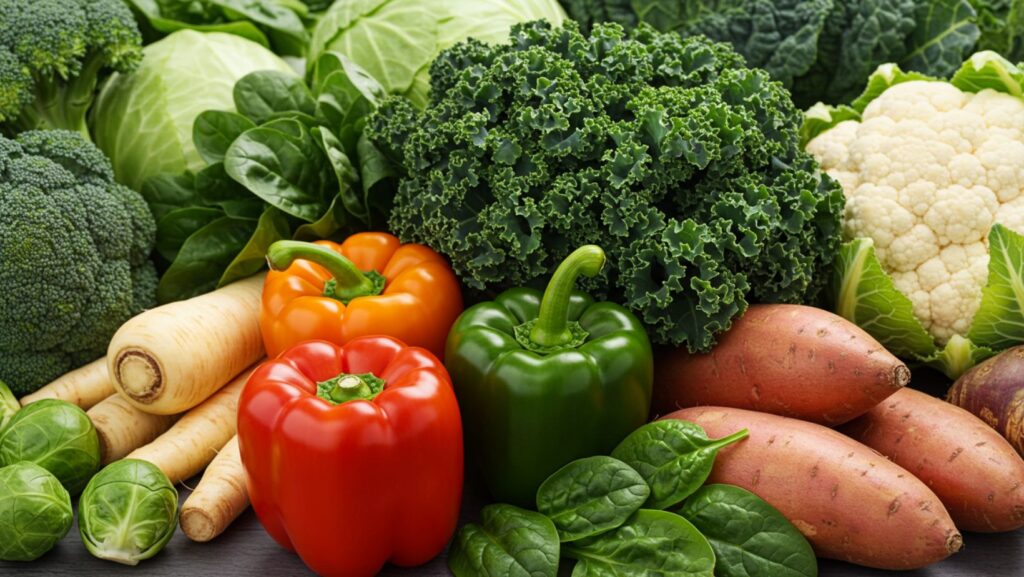
Would you want to know the Best vegetables for gut health and digestion? Vegetables that are high in fiber, such as leafy greens (spinach and kale), cruciferous vegetables (broccoli, cauliflower, and Brussels sprouts), and root vegetables (carrots, beets, and sweet potatoes),
as well as fermented vegetables like kimchi and sauerkraut should be prioritized for a healthy gut and improved digestion, according to my personal experience.
Folate, vitamin C, vitamin K, and vitamin A are just a few of the nutrients that can be found in great quantities in leafy greens like spinach and kale.
These greens are fiber-rich. Leafy greens also contain a sugar that boosts gastrointestinal microbes.
However, that is not all; as you continue reading, I will provide you with further information on the topic matter.
Now, let’s get started
Why are vegetables so good for gut health
The consumption of vegetables is an excellent source of dietary fiber, which can assist your feces to become more bulky and absorb water, so ensuring that they smoothly go through your intestines.
Many veggies include the additional power of prebiotics, which may assist in the growth of specific bacteria that are considered to be “good” for the gut.
Vegetables are not only a sensible decision but also a nutritious one because they have a number of additional health advantages that make them quite beneficial.
What are the best vegetables for gut health
“Just like your fingerprint, the microbiome of every individual is unlike anyone else’s. As a result of this, the characteristics that make a dish the “best” will be determined by your system.
Please consult your primary care physician, a registered nutritionist, or an accredited practicing dietitian for guidance that is as specific to your microbiota as it is to you.
For the time being, here are some examples of foods that Sarah thinks may be beneficial to the health of the gut:
Jerusalem artichokes are a root vegetable that also has a high amount of inulin, which may assist the microorganisms in your stomach in getting your digestion going and reducing constipation.
In addition to being a strong source of inulin, onions have the potential to contribute to FOS (fructo-oligosaccharides), which have the potential to increase the growth of beneficial bacteria.
There is some evidence that garlic can stimulate the growth of a beneficial bacterium known as L. acidophilus, which is found in the digestive tract.
When developing a weekly meal plan for your family, it is a good idea to think about what veggies are currently in season.
This is a fantastic approach to begin boosting the amount of vegetables you consume.
If you want to improve the health of your gut, one simple method to incorporate beneficial foods is to try adding one additional vegetable to your favorite cuisine.
In addition to fresh veggies, you might also want to think about the advantages of fermented meals, particularly with regard to the health of your digestive tract.
How Vegetables Support Digestion
We have all been made aware of the significance that fiber plays in our digestive system.
Not only does fiber help keep things moving through your intestines, which is essential for preventing constipation, but it also helps your body communicate to you that you are full. Fiber functions as a small broom that sweeps germs out of your intestines and colon.
Fiber can assist in relieving constipation or aid in soaking up surplus water that could lead to diarrhea, depending on what your body requires.
Fiber can also help to put your toilet breaks on a more regular schedule by helping to relieve constipation.
It is generally accepted that fruits, vegetables, and legumes are the primary and most plentiful sources of fiber.
If you consume a diet consisting mostly of whole foods, you are most certainly obtaining a sufficient amount of fiber.
It is important to note that if you are not already consuming a diet that is high in fiber, you should gradually introduce foods and vegetables that are high in fiber.
This is because consuming an excessive amount of fiber at first, when your body is not accustomed to it, can also lead to digestive issues.
When people begin a plant-based diet, they frequently suffer bloating or gas because they are consuming a large quantity of new whole foods and vegetables.
This is because they are introducing a lot of new foods into their diet. As you gradually include them into your routine, your body will acclimate to them.
What are the Top 5 Vegetables for Digestion
1. Digestive Artichokes
One medium artichoke offers nearly seven grams of fiber! It’s adaptable and easy to incorporate into your weekly diet.
To increase fiber, try adding it to a salad, stir-fry, soup, or cashew cheese dip with artichokes!
Artichokes offer various digestive benefits. These leafy bundles also include prebiotics, which boost intestinal microbes.
Prebiotics and probiotics keep your gut healthy. Recent research is also linking gut health to anxiety, inflammation, obesity, and diabetes.
Artichokes can reduce irritable bowel syndrome symptoms, including stomach discomfort, bloating, and toilet trips, according to research.
Artichokes also protect the liver, which absorbs nutrients and digests fat.
2. Digestive Greens
All those lush salad veggies include vitamins, minerals, phytonutrients, antioxidants, and fiber. Collard greens provide seven grams of fiber per cup, whereas cooked kale contains five.
While insoluble fiber may make greens hard to digest, it really helps your intestines transport waste through your GI tract and out of your body.
Pretty nice, huh? Since it doesn’t dissolve in water, insoluble fiber adds weight to feces. Soluble fiber produces a soft gel with water-like chia seed pudding and gently sweeps out your intestines.
Greens are great in salads, smoothies, stir-fries, stews, soups, and sandwiches.
3. Digestive Squash
Any squash—acorn, butternut, yellow, or green—has fiber. Acorn squash has nine grams of fiber per cup, whereas zucchini has one.
These easy-to-digest veggies include insoluble and soluble fiber, but soluble fiber shines. This fiber dissolves in water, so it can help manage diarrhea and loose stools.
Next time you have squash, consider roasting it, using it as a “bowl” for filled squash, pureeing it for a mash, or adding it to a Nourish Bowl, smoothies, or soup. Plenty of ways to enjoy squash and this fiber-rich veggie.
4. Digestive Broccoli
In addition to providing five grams of fiber per cup, cooked broccoli may aid digestion by maintaining your gut flora, a mix of good bacteria.
In mice, broccoli stimulated a gastrointestinal receptor that reduced inflammation.
Colitis patients benefit from this.
Most members of The Method with digestive disorders have trouble digesting raw broccoli. It produces gas, bloating, and enlarged stomachs. Cook broccoli to fight that and receive its nutrient and fiber boost!
My favorite broccoli dish is steamed or roasted with balsamic vinegar, gluten-free soy sauce, and olive oil. You can also steam it, add it to green smoothies, or pulse it into a fine “rice” to stir-fry.
5. Digestive Celery
Celery is mainly water—why is it good for digestion? Celery has several health advantages due to its antioxidants, anti-inflammatory minerals, and soluble and insoluble fiber.
One stalk has around one gram of fiber and several vitamins and minerals.
Celery polysaccharide improves the stomach lining and reduces ulcers. Finally, celery contains 95% water so that it can assist hydrate. Consuming more water improves systemic circulation. Friends, stay hydrated!
how to Cook Your Vegetables for Better Digestion
Raw vegetables are genuinely difficult for certain individuals to metabolize. This is due to the fact that cellulose, a fiber, can be challenging for the body to digest.
Nevertheless, the digestion of vegetables is facilitated by the process of cooking them.
Therefore, if you are experiencing any difficulties with fresh vegetables, simply prepare them briefly.
Sauté, roast, blanch, or steam—whichever method you select to prepare your vegetables—will facilitate their passage through your system.
Which vegetables are best for improving digestive health
Artichokes: A single medium artichoke contains nearly seven grams of fiber. Additionally, it is exceedingly adaptable and effortless to incorporate into your weekly meal plan.
Consider incorporating it into a salad, stir-fry, or broth.
Also, squash:
You will discover a substantial quantity of fiber regardless of the type of squash you select—acorn, butternut, yellow, or green.
These vegetables are easily digestible and contain both insoluble and soluble fiber; however, the soluble fiber truly stands out.
Broccoli: In addition to providing five grams of fiber in one cup of cooked broccoli, this vegetable may also aid in digestion by safeguarding the gut microbiome, which is the combination of beneficial bacteria in your intestine.
What are The Best Vegetables for Healthy Gut Bacteria
Mushrooms: One of the greatest veggies available for promoting intestinal health is the mushroom.
Polysaccharides, a kind of carbohydrate found in many mushrooms, are effective at promoting good gut flora.
These can enter the colon and further support gut health because they don’t decompose in the stomach.
Numerous substances found in mushrooms are also believed to generate prebiotics, which are nutrients that sustain and energize the cells and microorganisms lining your stomach, promoting intestinal health.
Mushrooms include chitin and chitosan, which are thought to lower intestinal inflammation and preserve a balanced gut flora.
Leeks and Onions: Onions and leeks are the best foods to support good bacteria in your stomach.
Leeks and onions, members of the same family, support digestive health. Inulin, a special kind of soluble fiber found in several plants, acts as a prebiotic.
Short-chain fatty acids, which are produced when gut bacteria ferment inulin, aid in improving the absorption of vital nutrients and promoting the development of good bacteria while also improving digestion in general.
Legumes and Beans:
Taking care of your digestive system might feel like you’re being urged to keep eating the same things.
Packed with fiber and cooking potential, peas and beans help maintain bowel motions, promote healthy digestion, and provide vital nutrients to the gut microbiota.
Additionally, bioactive substances with anti-inflammatory qualities, such as polyphenols, are found in peas, beans, and legumes.
These substances could aid in lowering intestinal inflammation and creating an atmosphere that is beneficial for the best possible digestive health.
These little hero vegetables are perfect for fostering a better gut microbiota since inflammatory bowel illness and irritable bowel syndrome are both indicators of poor gut health.
Cauliflowers: Similar to other leafy green vegetables, cauliflower offers advantages beyond its versatility. Cauliflower turns out to be a beneficial dietary additive for intestinal health.
Both soluble and insoluble forms of dietary fiber may be found in cauliflower.
By nourishing beneficial gut bacteria, both forms of fiber assist regular bowel movements, avoid constipation, and improve digestive health in general.
Cauliflower has several forms of fiber that also function as prebiotics, feeding the good bacteria in the stomach.
This encourages the development of these microorganisms, supporting a healthy and balanced gut microbiota.
Cucumbers: Rich in soluble and insoluble fiber, cucumbers aid in better digestion. Fiber gives the stool more volume, which promotes easier bowel motions and keeps constipation at bay.
Certain fibers included in cucumbers function as prebiotics, encouraging the development of beneficial bacteria in the digestive tract.
Cucumbers, which are high in antioxidants such as beta-carotene, flavonoids, and tannins, aid in the fight against inflammation and oxidative stress in the digestive tract and other parts of the body.
Final thought
Now that we have established the Best vegetables for gut health and digestion, Vegetables’ high fiber content is one of their key advantages.
Fiber has many health benefits, but consuming too much of it at once might exacerbate digestive problems.
Vegetables can be introduced one to two servings at a time until the body is able to adapt to the higher fiber content.
Water consumption should rise in tandem with fiber intake since fiber requires water to pass through the digestive tract.
While it’s OK to simmer or roast your vegetables mildly, cooked vegetables are often better tolerated than raw ones.
Eating certain vegetables is more vital than avoiding them due to digestive pain, even if a combination of raw and cooked vegetables should be ingested ideally. Lastly, the secret is to be daring.
Consuming a wide range of veggies will make it simpler to absorb a far bigger assortment of health-supportive nutrients and chemicals, even though most individuals tend to consume the same four to five vegetables over and over again.