
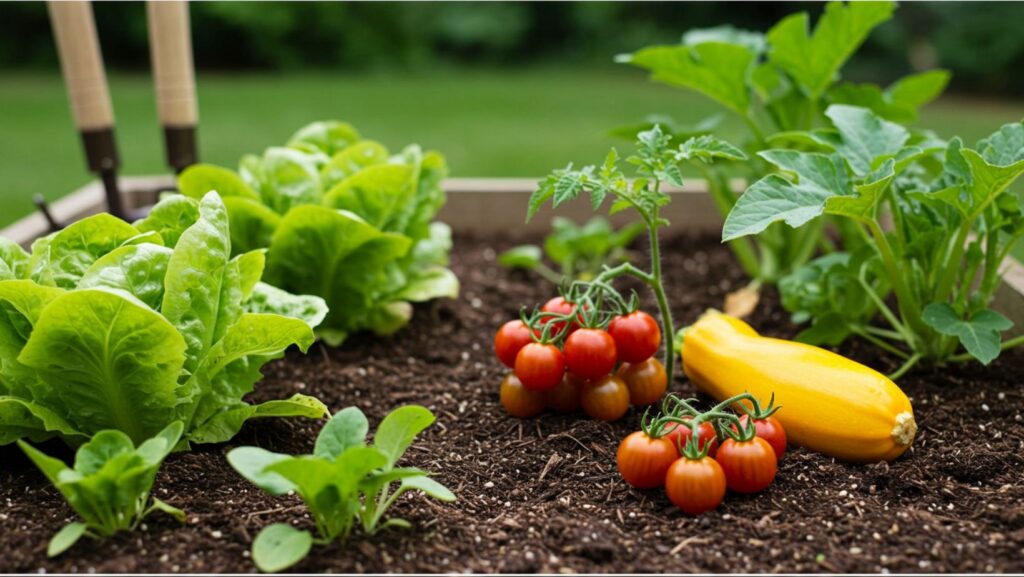
Would you want to know the Best vegetables for beginners to grow? According to my experience, the best vegetables for novice gardeners to grow are usually climbing vegetables like cucumbers and
pole beans, root vegetables like carrots and radishes, and leafy greens like lettuce, spinach, and kale because they are easy to maintain and yield a good harvest quickly.
Nothing compares to fresh vegetables, especially if you produce them yourself, which you can do!
Although it might appear intimidating at first, gardening is a really fulfilling pastime.
As you go on, I’ll go into further detail about the fundamentals of vegetable gardening and planning, including how to determine a plot size, where to put your garden, and which veggies to cultivate.
Now, let’s get started.
What are the Things Beginners Should Know Before Starting a Vegetable Garden
Choose a sunny area.
During a dry time, hauling the garden hose or watering cans to your garden pail ruins the fun of gardening.
Cucumbers and other thirsty vegetables require frequent watering to thrive.
Consider using soaker hoses to irrigate the root. This strategy saves more water than above sprinklers, which evaporate some.
Determine your watering strategy.
After choosing a spot, test the soil. It may seem needless, but without knowing what you have, you won’t know whether you need to add anything.
Why waste money on nutrients you don’t need?
Soil pH (acidity) and nutrient levels may be tested at your local university coop extension office (find yours here) for $20 or less. This is only needed every few years, therefore it’s not expensive.
Home test kits are less accurate and comprehensive.
Test the soil.
You may dream of grandeur, but let’s be honest: A food garden takes labor.
For instance, you’ll need to weed periodically because infant plants don’t compete with weeds for water and nutrients. Tie up tomato plants and watch out for nightly pests and diseases.
Overcommitting in the first year makes growth less pleasurable.
What size vegetable garden should beginners start with? Start with a 10-by-10-foot bed. But starting small is acceptable, too. You can always “go big” next year with experience.
Start small.
Container gardening is a terrific method to start if your yard doesn’t get enough sun or if your soil is poor and you don’t want to amend it.
You may put pots on a deck, patio, driveway, or even a tiny balcony.
Containers enhance planting area, warm up faster in spring, and provide you with more environmental control.
Many new vegetable cultivars are container-friendly.
Do container gardening.
You shouldn’t plant radishes because someone said they’re easy if you dislike them. Choose a few vegetables you enjoy and grow a few plants of each.
Choose chocolate-brown or orange cherry tomatoes, tiny cucumbers, or ceramic-looking white eggplants that won’t be found at the grocery store.
Growing, eating, and harvesting your favorite foods can make you happier.
what are the easy-to-grow vegetables for beginner gardeners
1. Lettuce
Anyone can grow lettuce. It tolerates shadow better than most vegetables and keeps growing after you cut it, so you may plant once and have fresh lettuce all summer.
There are several kinds. Buttercrunch works great with salads, so I enjoy it. Start with a combination of leaf lettuces and see what you prefer.
2. Swiss Chard
Pests devour kale and spinach bolts readily. Swiss Chard, the ever-giving green. Cook or eat it raw like any other leafy green. Rainbow is gorgeous, but white is more productive.
3. Beans
I adore planting beans because they replenish soil minerals and produce a lot from a little plot.
Our family prefers the yellow variety, but I recommend green and purple also. I love bush beans, but a crimson runner bean on a trellis is gorgeous.
4. Potatoes: Are any old potatoes you bought sprouting? Perfect. You have everything for potato growing this year.
Side note: Grocery store potatoes may not work as well.
Depending on the size and number of eyes, cut your potato in half or thirds. Dig a deep hole, insert the cutting and cover. Hill potatoes in July and August to prevent greening.
5. Zucchini Easy to grow from seed, low-maintenance, and abundant output. Plant only 1 or 2 plants unless you have a 10-person household or prefer distributing zucchini to everyone.
What are The best vegetables to grow in pots
Not all veggies grow well in containers. Pumpkins, squashes, sweetcorn, and most root vegetables are overly spreading, tall, and deep.
Choose dwarf or container varieties for optimum results—there are many!
These are the easiest potted vegetables:
Tomatoes:
Growing tomatoes in pots requires a compact bush or tumbling tomato and avoiding cordon kinds that grow too large.
Each plant needs a 30cm pot or 35cm spacing in a grow bag or planter—even a hanging basket for tumbling varieties! The brightest portion of your yard is best for tomato plants, which need lots of sun to grow vegetable.
Peppers:
Pepper plants thrive in pots and need lots of sun, so a windowsill, conservatory, or greenhouse is great, but in summer, you may transfer them to a sunny patio.
Use a 20-25cm deep and broad container instead of terracotta, which dries out in hot weather because peppers need moist soil.
Kale, spinach:
Spinach and kale thrive in pots because to their shallow roots and tight growth. Take what you need from the plant, and it will generate more.
Maintain frequent checks for slugs and snails since many species enjoy kale.
Peas and beans are easy to raise and produce abundant yields during the summer. Several dwarf types are equally as prolific as their lanky siblings, although taller plants can be supported in pots.
Leaves of salad:
Keep a few lettuces in pots on your patio or balcony to avoid soggy salad in your fridge. Just choose what you need daily, and the plants will produce more.
Cover your plants with a cloche at night or line the pot with copper tape to deter slugs and snails.
Chillies, like peppers, are ideal for windowsills and conservatories. They grow big yields in little space and maybe pickled, preserved, or processed into hot sauce.
Even better, you can choose them anytime once full-sized. Green chilies are gentler and get hotter as they mature red, yellow, or orange.
Spring onions: While not suitable for pots due to their depth requirements, spring onions are easy to cultivate and multipurpose.
Plant them in rectangular planters or pots 7cm apart in rows. In warmer weather, watch for bolting (flowering) and cut-off flower stems—you want the plants to grow huge bulbs!
What are the easiest vegetables to grow from seed
Vegetables that need little more than planting and watering are the simplest to cultivate from seed.
“growing a lot of vegetables from seed is simple.” “I would say that the easiest foods are lettuce, beans, cucumber, squash, radish, peas, pumpkins, arugula, and okra.”
For a vegetable to be deemed simple, it must sprout rapidly and take a little more attention (apart from the required watering) to mature and yield a tasty crop.
What are the Three Favourite Vegetables For Beginners
Potatoes
We previously talked extensively about how simple it is to produce potatoes at home. Please take a look at our comprehensive guide on producing potatoes in the spring.
Salad Leaves
When the weather warms up, salad leaves are a surefire winner.
At outdoor events, the ideal foundation for a summer salad meal is undoubtedly fresh, crisp greens from your garden.
There is something for everyone with the wide variety of flavors, colors, and textures available.
BEANS FOR RUNNER
Every garden should have space for runner beans as the summer months draw near.
Due to their ease of cultivation and small area requirements when utilizing bamboo canes, they are an ideal vegetable for novice gardeners.
The summer is the best season to include them in your plot because they are highly vulnerable to frost and low temperatures.
What is the Best Soil for Growing Vegetables
If you don’t know what you’re searching for, you’ll be overwhelmed when you walk into the hardware shop to get garden soil. The ideal soil mixture for gardens may be created using:
- 1/3 topsoil
- One-third compost
- 1/3 coconut coir or peat moss
By itself, topsoil frequently has too much clay, poor moisture retention, and insufficient nutrients to grow garden crops.
For this reason, the ideal type of loose, nutrient-rich soil for vegetable planting that can also hold water is a mixture of compost, top soil, and peat moss.
Raised beds, big pots, and in-ground vegetable gardens may all benefit from this garden soil mix.
These three items may be purchased separately, or you can look through soil bags to see if there is a pre-mixed soil mix for vegetable gardens.
For outdoor vegetable gardens, use this soil mixture. Use Sungro soil for beginning seeds inside.
When it comes to testing and amending garden soil year after year, there is a lot more to learn if you intend to use dirt that already exists.
It is not necessary to use this pricey garden soil mix to fill a deep raised bed with dirt if you plan to fill raised beds with soil. Other, less expensive alternatives exist for what to put in raised beds’ bottoms.
Final thought
Now that we have established the Best vegetables for beginners to grow, It is recommended that you begin your strawberry patch with a few plants, despite the fact that seeds might be quite challenging for someone who is just starting.
Every plant will produce two more plants for you to add to your garden each year, and this will continue to happen year after year.
There is nothing better than a strawberry that you have grown yourself; it is quite easy to care for, and if you have children, they will adore the fresh vegetable.