
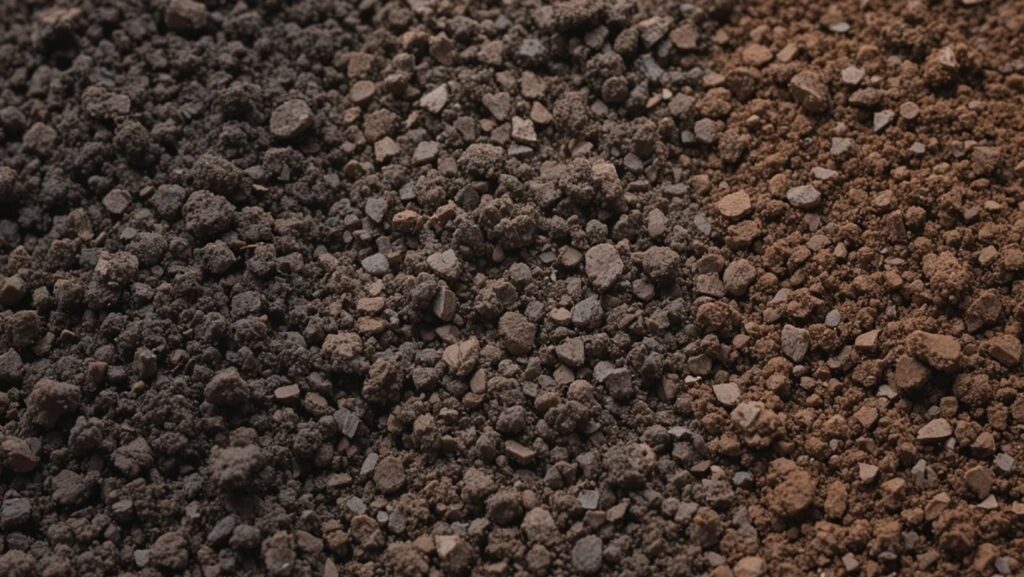
Would you want to know the Best soil types for growing vegetables? The majority of gardeners consider loamy soil to be the best type of soil since it has a healthy proportion of sand, silt, and clay.
I would say this based on my own experience. It is abundant in nutrients and organic materials, and it is able to keep moisture while also ensuring that drainage is adequate.
However, that is not all; as you continue reading, I will provide you with further information on this subject matter.
Now, let’s get started
What is the Best Soil for Your Vegetable Garden
Here are the six varieties of soil you may discover in your yard, along with information on where to locate them and how to test your soil at home to determine which type you have.
1. Loam
The preferred soil type for gardeners! The proportions of clay, sand, and silt in loam are almost equal.
This kind of soil facilitates easy movement of roots, water, and air. This soil is ideal for raised bed gardening and veggies. Although loam soil is found across Canada, Southern Quebec is where it is most prevalent.
Texture Test: Roll a handful of your dirt into a sausage form after moistening it. It is mostly loam if it has a little grainy texture and retains its form but is also brittle. It should have a chocolate cake-like texture!
2. Clay
Because of its small particle composition, it retains a lot of moisture. The air movement and water drainage are quite poor because of the small particles. Roots struggle to develop in clay soil because it compacts readily.
As with other gardeners around the St. Lawrence River, clay soil will be quite familiar to any of our friends in the GTA.
Texture Test: Roll a handful of your dirt into a sausage form after moistening it. It is mostly clay if it has a sticky feel and is readily shaped into different shapes.
3. Sand
Sand feels rough to the touch and is composed of big particles. Sand loses nutrients rapidly and drains very efficiently because of these big particles.
This soil is prevalent in regions like the Okanagan Valley that are close to bodies of water or have significant evaporation and little rainfall.
Texture Test: Roll a handful of your dirt into a sausage form after moistening it. It is mostly sand if it feels grainy and crumbles readily.
4. Silt
The medium-sized particles that makeup silt are intermediate between sand and clay. In addition to being rich and having good drainage, silty soils can compress and result in poor drainage.
Because of their glacial past, places like Alberta, Saskatchewan, and Manitoba have this soil. It can also be found in the St. Lawrence and Great Lakes regions.
Texture Test: Roll a handful of your dirt into a sausage form after moistening it. It is mostly silt 5. Chalk if it is silky and smooth and doesn’t crumble when rolled.
Chalk soil is alkaline and contains a lot of calcium carbonate, although its particles are comparable to those of silt soils.
This soil has a characteristic light grey/white color. Although it drains efficiently, it lacks nutrients.
Chalk soil is uncommon in Canada because it comes from old sea floors where shells and marine skeletons broke down over millions of years.
6. Peat
Unless it is brought in, peat soil is seldom ever found in residential gardens. This soil is composed of partially decomposed organic matter and originates from marshes and peatlands.
Although this soil is usually used in soil mixes and seed starting mixes, we do not advise utilizing it because it contributes significantly to greenhouse gas emissions during excavation.
What are the Soil nutrients for your vegetable garden
All the nutrients required to sustain your plants throughout their life cycle should be present in fertile soil.
No fruit or vegetable can survive without the three basic elements of potassium, phosphorus, and nitrogen.
Each has a job, and you may have heard of them simply as NPK.
The formation of plant protoplasm depends on nitrogen (N). A cell’s genetic material is found in its protoplasm, which also regulates its activity and acts as a catalyst for other minerals.
Additionally, nitrogen is a component of the chlorophyll molecule, which gives plants their green hue and plays a key role in photosynthesis, which produces food for the plant.
Nitrogen is the nutrient that plants absorb the most.
The growth of the plant’s growing tip and cell division depend on phosphorus (P). It is also in charge of collecting solar energy and using it for development and procreation. This process is already familiar to you as photosynthesis.
In plant tissue, potassium (K) facilitates the movement of nutrients, water, and carbohydrates.
Numerous enzymes, including those involved in protein synthesis, sugar transport, N and C metabolism, and other processes, are also activated by it.
If you will, K is in charge of the plant’s immune system. By preventing the root system from withering, it fortifies the plant’s resilience to disease and shields it from inclement weather.
Since plants require a lot of NPK for growth and survival, these nutrients are typically the first to become depleted.
During extended hot seasons or periods of high rainfall, these elements can also naturally seep out of the soil.
In addition to NPK, your soil should include trace amounts of manganese, iron, zinc, boron, and copper, as well as magnesium, sulfur, and calcium.
On the other hand, the plants will swiftly deplete all of the reserves if there are insufficient nutrients.
After that, their growth will either drastically slow down or maybe cease. The plant may become seriously threatened with death if its leaves turn yellow.
For this reason, a lot of individuals utilize fertilizers to replace the nutrients they are lacking.
You may also require some; however, to determine the quantity and brand, see the Western Australian Government’s fertilizer calculator.
What is the Proper soil PH to grow vegetables
Soil pH is simply an indicator that shows you the acidity or alkalinity of your soil. The pH scale ranges from 0 to 10. The soil under seven is considered acidic, and above 7 – is alkaline.
Levels under or beyond the standard will affect the regular growth of your plants. Some plants actually prefer levels below or above the average, but the majority don’t.
So, what is the standard pH level for your soil
In Western Australia, for example, the soil ranges from 4 to 8.5 pH. In the coastal and metropolitan areas, the soil tends to be more alkaline (above seven pH). And inland areas tend to have acidic soil (under seven pH).
Most soils’ pH levels vary from 3.5 to 10. In areas where rainfalls occur more often, the pH levels range from 5 to 7.
On the other hand, dry areas have soil pH from 6.5 to 9. On average, most plant nutrients are available at levels between 6 to 7 pH, so these levels can be considered most favorable, especially for vegetables
What is the best soil for potted vegetable plants
People who lack the room for a raised vegetable garden or backyard may have to grow vegetables in pots, sometimes inside.
However, even in this case, compost and natural soil would still be more important than a bag of manufactured potting mix.
The problem is that local soil is frequently unavailable to individuals.
Plantophiles advise buying a potting mix composed of compost, peat moss, bark chips, and pine bark if this is the case.
For the majority of plants to flourish, these factors should also establish a baseline pH.
The additional aeration and vermular activity of organisms like earthworms, which contribute to making garden soil even more nutrient-dense for your vegetables, are lost when you use potted soil.
Don’t be scared to seek a commercially available bag of garden or potting soil if you don’t have the compost to start with and need a little help getting the soil to the proper condition.
In actuality, you can typically get away with adding a bag or two of those store-bought mixes whether you’re growing vegetables in the ground, a raised bed, or a pot.
Just make sure to pick ones with as little artificial components as possible.
What is the best soil for a raised bed vegetable garden
Because not all gardens are created equal, the soil needs for those gardens are not all the same.
This is because not all gardens are made alike. For instance, when you combine different kinds of soil, raised bed gardens really perform better than other types of gardening.
The recommendation made by Love to Know is that this mixture should consist of a fifty-fifty mixture of compost and topsoil from the surrounding area, preferably grown in your backyard.
The nutrients that are present in pre-mixed soil mixtures are missing
How to prep soil or a vegetable garden
The soil that is rich in nutrients must be able to retain rainwater while also allowing for adequate drainage.
Increase the amount of organic matter in your garden soil by adding a lot of compost and aged manure.
This will help you get your garden soil in better shape.
In order to achieve the greatest possible outcomes, the pH of the soil should be anywhere between 6.5 and.
You should thus do a test on your own (you can get a kit from your nursery), and if the soil is excessively acidic, you can add a dressing of lime or dolomite.
Make sure to add sulfur to the soil if it has a pH that is higher than 7.5.
The powdered form of sulfur is the most common, although there are also liquid forms that are accessible and function more quickly.
What are Other tips for growing vegetables
The sun is essential for the growth of vegetables; thus, you should place your patch in a location that receives at least half a day of direct sunshine and is shielded from winds that might dry up the soil.
Watering: Because food crops are thirsty, you should be prepared to water them on a consistent basis throughout the summer.
Your location, the type of soil you have, and the plants you are cultivating as well as the frequency, will all have a role.
However, in most cases, you will need to water your plant once every couple of days.
Veggies are plants that require nourishment; therefore, it is important to improve the soil before planting them, as was discussed earlier, and then to encourage their growth with frequent fertilization.
When planting, add pellets of organic manure, and then repeat the process a couple of months later for crops that will flourish for a longer time.
For the purpose of supercharging plants and increasing your harvests to their full potential, liquid fertilizers and seaweed tonics are suitable.
Unfortunately, vegetables are prone to a variety of harmful organisms, including illnesses and pests. Keep a watchful check on your plants so that you can see any problems at an early stage.
Final thought
Now that we have established the Best soil types for growing vegetables, The use of soil is the first step in growing vegetables.
n addition to small rock particles, water, air, organic matter, microbes, and other creatures, including worms, the soil is a mixture of all of these elements.
Rocks are broken down into soil as a result of the action of the weather, water, and air on stones, which allows for the formation of soil.
The surface of rock gradually softens and decomposes over thousands of years, eventually becoming soil.