
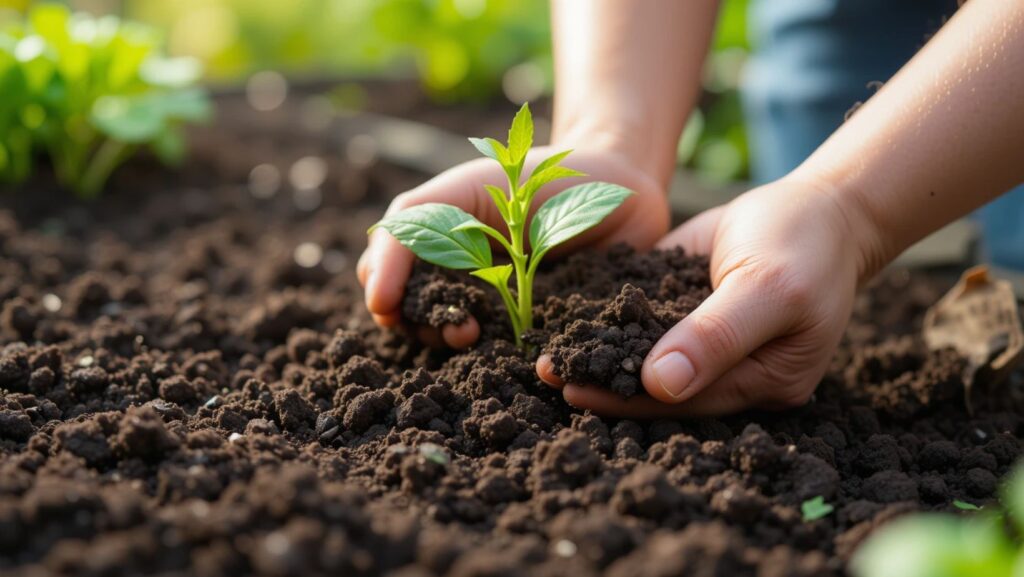
Would you want to know the Best soil for vegetable gardening? I’ve found that loamy soil, a balanced mix of sand, silt, and clay, provides good drainage, retains moisture, and promotes root growth.
If your soil isn’t loamy, you can add compost or well-rotted manure to make it loamy. The quality of your vegetable garden soil determines its health and output.
Good soil is a living, breathing foundation that provides your plants with nutrients, oxygen, and water to thrive.
However, poor soil can weaken plant development, lower yields, and increase pest and disease vulnerability.
Creating a unique soil mix can solve these issues and let you customize the ground for your garden.
However, as you continue on, I will explain more.
Now, let’s get started
What is the Best Soil for a Vegetable Garden
Rich in organic matter and able to drain freely, the ideal soil for a vegetable garden also retains moisture.
The ideal soil pH range is between 6.0 and 7.0, which is slightly acidic to neutral.
Generally, there are four primary categories of soils.
Sandy
Loamy Clay and Silt, further subdivided by the percentage of each.
Peaty and chalky types of soil are two more that exist but don’t exactly fit in this grid.
These soils are excellent for a variety of construction and gardening applications.
Obtaining soil with a combination of organic materials is quite simple when dealing with raised garden beds or garden beds that are mostly constructed off the ground.
on Australia, a variety of soil types are available for vegetable gardens on raised beds.
You may purchase the perfect soil in a bag for little pots or garden beds, or you can use the extra dirt you have in your gardens.
If you need a few cubic meters of dirt, you may also go to your neighborhood landscape provider and have it delivered.
A right mix of organic matter, compost, loamy topsoil, and a small amount of washed sand for irrigation is what we constantly search for.
It may also contain a nitrogen-rich substance, such as mild cow dung, which would supplement the plant’s nutrition without causing an unpleasant odor.
What are the Types of Soil for Vegetable Gardens
For a vegetable planter, understanding soil types is essential. The type of soil you pick will affect which vegetables grow best for you.
Three primary components make up soil:
- Clay.
- Sand
- Silt
All three of these elements are balanced in loam soil. Every soil type does, however, have certain benefits and drawbacks.
The most popular types of soil for gardening are as follows:
- Sandy Soil
- Loamy Soil
- Clay Soil
- Soil Silt
Other kinds of soil include chalky and peaty soil. The four soil types listed above, however, are the most common varieties for gardens.
The texture of sandy soil is granular. It may be deficient in some nutrients, is loose, and drains rapidly. It benefits plants with robust root systems because of its dry and acidic properties.
Therefore, you may use sandy soil with the right supplements or organic fertilizers to produce root crops like carrots and radishes.
In addition, this kind of soil heats up rapidly in the sun. For this reason, it may thrive on crops that prefer heat, such peppers and tomatoes.
The best-balanced soil is loamy, which has a combination of clay, silt, and sand.
This soil type has a balanced nutritional profile, maintains moisture, and allows for efficient drainage, making it suitable for all kinds of vegetables.
Soil made of clay is sticky. It drains slowly after rain, heats up slowly, and is challenging to dig. But it also has the ability to retain water and is high in plant nutrients.
With the right watering and aeration, this kind of soil may be used to grow both leafy greens (like spinach and cabbage) and root crops (like carrots, potatoes, and radishes).
Finally, the silty soil is rich, smooth, and has good moisture retention. Crops like lettuce, peas, and beans may thrive on it because of its fertility and capacity to retain water.
What are the Qualities of Good Vegetable Garden Soil
The most crucial need for high-quality vegetable garden soil is that it be healthy.
A good and healthy vegetable garden soil has a number of important characteristics. They are:
Drainable: High-quality soil will permit surplus water to escape. This avoids root rots in wet circumstances.
Proper Aeration: The ideal soil for a vegetable garden should allow air to circulate freely. This encourages microbial activity and root health.
Packed with Beneficial Microorganisms and Organic Matter: It should include a healthy balance of microorganisms and organic matter, including nematodes, bacteria, actinomycetes, fungus, algae, and protozoa.
Balanced Nutrient Levels: Proper soil has the right amounts of macronutrients and micronutrients, which are necessary for plant growth. This lowers pest illness and avoids deficits.
Ideal pH Level: Preserves the perfect pH level for the particular veggies being cultivated.
Loose Texture: Healthy soil makes it simple for roots to grow and penetrate.
Free of Compaction: The lack of compacted layers can impede water passage and root growth.
Dark, Crumbly Appearances: Healthy soil often has a crumbly texture and a dark hue, which denotes a balanced balance of minerals and organic matter.
What Is The Best Soil for a Raised Bed Vegetable Garden
Light and fluffy, well-drained, and nutrient-balanced soil is ideal for a raised bed vegetable garden. Loam soil is regarded as one of the greatest for raised bed gardens, just like it is for vegetable gardens.
Instead of using potting soil for raised beds, use 75% loam soil with no more than 25% organic matter well mixed (via the University of Maine Cooperative Extension).
The following qualities should be present in the ideal soil for food plants grown in raised beds:
Light, fluffy soil with lots of air space is essential for vegetable plants, which frequently have sensitive root systems.
The soil must be rich in nutrients, vital minerals, and vitamins in order to provide nutrient-dense vegetable and vegetables.
The perfect raised bed soil for food plants should hold onto moisture while letting extra water run off to avoid waterlogging.
Raised bed soil should be free of weed seeds since weeds can deprive edible plants of essential nutrients.
Finally, the finest soil for raised bed vegetable gardens should be devoid of all harmful chemicals, such as synthetic fertilizers, pesticides, and herbicides.
Top Recipes for Raised Bed Soil Mix
Two soil recipes for your raised bed garden are as follows:
Recipe #1 for Soil:
40% topsoil (a loamy mixture of organic matter, silt, clay, and a tiny bit of sand)
40% of the material is compost.
20% sand that is gritty
More worm casting to increase nutrients
Loamy soil with the ideal ratio of nutrients, water retention, and soil structure will result from using this mixture.
#Soil Recipe #2:
One-third compost
One-third of coarse vermiculite
1/3 coco coir or peat moss
Mel Bartholomew’s book is the source of this mashup. It is intended for raised beds with adequate drainage and moisture retention.
How To Improve Soil for Vegetable Gardening
You must concentrate on the soil’s structure, fertility, and health in order to develop it for vegetable gardens.
To improve the quality of the soil and get better results, follow these steps:
Perform a Soil Test: A soil test may be used to determine the pH of the soil, nutrient levels, and any deficiencies. This might assist you in making the necessary adjustments.
Utilize Organic Matter: Add compost that has been thoroughly decomposed to your soil. Enhancing soil structure and moisture retention may be achieved with compost. Additionally, it boosts good microbes.
Use Organic Fertilizers: By selecting organic fertilizers with a balanced NPK ratio, you can ensure that your food plants are getting the nutrients they need.
Rotate your crops every year to avoid nutrient depletion and lower your chance of contracting soil-borne illnesses.
Mulch Your Garden Beds To keep weeds at bay and preserve moisture, use organic mulch over your garden beds, such as straw, wood chips, or manure.
Think About Cover Crops: To preserve the soil, fix nitrogen, and increase soil fertility, plant cover crops like clover legumes in the off-season.
Encourage Earthworms: Earthworms help with nutrient cycling and soil aeration. Earthworm populations are attracted to and maintained by healthy soil.
Apply Gypsum to Clay Soils: By encouraging flocculation, gypsum can enhance drainage and structure in heavy clay soils used for vegetable planting.
How to prep soil or a vegetable garden
The soil that is rich in nutrients must be able to retain rainwater while also allowing for adequate drainage.
Increase the amount of organic matter in your garden soil by adding a lot of compost and aged manure.
This will help you get your garden soil in better shape.
In order to achieve the greatest possible outcomes, the pH of the soil should be anywhere between 6.5 and.
You should thus conduct a test on your own (you can get a kit at your nursery), and if the soil is excessively acidic (below 6.5), you should add a dressing of lime or dolomite.
Make sure to add sulfur to the soil if it has a pH that is higher than 7.5.
The powdered form of sulfur is the most common, although there are also liquid forms that are accessible and function more quickly.
Final thought
Now that we have established the Best soil for vegetable gardening, Compared to other types of plants, vegetables require a little bit more attention and care.
After all, you are asking them to produce a harvest that you can use for sustenance.
Getting the soil just right is the single most critical thing you can do to grow your own vegetables.
When cultivating veggies, you will need soil that is crumbly, simple to dig and has a significant amount of organic matter.
On account of this, it is highly recommended that you provide them with a raised garden bed, which will allow you to fill it with a vegetable-growing mix of high quality.