
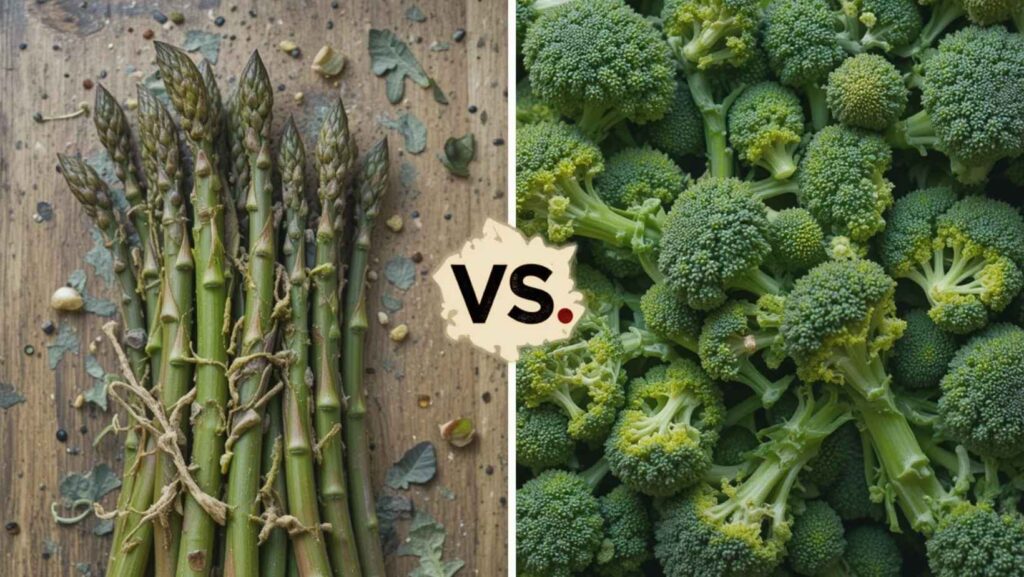
Would you like to know the comparison between asparagus and broccoli in terms of nutrition? According to my own experience, broccoli and asparagus are both vegetables that are rich in nutrients, yet their profiles differ slightly from one another.
Asparagus and broccoli are both high-fiber, folate-and vitamin K-rich vegetables; however, broccoli has far more vitamin K and C than asparagus.
To reiterate, both broccoli and asparagus are nutritious foods that may be included in a diet.
The amount of fiber, folate, magnesium, and selenium that asparagus contains is somewhat greater, whereas the amount of vitamin C that broccoli contains is higher.
However, that is not all; as you continue reading, I will provide you with further information on the topic matter.
Now, let’s get started
Which is healthier, broccoli or asparagus
These two types of vegetables are both extremely nutritious and provide a unique combination of vitamins, minerals, and other essential components.
The presence of vitamin C, folate, and fiber in broccoli is noteworthy.
Apart from that, asparagus is a good source of fiber and folate. Vitamin A is abundant in asparagus as well.
Here is a comparison that goes into considerably more detail:
To summarise:
Quite high in folate, a mineral needed for DNA synthesis and cell division. The cuisine is rich in vitamin K, important for strong bones and blood clotting.
Includes compounds with antioxidant and anti-inflammatory properties.
There is a dearth of calories and carbohydrates.
Not only is vitamin C abundant in broccoli, but the vegetable is also a fantastic source of antioxidants, which work together to fortify the immune system.
Contains glucosinolates, which are chemicals that have the potential to contribute to the prevention of some malignancies.
A good source of potassium, which is essential for ensuring that one’s blood pressure remains within a healthy range.
It is rich in calcium, which is essential for maintaining healthy bones.
Comparisons of Asparagus and Broccoli per 1 lb
To make informed dietary decisions, compare the macro- and micronutrient contents of one pound of broccoli with those of one pound of asparagus.
Examine the advantages and variations in their diet.
Let’s examine the vitamin contents of one pound of broccoli and asparagus:
In comparison to broccoli, one pound of asparagus contains 1.2 times more vitamin A, 2 times more vitamin B1, 1.2 times more vitamin B2, 1.5 times more vitamin B3, and 1.4 times more vitamin E.
However, compared to raw asparagus, one pound of raw broccoli has 2.1 times more vitamin B5, 1.9 times more vitamin B6, 15.9 times more vitamin C, and 2.4 times more vitamin K.
Broccoli and asparagus both have comparable quantities of vitamin B9 per pound.
One pound of raw broccoli and raw asparagus does not provide enough vitamin B12 and vitamin D.
Comparing the nutrients in one pound of broccoli and asparagus:
Compared to broccoli, one pound of asparagus has 3.9 times more copper, 2.9 times more iron, and 1.3 times more zinc.
Compared to raw asparagus, one pound of raw broccoli has twice as much calcium, 1.5 times as much magnesium, 1.3 times as much manganese, 1.3 times as much phosphorus, 1.6 times as much potassium, and 16.5 times as much sodium.
Broccoli and asparagus have comparable amounts of water and selenium per pound.
Macronutrient comparison per pound:
Compared to raw asparagus, one pound of raw broccoli has 1.3 times more protein, 1.7 times more carbohydrates, and 6.3 times more omega-3.
Broccoli and asparagus both provide similar amounts of fiber and sugars per pound.
Omega-3 is not sufficiently present in one pound of asparagus.
Raw broccoli and raw asparagus both offer insufficient levels of Omega 6 and calories per pound.
Is Asparagus one of the healthiest vegetables
Asparagus has a lot of anti-inflammatory plant compounds called polyphenols and vitamins C and E, thus eating it could help lower the risk of inflammatory disorders.It is well known that consuming more potassium and less salt will help lower high blood pressure.
One serving of asparagus provides approximately 5% of your daily recommended intake (DRI), making it a healthy source of potassium.
Furthermore, a naturally occurring substance in asparagus functions as an ACE inhibitor, assisting in blood vessel dilatation and blood pressure reduction.
This is accomplished by blocking the production of angiotensin II, an enzyme responsible for vascular constriction and hypertension.
Despite this encouraging discovery, human replication of the same effects has not yet been achieved.
Is asparagus healthier cooked or raw
Antioxidants may be higher in cooked asparagus.
There may be more benefits to boiling asparagus than just a softer texture.
Polyphenols, a class of chemical substances found in abundance in asparagus, are widely recognized for their strong antioxidant properties.
A diet rich in polyphenols may help reduce inflammation, stress, and the risk of various illnesses, including diabetes and heart disease.
The overall antioxidant activity of Green Asparagus increased by 16% after cooking.
In particular, it increased the amounts of two potent antioxidants, beta-carotene and quercetin, by 24% and 98%, respectively.
The antioxidant activity of cooked white asparagus was almost three times more than that of raw white asparagus.
Cooking has an impact on the nutritional content.
Cooking asparagus may make some of its chemicals more accessible, but it may also decrease the amount of other nutrients it contains.
For instance, one research discovered that boiling green asparagus resulted in a 52% decrease in the amount of vitamin C, a vitamin that is very sensitive to heat.
The type of nutrient, cooking method, and duration of heat exposure all affect how certain nutrients in vegetables are affected by cooking.
As a general guideline, use cooking techniques such as steaming, sautéing, quick-blanching, and microwaving that minimize the time food is exposed to heat and water.
Additionally, strive for a crisp-tender texture rather than overcooking your veggies.
Is asparagus safe for everyone
Asparagus is a good source of purines, which can raise uric acid production and put you at risk for conditions like kidney stones and gout.
As a result, asparagus might not be suitable for you if you’ve been told to cut back on purines in your diet.
If you have an allergy to asparagus, you can also have an allergy to other plants in the same family, such as chives and garlic.
Consuming a large amount of asparagus in one sitting may cause wind and bloating if you’re not accustomed to consuming fiber.
Urine that smells like asparagus after eating it is another complaint made by some people.
This is because the strong odor of asparagus is caused by a molecule called asparagus acid, which breaks down into chemicals that contain sulfur.
Is asparagus healthy overall:
Minerals, vitamins A, C, and folic acid are abundant in asparagus. It is a fiber vegetable that may help decrease blood pressure and promote digestive health.
Because of these reasons, it might be considered a useful addition to any diet.
What are Other Broccoli vs Asparagus Comparisons
The broad stem of broccoli gives it a tree-like or dome-like look. When the dome has tightened and is green or blue-green, it is harvested.
Yellow petals are an indication of over-maturity.
The structure of asparagus is a long, slender rod with a spear-like tip. The height of a fully grown asparagus plant is around 91 centimeters.
The stem (spear) of asparagus is the edible portion. Asparagus can be purple, white, or green.
Texture: The portion of broccoli that is eaten determines its texture.
Raw broccoli has a top that looks like a collection of tiny, soft grains arranged in a dome. Broccoli stems are crisp and firm. Broccoli tends to soften on the top and bottom when cooked.
One important physical quality factor for asparagus is texture. Woody, stringy, or fibrous stems are not desirable in asparagus. In contrast, the texture of white asparagus is soft.
The texture of cooked asparagus varies depending on the cooking level, ranging from crisp to soft and meaty.
Taste: Broccoli has a green, earthy flavor that is slightly bitter. However, different people interpret bitterness in various ways.
The flavor of asparagus is also intense. Although asparagus has a much stronger savory flavor, it tastes similar to green beans and broccoli. Good asparagus has a complex taste with a subtle balance of sweetness and bitterness.
Compared to green Asparagus, white and purple Asparagus are comparatively sweeter. When asparagus ages, its flavor tends to become more bitter than when it is fresh.
Fragrance: The fragrance of raw broccoli is earthy. Broccoli has an odor similar to sulfur when it is cooked. It is not always the case that this smell indicates that the broccoli has gone rotten. As broccoli ages after picking, its smell intensifies.
There is also a faint, earthy smell of raw asparagus. As asparagus cooks, it releases volatile sulfur-containing chemicals that smell like broccoli.
Final thought
Now that we have established the asparagus vs. broccoli nutrition comparison, both asparagus and broccoli have remarkable nutritional profiles and health advantages that make them worthy of a spot on your menu.
These nutrient-dense vegetables are excellent for reducing inflammation, improving digestion, and promoting overall well-being.
Therefore, the next time you’re organizing your meals, think about including broccoli and asparagus for a delicious and nourishing boost that your body will appreciate.
Try to include other veggies, such as spinach, kale, and Brussels sprouts, for a more varied nutritional intake.
Consuming a variety of vibrant vegetables will help ensure that you obtain the vitamins, minerals, and antioxidants necessary for good health.