
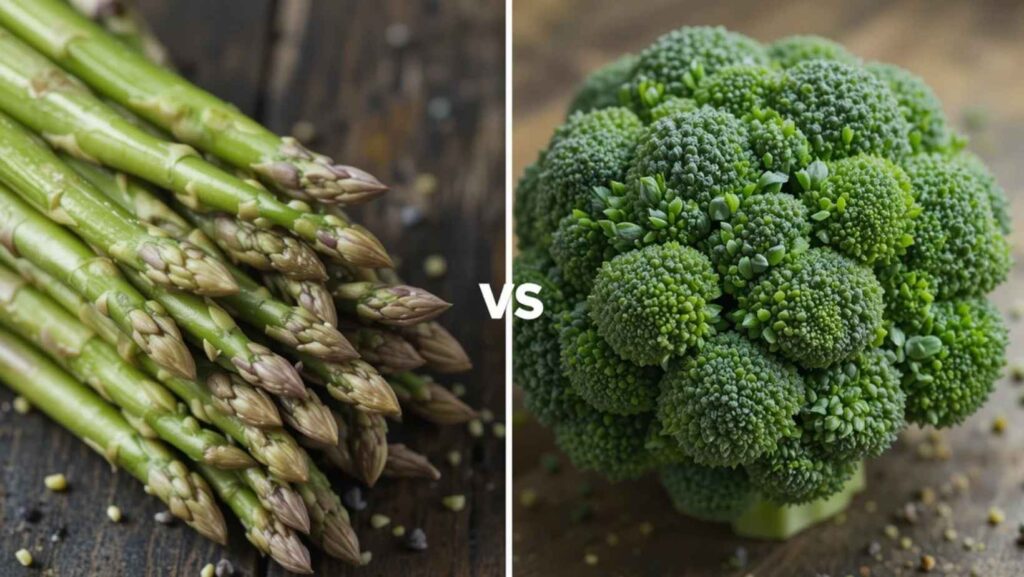
Would you like to know about the differences between asparagus and broccoli fiber? A Brassicaceae family member, Broccoli (Brassica oleraceae), is alternatively referred to as “the cabbage family” or “the mustard family.”
Broccoli is classified within the cruciferous vegetable family, including cabbage, collards, cauliflower, and Brussels sprouts.
Broccoli and cauliflower production has increased from 15 million metric tons (MMT) to 27 MMT globally over the last two decades.
China and India remain the leading producers, accounting for over two-thirds of the global broccoli supply.
A perennial vegetable, asparagus (Asparagus officinalis), is a member of the Asparagaceae family. Historically, asparagus was classified within the lily family, alongside garlic and onion.
Asparagus production has increased by a factor of two globally over the past two decades. China is the leading asparagus producer, contributing to more than 90% of the worldwide supply.
In contrast, one cup of Broccoli contains 2.4 grams of fiber, while asparagus contains 2.8 grams.
I contrasted the nutritional value of asparagus and Broccoli (100g each).To provide a concise overview of the critical nutrients and distinctions between asparagus and Broccoli:
• Broccoli and asparagus are both high in fiber and potassium. While asparagus is higher in thiamin, broccoli is higher in pantothenic acid.
• Asparagus is rich in iron; • Broccoli is a fantastic food source of vitamin C;
• Broccoli also has plenty of calcium and vitamin K.
But that is not all; I will provide additional information on the subject as you continue to read.
Now, let’s get started.
Are Asparagus and Broccoli the Same
Broccoli and asparagus are not the same thing. They possess unique qualities and belong to many plant families.
A perennial plant that blooms and is a member of the Asparagaceae family is called asparagus (Asparagus officinalis).
It is usually green or purple and is distinguished by its long, thin spears with pointy points.
A cruciferous vegetable, Broccoli (Brassica oleracea var. italica) is a member of the Brassicaceae family.
It bears a dense head, or “crown,” formed by a cluster of closely spaced green florets and a thick, tasty stalk.
Therefore, despite certain similarities, asparagus and Broccoli are two distinct vegetables with unique attributes.
You may eat the entire vegetable, including the leaves, young stems, blossoms, and unopened flower buds.
Though it is not closely related to asparagus, it has a pleasant taste with the characteristics of both vegetables. Steaming, boiling, stir-frying, and sautéing are standard culinary techniques.
What are the benefits of asparagus
Very little research has examined the specific health benefits of asparagus for individuals.
Nonetheless, several prospective and epidemiological studies have shown that consuming a high intake of fruits and vegetables reduces the risk of developing certain malignancies, heart disease, and other chronic illnesses.
This protection may be aided by the antioxidant chemicals found in fruits and vegetables.
Phenolic compound richness:
The primary phenolic components in asparagus are flavonoids, primarily rutin, and phenolic acids, including hydroxycinnamic acid.
These substances are believed to possess antioxidant properties, which help mitigate the damage caused by free radicals to the body.
These later highly reactive molecules are believed to play a role in the onset of certain malignancies, cardiovascular disorders, and other age-related illnesses.
Compared to white asparagus, green and purple asparagus have higher levels of phenolic chemicals.
While peeling asparagus before storing it might lower its phenolic compound level, peeling asparagus does not appear to affect its phenolic compound content while it is fresh.
Compared to a few typical European and US vegetables, such as yellow and red onions, garlic, Broccoli, and pepper, asparagus may have more and higher-quality antioxidants.
However, its usage is relatively low. Therefore, an increase in asparagus consumption would be beneficial from a health perspective.
Carotenoids that are antioxidants: Beta-carotene, lutein, zeaxanthin, and capsanthin are the primary carotenoid pigments found in asparagus.
Concentrations of zeaxanthin and capsanthin tend to increase with asparagus ripening, whereas lutein and beta-carotene tend to decrease.
Antioxidant-rich chemicals known as carotenoids are associated with a reduced risk of developing certain malignancies and cardiovascular illnesses when consumed in the diet.
A great way to get folate (vitamin B9) is to:
With a high folate concentration, asparagus ranks fifth in folate content among foods, behind only beef liver and other legumes.
For the general population, five cooked asparagus serves as around 25% of the daily folate need;
the amount is closer to 15% to 20% for pregnant or nursing women. Nearly as much folate is found in canned asparagus as in fresh asparagus.
Broccoli vs Asparagus: Which is Healthier
Asparagus and Broccoli are both excellent. The greater of the two is whatever was grown best and is presently in your possession.
Whichever is most suitable for your particular health needs, the cheapest, the freshest, or, if neither, equally suitable.
However, Broccoli and asparagus still do not contain a lot of energy. Nevertheless, they contain several health-promoting vitamins, minerals, and bioactive compounds.
Broccoli and asparagus share a comparable nutritional profile.
However, in addition to their common nutritional characteristics, they also have some distinctive distinctions. We will examine these parallels and discrepancies using the best scientific evidence.
There Are More Antioxidants in Asparagus.
Cardiovascular disorders, diabetes, cancer, cognitive decline, and aging are all influenced by oxidative stress.
Antioxidants prevent oxidative stress by removing harmful free radicals from the body.
Two vegetables that are rich in antioxidants are broccoli and asparagus. This is because these vegetables include antioxidants including vitamin E, vitamin C, flavonoids, carotene, and polyphenols.
Compared to Broccoli, asparagus has more potent antioxidant activity. There is no discernible difference between Broccoli and asparagus’s total phenolic component content.
On the other hand, asparagus has three to five times more flavonoids than Broccoli.
Numerous bioactive substances, such as polyphenols, alkaloids, sterols, flavonoids, saponins, hydrocinnamic acids, and fructans, are found in asparagus.
As a result of these bioactive ingredients, asparagus exhibits a variety of biological activities, including antioxidant, immunostimulant, hepatoprotective, antibacterial, and antifertility effects.
What are the benefits of Broccoli
Several studies suggest that eating vegetables from the Brassica family daily may lower the risk of developing cancer, highlighting the importance of these veggies in preventing certain types of cancer.
The quantity of polyphenols and antioxidant compounds in Broccoli is primarily responsible for this activity.
Eating Broccoli in various ways is advised to reap all its health advantages. Broccoli florets can be added to salads or vegetable platters and consumed raw.
Another healthful choice that best retains nutrients is steaming. Broccoli florets can be included in vegetable stir-fries, soups, and other dishes. Broccoli should not be overcooked to prevent excessive nutritional loss.
Although Broccoli is a year-round vegetable, its freshness and abundance are most remarkable in the spring and fall. Selecting Broccoli with vibrant green florets and sturdy stems is crucial.
Just chop the florets into broccoli florets and use the fragile stems (peel and cut into pieces) to make the Broccoli.
What are the healthy recipes for Broccoli and asparagus
Other highly suggested alternatives include Broccoli and spinach, but I chose asparagus because it absorbs water.
When it comes time to go extra-tight for the stage during the pre-contest crunch, top bodybuilders turn to asparagus as a meal.
This is How It’s Prepared: 30 minutes. 15 minutes for cooking. Serving size range: 20–30
Components:
One bunch of green asparagus; a handful of hazelnuts; a handful of shelled pistachios; a few sprigs of chives or other herbs (parsley, basil, coriander, etc.); one Broccoli; two young green onions;
1. Steam the Broccoli and asparagus for a short while until cooked.
2. Finely chop the Broccoli and asparagus and place them in a big salad dish.
3. Chop the young onions and herbs, then combine all the other ingredients in the salad dish.
Accompany with your vinaigrette or lemonette.
Final thought
Now that we have established the fiber content of asparagus versus Broccoli, Compared to Broccoli, asparagus has fewer carbs.
Let me do the arithmetic for you again: the difference in carbs between Broccoli and asparagus is almost 96%, with 6.64g and 3.38g per 100g, respectively.
Furthermore, Broccoli and asparagus are the ultimate health rivals, yet both are excellent additions to any diet due to their numerous health benefits.
They are both excellent for controlling weight and improving digestion, as they are high in fiber and low in calories.
Furthermore, the anti-inflammatory properties of these vegetables may help reduce the risk of developing chronic illnesses, such as cancer and heart disease.
In the end, eating Broccoli and asparagus can have many positive health effects. Thus, there isn’t a definite winner in this match!