
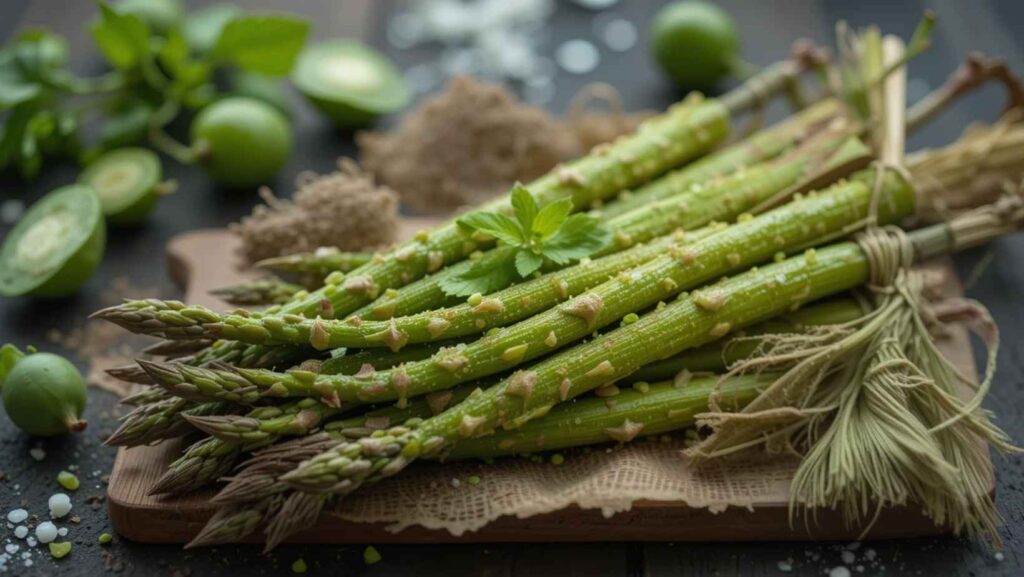
Would you like to know about asparagus or peas? In my observation, asparagus contains 75% fewer calories than peas. Iron-rich asparagus is an excellent source.
While peas are rich in niacin, asparagus is more abundant in pantothenic acid. Peas are particularly rich in vitamin C
Additionally, to maintain the freshness of the asparagus until use, place each spear upright in a tall glass filled with one to two inches of water.
Since asparagus has a propensity to dry out and lose moisture rapidly, this method will effectively extend its shelf life. But that is not all; I will continue to educate you on the subject as you read.
Now, let’s get started.
Is asparagus a pea
Grown for its angular pods, the asparagus pea, often called the winged pea or goa bean, is a unique and little-known half-hardy annual.
The tiny, bush-like plants provide eye-catching, dark red blossoms that resemble peas before developing into pea-like pods.
Two species are known as asparagus peas. Lotus maritimus, or yellow asparagus pea, and Lotus tetragonolobus, or red asparagus pea, are the two varieties.
The red-flowered asparagus pea is more significant as a crop. This is demonstrated by the fact that red asparagus pea seeds are practically the only ones available on the market.
The asparagus pea plant is often called the “winged pea” due to its seed pods, which resemble wings. It comes from the southern Mediterranean region and is prized in Asia more than anywhere else.
Since the 16th century, this legume has been widely used, although the cultivated pea (Pisum sativum) has mostly replaced it.
Velvety crimson blossoms adorn the 30- to 40-cm-tall red asparagus pea plant, which flourishes throughout the summer.
In contrast, yellow asparagus peas grow just 10 to 30 centimeters high and are hardy and perennial. Their blossoming season is limited to May through July.
Are peas suitable for the diet?
Peas are a great source of antioxidants, zinc, and vitamins C and E, supporting a healthy immune system.
Cholesterol, vitamins A and B, and cholesterol are supplementary nutrients that lessen inflammation and the likelihood of acquiring chronic diseases including diabetes, cardiovascular disease, and arthritis.
They include complex carbs, which the body breaks down gradually to produce long-lasting energy and prevent blood sugar spikes.
Furthermore, the fiber in peas helps you feel fuller for longer and curbs cravings by promoting a sense of satiety.
Eating peas should not cause noticeable weight gain or loss if you consume them regularly in a balanced diet and sensible portions. For best results, use steam cooking and sprinkle with olive oil.
Use caution if needed when it comes to seasoning and cooking: Adding shredded cheese or cream to peas cooked in a pan with a lot of butter will definitely boost the calorie bill.
Can you eat peas as much as you want
In principle, you can consume as many peas as you choose. In actuality, though, excess is never good for our health.
Put differently, it is not feasible to eat cans of peas nonstop. As with other meals, peas should be consumed in moderation.
The dietician suggests we vary the vegetables on our plate, which should comprise around half for lunch and supper.
As was already said, peas have comparatively fewer calories than other meals. You run the risk of nutritional imbalance and possible deficiencies if you overeat it at the expense of different foods.
What’s at risk? A reduction in immunity, cognitive difficulties, and many physiological issues.
Not to be forgotten, peas can induce bloating and distend the stomach, resulting in digestive discomfort accompanied by abdominal pain.”
Here are some things to be aware of:
• If you have a grass pollen allergy, you could also have a cross-allergy to some pollens found in peas.
Throughout the program? Sneezing, itching, runny nose, conjunctivitis, etc.
• Eating peas, which are high in fermentable sugars, may aggravate your irritable bowel syndrome and produce bloating.
There’s no need to eliminate them, but eating them in moderation is best.
• Low-residue diets are necessary for some diseases, such as Crohn’s disease or intestinal diverticulitis, but peas are high in dietary fiber and might not be one of them.
What are the benefits of peas
Peas’ rich concentration of vitamins, minerals, antioxidants, and phytonutrients offers several health benefits, from helping to prevent certain malignancies to supporting eye health.
1. Eye well-being
Zeaxanthin and lutein are two carotenoids found in peas. These nutrients protect your eyes from long-term conditions, including age-related macular degeneration and cataracts.
Lutein and zeaxanthin help protect the eyes from cataracts and macular degeneration by acting as filters against harmful blue light.
2. The pea prevents constipation by acting during transit.
One excellent source of dietary fiber is peas. They enhance the frequency of bowel motions by stimulating the intestine’s top-to-bottom movement.
Along with improving the health of the gut microbiota, they also encourage the proliferation of beneficial bacteria.
3. The satiating power of green peas in a slimming diet
Compared to other vegetables, peas have nearly three times the protein content. Out of 100 g, it yields 5.8 g.
However, although it has a higher carbohydrate content, its glycemic index (GI 35 when fresh or frozen and GI 45 when canned) remains low. Thus, it promotes satiety while marginally raising blood sugar levels (glycemia).
4. Peas’ antioxidant qualities
Peas are a rich source of manganese (0.32 to 0.4 mg/100 g, depending on whether they are cooked or raw) and beta-carotene, often known as vitamin A (414 μg/100 g), two essential nutrients that help fight oxidative stress and consequent cellular aging.
What does asparagus taste like
Depending on how it is cooked, it can have a hard or soft texture and a strong, sweet taste. Harvested at a height of fifteen centimeters, it grows above the ground.
As a result, it receives plenty of sunshine. Its lovely green hue is caused by the chlorophyll activated by this natural light.
How to get them ready:
Rinse the asparagus and cut only the base.
For a melting texture, soak them in boiling water for 5 minutes; for a crunchy feel, soak them for 10 minutes.
Additionally, you may cook them on a plancha, in foil, or even in the oven.
What part of asparagus is not eaten
The most significant portion, the delicious part, is the TIP. Towards the base, the remainder becomes more stringy and rough.
This tip quickly grows approximately a foot tall, forming ferny sections that are usually not eaten.
Asparagus sprouts every spring, becoming roots about a foot below the surface and multiplying from there.
Still, Arrange the spears in a straight line. Cut off the stiff, woody sections at the bottom (typically one to two inches) with a long, sharp knife.
Look for where the asparagus stalks change from bright to darker green to determine how much of the bottom should be chopped off. When the asparagus starts to change color, cut it.
What is Asparagus vs. Peas
Compared to peas, asparagus contains significantly higher levels of vitamins A, E, C, and K. Niacin, Pantothenic Acid, and Vitamin B6 are just a few of the many vitamins and minerals found in abundance in asparagus. Other important elements include potassium, magnesium, zinc, calcium, and phosphorus.
Asparagus is an excellent source of iron, riboflavin, thiamin, and vitamin K. Magnesium and zinc are plentiful in black-eyed peas.
Peas are an excellent source of iron, phosphorus, and vitamin B1 (thiamine). But peas and asparagus are both rich in potassium and dietary fiber.
• Compared to peas, asparagus has 73% fewer carbs.
• Compared to peas, asparagus contains 75% fewer calories.
• One excellent source of iron is asparagus.
•Asparagus has more pantothenic acid, whereas peas have more niacin.
• Peas are a great way to get vitamin C.
Calories:
Compared to peas, 81 calories per 100 grams, asparagus has 20 or 75% fewer calories.
Regarding macronutrient ratios, asparagus has more protein than peas, fewer carbohydrates, and about the same amount of fat.
The macronutrient ratio for peas, protein, and carbs from calories is 26:69:5, whereas asparagus has a ratio of 34:61:5.
Complete Protein:
Peas have 5.4 grams of protein per 100 grams, which is 146% higher than asparagus’ 2.2 grams.
Fat Saturation:
In comparison to peas, asparagus only has 0.04 g of saturated fat per 100 grammes. The saturated fat content of both veggies is minimal.
Final thought
Now that we have established asparagus or peas, In addition to being a great source of plant-based protein, the high fiber level of green peas makes them a very filling food.
Find out how to prepare asparagus and pea risotto in 15 minutes. The dish consists of 190 g of heavy cream, 20 cl of liquid cream, 300 g of green asparagus, 200 g of peas, and 200 g of broad beans.
Arrange the asparagus soup and peas in the center of the two deep dishes. Season with salt and pepper. Gently drizzle each plate with a little amount of oil and serve.