
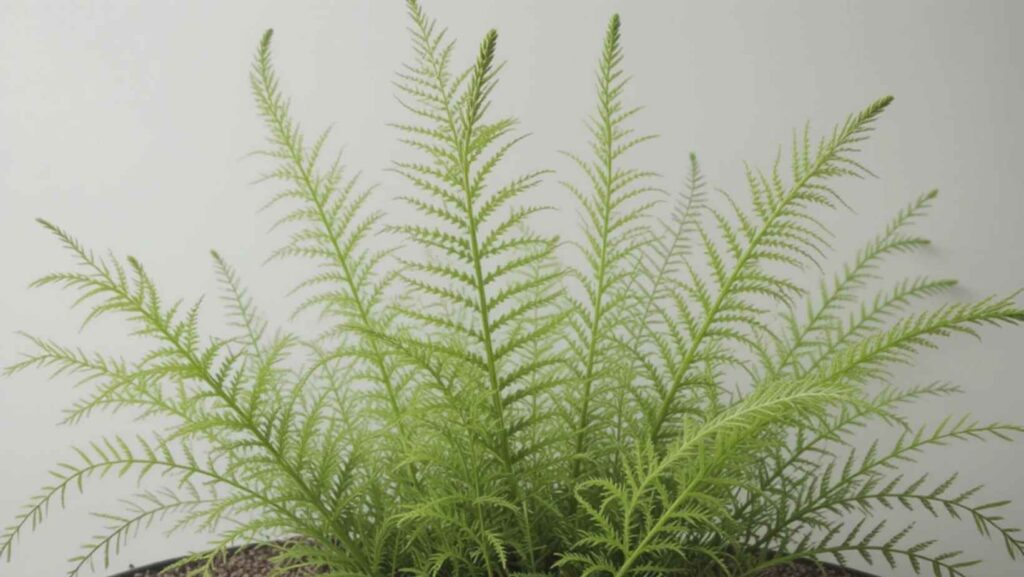
Do you want to know? Are edible asparagus and asparagus ferns related? According to my observations, asparagus ferns, such as Asparagus densiflorus, are lovely plants commonly used in flower arrangements but are not edible on their own despite being related to the culinary Asparagus (Asparagus officinalis).
The asparagus fern is not a true fern; rather, it is a member of the lily family. The vegetable is edible and closely resembles real Asparagus.
When Barbie invites Ken around for supper, she undoubtedly serves little spears of asparagus fern, delicately mixed with a delicate Hollandaise sauce.
However, that’s not all; as you continue reading, I’ll provide further details regarding the subject.
Now, let’s get started
Is asparagus fern the same as edible Asparagus
In spite of the fact that they are related, asparagus fern, which is often known as asparagus densiflorus or asparagus setaceus, is not the same as edible Asparagus, which is known as asparagus officinalis.
Furthermore, the fern is not edible.
In order to provide a more in-depth explanation:
Relationships in Botany: Although they are both members of the same genus (Asparagus), they are distinct species.
Edible Asparagus, also known as Asparagus officinalis, is famous for its sensitive shoots.
However, the “leaves” of the asparagus fern are actually modified stems known as cladodes, and they are not safe for human consumption.
In terms of appearance, the asparagus fern has “leaves” that are needle-like and delicate, whereas the edible Asparagus has stems that are straight and thick.
The asparagus fern is also referred to as the “Sprengeri fern” and the “Foxtail fern,” which are also common names.
There are around 300 different species that belong to the genus Asparagus. The edible form of Asparagus is known as Asparagus officinalis.
Asparagus ferns are widely used as decorative plants because of their lovely leaves, whilst edible Asparagus is produced for its edible branches.
Both types of Asparagus are utilized for ornamental purposes.
What is the difference between Asparagus and its Fern
A tight relationship exists between asparagus ferns and edible Asparagus, also known as asparagus officinalis.
Although asparagus ferns do not produce anything that can be harvested and consumed by humans, they are helpful in a wide range of gardening circumstances due to their adaptability, dependability, and ease of cultivation.
One of the most widely cultivated varieties of asparagus fern is known as Asparagus densiflorus ‘Sprengeri.’
This asparagus fern develops a mound of foliage that is around 18 to 24 inches tall and considerably broader than average.
The foliage is glossy, brilliant green, and has a coarsely textured appearance.
An even more in-depth analysis is as follows:
The botanical name for Asparagus, which is a vegetable that may be eaten, is Asparagus officinalis.
Parts That Can Be Consumed The fragile shoots, sometimes known as “spears,” are picked and consumed as a fresh vegetable.
The plant will produce fern-like leaves if the shoots are not picked until after they have been collected.
Asparagaceae is the family name; however, it is also sometimes categorized as part of the Liliaceae, or lily, family.
The botanical names for several species that belong to the genus Asparagus, such as Asparagus setaceus, Asparagus densiflorus, and Asparagus sprengeri, collectively refer to the Asparagus Fern.
Tasteable? It is not true that these plants are produced for human sustenance; rather, they are treasured for the stunning leaves that they make.
They are well-known for their delicate, feathery, fern-like leaves, which is one of the reasons why they are sought after as houseplants.
Asparagaceae is the family name; however, it is also sometimes categorized as part of the Liliaceae, or lily, family.
The asparagus fern, the lace fern, the foxtail fern, and other common names for this.
Toxicology: Every portion of the plant is a moderately dangerous substance to both people and animals.
Is asparagus fern actually Asparagus
The Asparagus we consume is a distinct species from the asparagus fern, which is not edible.
The species is not edible, yet it is nonetheless classified as a member of the Asparagus genus.
In spite of its popular name, it is not a genuine fern; rather, it belongs to either the asparagus family (Asparagaceae) or the lily family (Liliaceae), which contains plants such as amaryllis, daylilies, hosta, and tulips, depending on the classification system that is being utilized.
The edible A is a member of the genus Asparagus, which contains this substance.
In order to provide a more in-depth explanation:
Despite its name and appearance, the “asparagus fern” is not a genuine plant. It is a plant that is related to Asparagus.
Associated with the Asparagus: Both the edible Asparagus, Asparagus officinalis, and this plant are members of the same genus, which is called Asparagus.
Connection to the Lily Family: Additionally, it is part of the lily family, also known as the Asparagaceae or Liliaceae family, which comprises plants such as garlic, onions, and lilies.
The species of “asparagus fern” that is most commonly found is known as Asparagus densiflorus.
“Foxtail Fern” and “Plume Asparagus” are two of the other names that are used to refer to the species.
Asparagus densiflorus.
According to toxicity, the entire plant, including the berries, is considered marginally hazardous to humans and animals.
Can humans eat Asparagus fern
No, the asparagus fern, also known as Asparagus densiflorus, should not be consumed by people since it is not edible and, if ingested, can also cause irritation to the skin and gastrointestinal problems.
In order to provide a more in-depth explanation:
In no way a genuine fern:
Although it is sometimes referred to as an “asparagus fern,” it is actually a member of the lily family. Not only is it more closely related to the food asparagus, but it is also not edible.
Ingestion of any component of the beautiful asparagus fern, which is toxic, can result in skin irritation and gastrointestinal problems. All portions of the asparagus fern are deadly.
There is a separate kind of Asparagus known as edible Asparagus, which is called Asparagus officinalis.
The young shoots of this variety are the portion of the plant that customers often consume.
Berries: The berries taken from the asparagus fern are poisonous to both cats and dogs, and they have the potential to induce gastrointestinal distress.
Why is asparagus fern toxic
Sapogenin, a naturally occurring steroid, is the component of the asparagus fern that is responsible for its poisonous properties.
This steroid is contained within the brilliant red berries of the asparagus fern.
This particular steroid is responsible for both the gastrointestinal distress the patient is experiencing and the cutaneous reaction the sap is causing.
Skin responses to the sap typically only last for a short time, but they tend to become more severe after repeated encounters.
When beginning treatment, it is common practice to start by thoroughly washing the mouth with clean water.
This is done with the intention of removing as much of the poison from the exposed tissue as possible.
Rinsing any skin that has been exposed to the sap can help prevent dermatitis from developing as a result of the sap’s presence.
To alleviate mild discomfort and swelling in the mouth, your dog may also benefit from applying an ice cube.
In most cases, bad taste of the plant will deter most dogs from consuming a significant amount of the actual material.
Therefore, it is possible that the only necessary therapy is to rinse the mouth region properly.
Final thought
Now that we have established Are asparagus ferns are related to edible Asparagus. The foliage of asparagus ferns is light and delicate, and it resembles the leaves of Asparagus with the exception that it arches beautifully, just like a fern.
This is where the name comes from. They are not ferns in the traditional sense but rather members of the lily family, and they originate from the wet woods of southern Africa.
They are wonderful choices for indoor plants.