
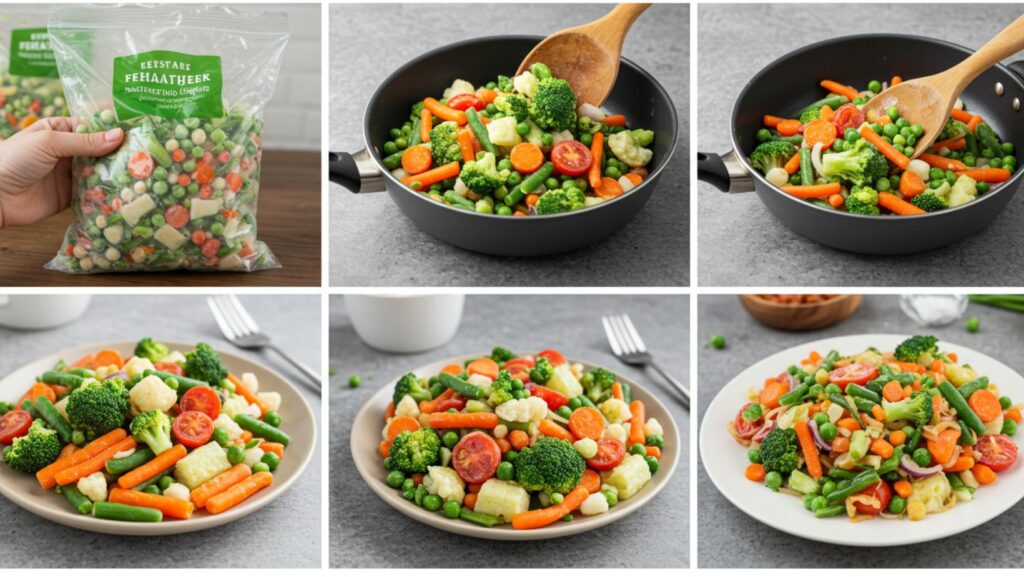
Would you want to know if frozen vegetables are healthy? To answer your question, yes, frozen veggies can be healthful and nutritious, based on my own experience.
They have the potential to be just as nutrient-dense as those of fresh veggies and, in some instances, even more so.
Frozen veggies are among the most common items found in the freezers of many households because of their convenience and nutritional value.
People who desire to maintain a nutritious diet without compromising convenience frequently find themselves in the frozen aisle, evaluating the options available to them.
This is because they are frequently confronted with the question of their healthiness.
When it comes to customers who are concerned about their health, the issue “Are frozen vegetables healthy?” is more important than it has ever been.
The purpose of this blog article is to give a comprehensive understanding of frozen veggies and their role in a diet that is healthy by removing some of the layers that have been accumulated.
Now, let’s get started
Are Frozen Vegetables Healthy
The use of frozen veggies that have been packaged without any additional salt, sugar, or fat is a healthy and nutritious alternative to the consumption of fresh produce.
Frozen veggies are gathered when they are at their height of ripeness and then flash-frozen afterward, which helps to retain the nutrients in the vegetables.
They also provide an easy way to consume a greater quantity of veggies.
In recent years, there has been a rise in the demand from consumers for ready-to-eat meals;
yet many individuals opt to avoid frozen veggies because they believe that they are less wholesome than their fresh counterparts.
It’s possible that this is due to the fact that a lot of frozen meals, including certain vegetable products, are highly processed and frequently have salt and other additives that have been added.
The nutritional value of frozen veggies that have not been seasoned with any additional additives is comparable to that of fresh vegetables.
In addition, individuals who consume frozen veggies had a greater total vegetable consumption compared to those who do not consume frozen produce.
They also consume meals that are of a better quality, with increased amounts of potassium, calcium, and vitamin D.
- Have less sodium.
- The consumption of more fiber.
- Decrease the body mass index.
Do Frozen Vegetables Retain Their Nutrients
Blanching is a procedure that includes quickly boiling or steaming vegetables before freezing them.
Blanching is used for many frozen vegetables.
There is a possibility that this method will result in the loss of some nutrients that are heat-sensitive and water-soluble.
For the purpose of determining the vitamin content of fresh vegetables that have been stored in the refrigerator for three to ten days and frozen vegetables that have been steam-blanched and then frozen for ten to ninety days.
In addition to peas and green beans, typical vegetables include maize, carrots, broccoli, spinach, and the like.
On the whole, the vitamin content of the fresh veggies and the frozen vegetables was equivalent.
It is interesting to note that the amounts of vitamin C, vitamin E, and vitamin B2 were much greater in a number of frozen veggies.
Out of all the nutrients, beta-carotene was the only one that was shown to be lower in some frozen vegetable samples.
What Are the Benefits of Frozen Vegetables
While you’re at the grocery store, are you rushing by the freezer aisle? Not any longer. There are a number of advantages to using frozen veggies, some of which include the following:
Helps save resources:
, frozen foods are an excellent choice for those who frequently find that by the time they are ready to consume their fresh produce, it has already passed its prime and you are forced to dispose of it.
The preparation time is reduced since frozen vegetables are fully cleaned, trimmed, and chopped when they are delivered to you; all that is required of you is to remove a serving or two from the bag and cook them.
You also do not need to be concerned about throwing away the stems, pods, or skins of the fruit.
When you consider how easy it is to prepare frozen veggies, it is possible that choosing frozen types will encourage you to consume a greater quantity of healthy vegetables.
Eat more fruits and vegetables; this is one of the most beneficial things that anyone can do for their health.
One-half to two cups of fruits and two to three cups of vegetables are the daily quantities that are suggested for people to consume, but only ten percent of adults actually consume these amounts.
The use of frozen vegetables can make it simpler to accomplish this objective. When veggies are frozen, there is no need to excuse yourself from eating them.
What are the Tips for Choosing and Preparing Frozen Vegetables
hints that you should keep in mind while utilizing frozen vegetables in order to guarantee that you get the most out of them.
When looking for minimal processing, it is important to read labels.
Choose frozen vegetables that do not include any additional salts or sauces while you are shopping for them.
In order to guarantee that the product you are purchasing is as unadulterated and unadulterated as possible, you should look for bags that include the vegetable itself as the sole ingredient.
Ensure that frozen veggies are stored appropriately in order to preserve their quality. Handling and storage should also be done carefully.
Keep them in the section of your freezer that is the coldest, and if you want to get the most out of their quality, attempt to utilize them within three to six months.
Avoid thawing and refreezing food since doing so might cause the texture to deteriorate and could result in the loss of nutrients.
Does Freezing Vegetables Destroy Nutrients
You may be wondering if your freezer’s harsh, frigid temperature zaps vegetable nutrients.
Post-harvest flash-frozen veggies retain greater nutrients.
You may be getting a more nutrient-dense broccoli than one that was harvested, driven, and stored on a store shelf.
Remember to refrigerate the veggie after buying it until you’re ready to use it in that beef and broccoli stir-fry or zucchini pasta meal.
That’s why frozen veggies have benefits, even if purchasers prefer fresh.
Because food loses vitamins over time, frozen produce is generally healthier than fridge-fresh.
This doesn’t mean fresh veggies are unhealthy. Fresh and frozen veggies are plenty in your diet.
Vegetables offer important advantages.
What to Look for When Buying Frozen Vegetables
You can easily locate a broad selection of frozen vegetables in the freezer section of your grocery store.
These vegetables include peas and corn, as well as okra, spinach, and green beans. Because there are so many possibilities, it can be challenging to choose which frozen vegetables are the best ones to purchase.
In this section, Hever provides a detailed breakdown of the greatest frozen veggies that can be purchased.
Unflavored Frozen Vegetables:
It is recommended by Hever that you purchase veggies that are frozen in their natural state.
In the event that you turn the packaging over, you should study the list of ingredients and search for those that state “green beans” or “bell pepper strips.” You get the point—there are no additional ingredients.)
Although frozen vegetables and medleys that contain sauces and spices are low in sodium and saturated fat, this does not indicate that they are not acceptable to consume.
On the other hand, you should study the ingredients list and the nutrition data in order to have a complete understanding of what you are getting.
Steer clear of foods that include a high amount of sodium and saturated fat since they may contain salt, butter, or creamy sauces for the purpose of adding flavor and texture.
But what you purchase will be determined by your health objectives as well as the foods you consume during the remainder of the day.
In-Season Selections:
Lastly, if you have purchased a large number of veggies and are aware that you will not be able to consume them within the allotted period (or if you purposefully purchased a large number of vegetables throughout the season because they were on sale), you may consider storing them.
What are the 5 Reasons to Pick Frozen Vegetables
Frozen Fruits and Vegetables Are Less Healthful: Despite what many people think, frozen fruits and vegetables are frequently just as nutrient-dense as their fresh counterparts.
Produce that is frozen while it is at its ripest retains its nutrients, giving you the most nutritional value possible.
To compensate for shipping time, fresh food is usually harvested before it reaches its peak.
The fresh food may have been sitting for many days and lost part of its strength by the time you choose it at the shop.
Myth: Frozen foods have additives or preservatives. In actuality, the majority of frozen foods can be cleaned with boiling water without the need for extra preservatives.
The majority of frozen fruit and vegetable products are devoid of dangerous additives, but it’s always advisable to read product labels for any additional components.
Myth: An organic diet cannot include frozen foods.
There is no truth to this at all. Even popular mainstream companies provide a plethora of organic frozen fruit and vegetable selections.
The selection of organic vegetables has significantly increased within the past five years.
Choosing these pesticide-free substitutes may provide even more nutritional benefits in addition to being consistent with an organic lifestyle.
Here are two facts now:
The fact is that frozen food is nearly always less expensive than fresh.
The cost of frozen food is unquestionably one of its benefits.
Additionally, there are plenty of organic choices available, sometimes at a lesser cost than fresh, if you value organic products.
Reduced Waste and Increased Convenience
Frozen vegetables are a major convenience factor. They save time on preparation and cleaning because they are ready to use or cook right out of the freezer.
In addition, compared to their fresh equivalents, their extended shelf life minimizes food waste by allowing you to utilize exactly what you need and save the remainder for later use.
You may save time and potentially cut down on the quantity of fresh food from your crisper that ends up in the trash by including frozen vegetables in your weekly routine.
Final thought
Now that we have established that frozen vegetables are healthy, Since frozen veggies may save a significant amount of time and effort, including them in your regular dinner routine might be a wise decision.
frozen veggies last longer than fresh vegetables in terms of quality and nutritional content.
Additionally, they are made without requiring extra prep work and may be kept comfortably without running the danger of spoiling.
Therefore, for people searching for quick and simple meal options, frozen veggies may be a handy and healthful choice.